 If you’ve ever sat in a nail salon and thought “I could do this” you’re not alone. Nail technology is one of the more accessible pathways into the beauty industry, with shorter study timelines, lower upfront costs, and the flexibility to work for yourself or alongside other therapists. But before you book a course, it helps to know what you’re actually signing up for.
So, how long does it take to become a nail technician? The honest answer is: it depends on the path you choose. Some people are booking paying clients within a few months of starting their first course. Others take a year or more to build a complete skill set across acrylics, gel, nail art, and nail care. This article breaks down the options certificate programmes, short courses, online study, and hands-on training so you can figure out what timeline makes sense for you.
Whether you’re switching careers, adding a new service to your existing beauty practice, or simply exploring what’s possible, here’s what to expect.
What Training Do You Actually Need?
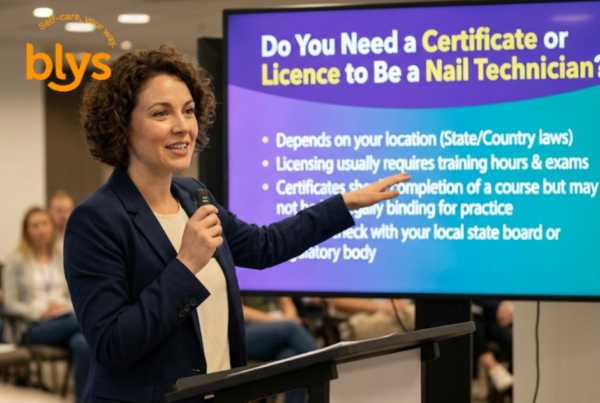
Unlike some health and wellness professions, nail technology in Australia doesn’t require a single mandatory qualification to start working. That said, most employers, salon owners, and clients will expect you to hold at least a Certificate III in Nail Technology or equivalent short course training before they trust you near their hands.
The Certificate III in Nail Technology (SHB30121) is the industry benchmark. It’s offered through TAFE and registered private training providers across Australia, and it covers everything from nail structure and skin anatomy to product chemistry, infection control, and client consultation. Completing this qualification tells clients and employers that you’ve been trained to a professional standard, not just watched a few YouTube tutorials.
Beyond the certificate, many nail technicians layer in additional short courses gel extensions, nail art, acrylic application either during their studies or once they’re already working. The beauty industry rewards ongoing learning, and the more techniques you can offer, the more clients you can attract.
For anyone researching the broader career picture, the nail technician career guide for Australia is a useful place to start before committing to a course.
How Long Are Nail Technician Courses?
This is where timelines vary the most. Here’s a breakdown of the main study options and how long each typically takes.
Certificate III in Nail Technology
A full Certificate III qualification usually takes between 6 and 12 months to complete, depending on the provider, your study load, and whether you’re studying part-time or full-time. TAFE programmes are often structured around semesters, while private colleges may offer more flexible intake dates and accelerated timelines.
The qualification covers practical and theory components. You’ll spend time on mannequin hands and practice nails before moving on to real clients under supervision. Most programmes also include a placement component a set number of hours in a commercial salon or supervised clinic environment.
If you’re looking at ASQA-registered training organisations in your state, check the course duration and delivery format carefully. Some providers offer weekend intensives; others run weekday classes over several months.
Short Courses and Skill-Specific Training
For people who already work in beauty or who want to add nail services to an existing practice short courses are a popular option. These typically run anywhere from one day to eight weeks, depending on the skill being taught.
Common short course topics include:
- Gel polish application and removal
- Hard gel and acrylic extension techniques
- Nail art and advanced design
- Paraffin treatments and nail care
Short courses don’t lead to a formal qualification, but they do build your practical skill set quickly. Many technicians use them to specialise after completing their Certificate III, or to stay current with new techniques and product systems.
Online and Home-Based Study
If you’re asking how to become a nail technician from home, the answer is: partially. Theory components of many courses can be completed online, including product knowledge, client communication, health and safety, and anatomy. Practical skills, however, need hands-on practice and most accredited providers will require in-person attendance for assessments.
There are online nail technician courses available through private providers, some of which include video instruction, theory workbooks, and a starter kit. These can be a good supplement to in-person training, or a way to test your interest before committing to a full certificate. Just make sure any online course you choose is delivered by a registered training organisation if you want the qualification to carry weight with employers.
What Happens After You Finish Your Course?
Completing a certificate or short course is only the first step. Most new nail technicians spend the next few months building confidence, improving speed, and getting used to working with real clients. Training gives you the foundation, but repetition is what helps your work feel smoother and more professional over time.
The early stage after study is often a mix of practice, setup, and finding your place in the industry. You may still be improving your timing, testing products, and learning how to handle consultations, hygiene, and client expectations in a real setting.
Here’s what the early post-study period typically looks like:
- Building a client base: Friends, family, and discounted introductory bookings are common starting points. Many new nail technicians begin with lower rates while they build a portfolio and gain repeat clients.
- Investing in your kit: Training providers often supply tools during study, but once you’re working on your own, you’ll need a professional kit. This usually includes core tools, products, and hygiene supplies, so it is worth budgeting for early.
- Registering your business: If you plan to work for yourself, you’ll need an ABN and, in some cases, business registration. Many technicians also organise insurance before taking paid clients.
- Joining a platform or salon: Some newly qualified nail technicians start in a salon, while others join a mobile or in-home platform to access bookings and build experience. Platforms like mobile nail services connect technicians with clients looking for at-home manicures and pedicures, making it easier to start taking bookings while building confidence.
For many people, this stage is where the real learning begins. It is not just about doing nails well. It is also about managing time, communicating clearly, and building trust with each client.
How to Speed Up Your Path to Clients
If you want to get to your first paid booking as quickly as possible, a few things can help.
Choose an intensive or accelerated programme. Some private providers offer full-time Certificate III programmes that compress the content into a shorter window sometimes as little as 10 to 12 weeks. These suit people who can commit to full days of study and want to graduate and start working quickly.
Practice constantly during your training. The technicians who progress fastest are the ones putting in hours outside of class time. Offer to do nails for friends, practise your designs, and build muscle memory with application techniques. Speed and consistency come from volume.
Study what clients actually want. Gel nails, French tips, and nail art are consistently in demand. If you focus your early skill-building on the most-requested services, you’ll have an easier time filling your books from the start.
Understanding what a nail technician does day-to-day is also worth reading before you commit, so you go in with realistic expectations about the work involved.
Is Nail Tech the Right Career for You?
Nail technology suits people who enjoy hands-on, detail-focused work and like building relationships with regular clients. It’s a profession where your income often grows directly in proportion to your skill level and reputation which can be both motivating and demanding in the early stages.
It’s also worth knowing that nail technicians work with chemical products daily, which means ventilation, skin care, and proper PPE are important parts of the job. Safe Work Australia publishes guidance on managing chemical exposure in beauty and nail workplaces, something worth familiarising yourself with before you start.
The career can be physically demanding too. Long periods of sitting in one position and fine motor repetition can cause strain over time. Building good posture habits and taking breaks between clients matters more than most training providers emphasise.
On the upside, the flexibility is real. Many nail technicians run their own mobile or home-based businesses, set their own hours, and build a loyal client following that generates steady, repeat income. For people who want independence and creative satisfaction in their work, it’s a genuinely rewarding career path.
Wrapping Up
How long it takes to become a nail technician comes down to the training path you choose and how much time you can put into practice. A Certificate III typically takes 6 to 12 months. Short courses can have you adding new skills in a matter of weeks. And with enough practice after graduation, you can be booking paying clients sooner than you might expect.
If you’re already qualified and looking for a flexible way to find clients, Blys connects beauty professionals with people seeking nail services at home. Visit the Blys homepage to learn more about how the platform works and whether it’s a good fit for where you are in your career.