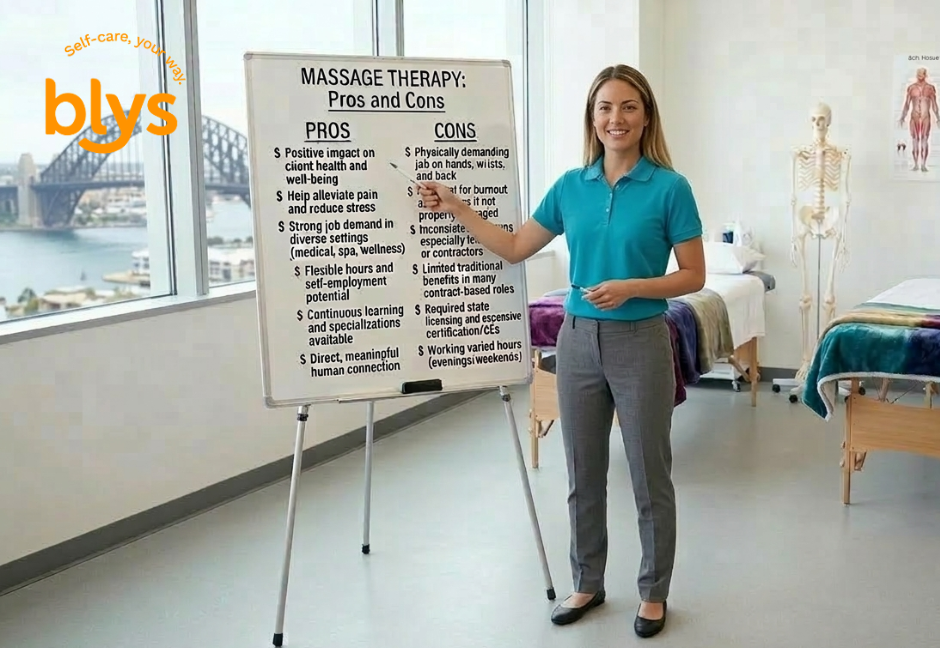
 You’re drawn to the idea of a career that genuinely helps people feel better. Massage therapy ticks a lot of boxes: hands-on work, flexible hours, and the satisfaction of seeing results in real time. But before you enrol in a course or change direction entirely, it’s worth asking: is massage therapist a good career for the long haul?
The honest answer is that it depends on what you’re looking for. Massage therapy offers real rewards, but like any profession, it comes with trade-offs. This post breaks down the salary expectations, job demand, physical realities, and career pathways so you can make an informed decision.
What Does a Massage Therapist Actually Do?
Massage therapists assess and treat clients using a range of hands-on techniques designed to relieve muscle tension, reduce pain, support injury recovery, and promote general wellbeing. Depending on your training and specialisation, you might work across remedial massage, relaxation massage, sports massage, pregnancy massage, or myotherapy.
A typical session runs 60 to 90 minutes. You’ll consult with the client, identify areas of concern, tailor a treatment plan, and carry out the massage while tracking progress and adjusting your approach session to session.
Beyond the hands-on work, you’ll also handle appointment scheduling, maintain treatment notes, manage client relationships, and, if you’re self-employed, take care of your own marketing and admin. It’s a role that rewards both technical skill and people skills.
Job Outlook: Is There Real Demand For Massage Therapists?
Yes, there is real demand for massage therapists in Australia, particularly within the broader health and wellness sector. Jobs and Skills Australia reports that around 19,800 people are employed as massage therapists nationally, with annual employment growth of about 300, which points to a stable and active profession.
Demand is also being supported by changing work models. Massage & Myotherapy Australia notes that the sector has evolved alongside higher training standards and stronger links to the wider health system, while platforms like Blys have created more flexible ways for therapists to find clients and work independently. That said, demand still varies by location, qualifications, and specialisation, with stronger opportunities often found in larger cities and for therapists with broader clinical skills.
What Can You Earn as a Massage Therapist?
Earnings as a massage therapist can vary quite a bit depending on your experience, location, and whether you work for an employer or run your own practice. Some therapists build a steady full-time income, while others prefer flexible, part-time work that fits around their lifestyle.
Employed vs Self-Employed
What you earn as a massage therapist depends heavily on how you work. Employed roles usually offer more predictable income, while self-employed or mobile work can offer stronger earning potential once your bookings become steady.
Current SEEK salary data places massage therapist roles in Australia at around $75,000 to $80,000 a year on average, while Blys says providers on its platform can earn up to 75% of the booking fee and work on their own schedule.
| Work Setup | Typical Income Pattern | What To Expect |
| Employed | Usually a fixed wage or hourly rate | More stable pay, but less control over pricing, hours, and workload. |
| Self-employed | Income depends on your rates, repeat clients, and booking volume | More flexibility and higher upside, but income can vary from week to week. |
| Mobile platform work | Per-booking income with flexible availability | An easier way to start independently without running a full clinic, though earnings still depend on demand and consistency. |
For new therapists, employed work can offer a steadier starting point, while self-employed or mobile work often becomes more rewarding once you have experience, strong reviews, and regular clients.
Realistic Expectations For New Therapists
Starting income is generally modest while you’re building your client list and clinical hours. Most therapists find that the first one to two years involve a lower income as they establish themselves, whether that’s through a clinic role, working under a senior therapist, or slowly growing a mobile practice. It’s a profession that tends to reward consistency and reputation over time rather than fast returns upfront.
The Real Challenges Of A Massage Therapy Career
No career is without its drawbacks, and massage therapy is no exception. Being honest about the challenges will help you make a clearer-eyed decision.
Physical Demands
Massage therapy is physically demanding work. Performing multiple treatments per day, especially deep tissue or remedial work, places repetitive strain on your hands, wrists, forearms, and lower back. Body mechanics training is part of any good course, but therapist burnout and injury are real occupational risks.
Most experienced therapists cap their treatment hours at five to six per day to manage fatigue. If you’re planning to work full-time hours through massage alone, it’s worth speaking to practising therapists about how they structure their week.
Income Variability
If you’re self-employed, income can be irregular, particularly in the early stages or during quieter periods. Building a reliable client base takes time, and there will be weeks where bookings are thin. This is a manageable reality for many therapists, particularly those with a flexible financial setup, but it’s worth factoring into your planning.
Continuing Education
The profession requires ongoing professional development to maintain your qualifications and private health fund registration. Courses, workshops, and industry body membership all have associated costs. This is common to most health professions, but it’s a line item you’ll want to budget for from the start.
What Are The Genuine Rewards?
Despite the challenges, massage therapy consistently scores highly on job satisfaction. The work is meaningful. Clients often arrive stressed, in pain, or depleted and leave noticeably better. That visible impact is something many therapists cite as the core reason they stay in the field.
Flexibility is another genuine draw. Whether you’re working from a clinic, renting a room, visiting clients at home, or partnering with a platform like Blys to take on mobile bookings, there are multiple ways to structure your working life. For people who value autonomy over a rigid nine-to-five, massage therapy offers real options.
There’s also career longevity when you manage the physical demands well. Many therapists work well into their 50s and beyond, particularly those who diversify into teaching, clinic management, or specialised treatment areas.
Our massage therapist career guide covers the practical steps for qualifying and entering the field in more detail; it’s a useful read if you’re mapping out your next move.
Is Massage Therapy the Right Fit for You?
Massage therapy tends to suit people who are genuinely motivated by helping others, comfortable with physical work, and interested in health and the human body. It’s not a passive desk role. It requires presence, empathy, and consistent manual effort.
It’s a particularly strong fit if you:
- Want a hands-on allied health career without a university degree pathway.
- Value flexible or self-directed work arrangements.
- Are interested in preventative health, injury recovery, or sports performance.
- Want to work in a growth sector with genuine client demand.
- Are prepared for the physical realities and willing to manage your body well.
If the physical workload, irregular early income, or ongoing professional development costs feel like dealbreakers, it’s better to know that now rather than midway through a training programme.
Curious about how therapists experience the role day-to-day? Our guide to how to choose the right massage therapist offers a client-side perspective that can help you understand what clients value most and how that shapes what it means to practise well.
Wrapping Up
Massage therapy is a genuinely rewarding career for the right person. It offers flexibility, meaningful work, and real job demand in a growing wellness market. It’s not without its challenges: the physical toll is real, income can take time to build, and sustaining a full-time caseload requires both skill and discipline.
If you’re considering making the move, speak to practising therapists, research your training options, and look into what working with a platform like Blys could look like as part of your practice. A career in massage therapy isn’t for everyone, but for those who are well suited to it, it’s a profession that tends to hold up over time.