 If you’re interested in becoming a nail technician in Australia, it’s natural to wonder what qualifications you actually need before you can start working. The answer is not always the same for everyone. Requirements can vary depending on the state or territory you’re in, the services you plan to offer, and whether you want to work in a salon, run your own business, or offer mobile appointments. Still, proper training matters no matter which path you take.
Getting the right qualification is about more than meeting basic expectations. It helps you build the practical skills needed to work safely, follow hygiene standards, understand client care, and feel confident with real treatments from the beginning. It can also improve your chances of finding work, getting insured, and building trust with future clients.
In this guide, we’ll break down what qualifications you may need to become a nail technician in Australia, where to study, how long training usually takes, and what you can expect once you start. That way, you can make a clear and informed decision before you commit to a course or career path.
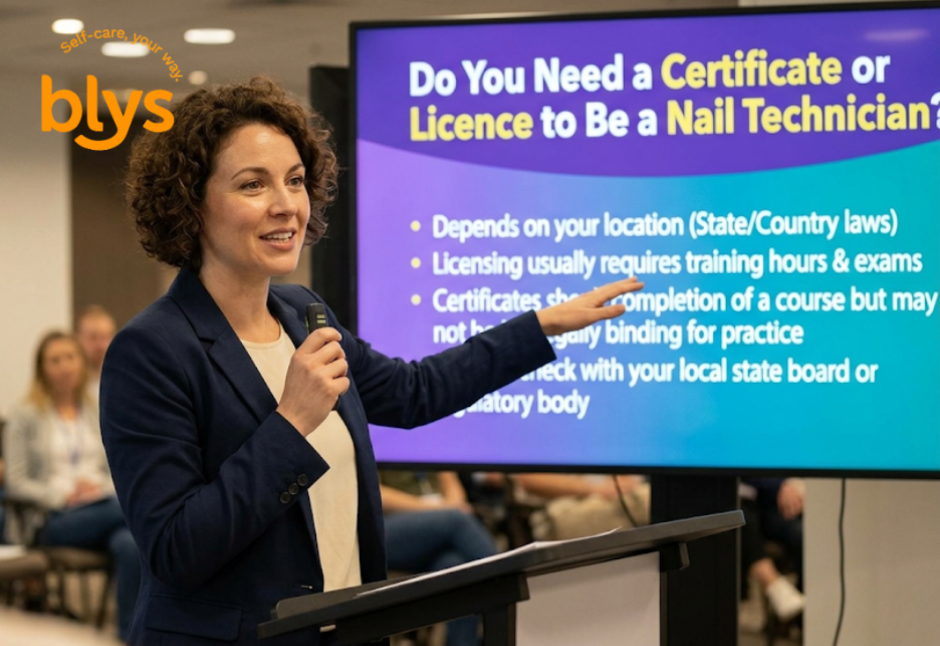
Is There a Legal Requirement to Be a Licensed Nail Technician in Australia?
Australia doesn’t have a single national licensing body that governs nail technicians the way it does for, say, electricians or registered nurses. Regulation sits at the state and territory level, which means requirements can vary depending on where you plan to work.
That said, most states and territories require nail technicians to hold a formal qualification if they’re working in a commercial setting. In Victoria, for example, operators providing nail services must comply with the Public Health and Wellbeing Act 2008, which sets out standards for hygiene and skin penetration procedures, including the use of nail drills and acrylic application. Similar regulations apply in New South Wales, Queensland, and South Australia.
Even in states where certification isn’t legally mandated, most reputable salons and mobile nail services won’t hire technicians who lack formal training. Insurance providers also typically require proof of qualification before covering you for professional liability.
The practical reality is this: whether or not a certificate is legally required in your state, having one makes you more employable, more insurable, and more credible to clients.
What Qualifications Do You Need to Be a Nail Technician?
The most widely recognised qualification in Australia is the Certificate III in Nail Technology (SHB30121). This is a nationally accredited qualification under the Australian Skills Quality Authority (ASQA) framework, which means it’s recognised across all states and territories.
What Does the Certificate III Cover?
The Certificate III in Nail Technology gives students the core knowledge and practical skills needed to start working in the industry. It covers the main services, safety standards, and client care skills expected in a professional setting.
The Certificate III in Nail Technology typically covers:
- Nail anatomy and skin structure
- Manicure and pedicure techniques
- Gel, acrylic, and gel-polish application
- Nail art and design
- Hygiene and infection control
- Client consultation and aftercare
- Safe use of nail products and equipment
Overall, this course helps you build a strong foundation in both treatment skills and professional practice, so you can work more confidently with clients in a salon or mobile setting.
Do You Need Anything Beyond a Certificate III?
For most nail technicians, a Certificate III in Nail Technology is the standard qualification needed to start working in the industry. It gives you the core skills, safety knowledge, and practical training required for entry-level nail services in a salon or mobile setting.
However, some technicians choose to continue studying as their career grows. If you want to move into a management role, run your own salon, or train other technicians, a Certificate IV in Beauty Therapy (SHB40121) or a diploma-level qualification may be worth considering. These higher-level courses can support broader career goals beyond everyday treatment work.
Many nail technicians also take specialist short courses in areas like nail extensions, hard gel systems, BIAB, e-file use, or nail art. These are not usually formal qualifications, but they can still strengthen your skills, expand your service menu, and help you stand out in a competitive market.
Where Can You Study Nail Technology in Australia?
Nail technology courses are offered through TAFE institutes, private registered training organizations (RTOs), and some beauty colleges. When choosing a provider, make sure they’re registered with ASQA; this ensures your qualification is nationally recognised and meets industry standards. You can verify provider registration through the training.gov.au national register.
Some providers offer flexible study options, including part-time, online theory with in-person practical components, or intensive short formats. This can make it easier to study alongside existing work or family commitments.
When comparing providers, look at:
- Whether practical training is included (it should be nail tech is a hands-on skill)
- The student-to-trainer ratio during practical sessions
- Whether the course includes a client work component
- Access to professional-grade tools and products
It’s also worth checking whether the RTO provides any job placement support or industry connections after you graduate.
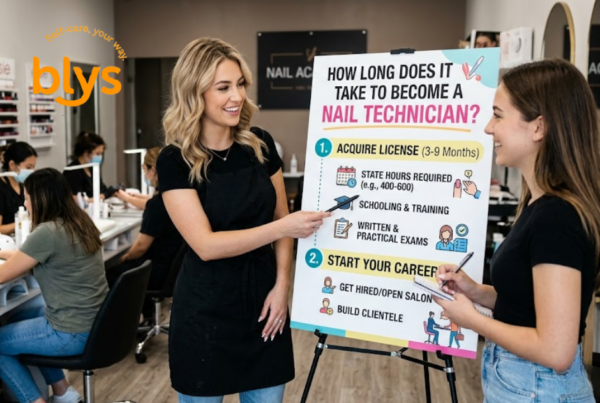
How Long Does It Take to Become a Nail Technician?
The time it takes to become a nail technician in Australia can vary depending on the course provider, your study schedule, and how quickly you complete your practical training. For most students, the process is fairly manageable, but it still takes time to build both the technical skills and confidence needed to work with real clients.
While the qualification itself can often be completed within a year, becoming fully comfortable in the role usually continues beyond the classroom.
Typical course length
The Certificate III in Nail Technology usually takes between six months and one year to complete. This is the most common training pathway for people entering the industry. Full-time students may finish sooner, while part-time students often take longer so they can balance study with work, family, or other commitments.
The course length can also depend on how often practical classes are scheduled and how quickly required assessments are completed.
Different study formats
Training providers offer different delivery formats, which can affect how long the course takes. Some private colleges run accelerated programmes that can be completed in as little as three to four months through intensive study. These can suit students who want to qualify quickly and can commit to a heavier schedule.
TAFE programmes often run over a longer period, but they may offer more structured learning and more supervised practical hours, which can be valuable when you are still building your technique.
What happens after you qualify
Completing your qualification does not mean you instantly feel confident with every service. Most new nail technicians still need time to improve their speed, consistency, and client handling, especially for treatments like acrylic sets, gel extensions, and detailed nail art. These are hands-on skills that improve with regular practice.
Many graduates begin by working in a salon, where they can gain experience with real clients, before moving into self-employment, mobile work, or specialist services.
Understanding the job beyond training
It is also important to look beyond the course itself and think about what the job involves day to day. If you plan to offer mobile nail services, you will need to think about travel, equipment, client expectations, appointment timing, and the physical side of the work.
Knowing this early can help you decide whether the role is the right fit for you. For a clearer picture of what the job looks like in practice, read this nail technician career guide.
Do You Need Insurance as a Nail Technician?
Formal qualifications are only part of the picture. Insurance matters too, especially when you work directly with clients, tools, and chemical products. Public liability and professional indemnity cover are commonly treated as key protections for beauty and nail professionals because claims can arise from accidents, treatment issues, or advice given during a service.
This also applies if you work as a mobile nail technician rather than from a salon. Mobile work still carries the same treatment risks, which is why insurers offer cover for salon, home-based, and on-the-go beauty businesses. A recognised qualification can also help support your professional standing when applying for work or insurance.
For the broader health and safety side, Victoria’s Department of Health says beauty therapy procedures, including manicures, pedicures, and artificial nails, can transmit infection and must follow infection prevention and control procedures. That makes training important not just for skill, but for safe and compliant practice as well
Conclusion
Getting qualified as a nail technician in Australia isn’t just a formality it’s what lets you work legally, get insured, and build a career that clients and employers will trust. The Certificate III in Nail Technology is the recognised starting point, and from there, ongoing training and specialisation can take your career wherever you want it to go.
If you’re ready to explore what a career in mobile nail services looks like in practice, take a look at what nail technicians do on the job or browse Blys nail services to see the kind of work our technicians do every day.