 Employee wellness is a genuine business priority for Australian employers and the cost of getting it wrong is significant. Safe Work Australia estimates work-related mental health conditions alone cost businesses over $543 million in workers’ compensation each year, before you even factor in musculoskeletal complaints, burnout, and lost productivity.
Most wellness programmes, though, share a quiet flaw: they’re built around a fixed location. They assume your staff are office-based, near a clinic, and available during predictable hours. For shift workers, remote and regional employees, aged care staff, FIFO workers, and distributed teams, that assumption doesn’t hold and they miss out because of it.
This post breaks down why the delivery model is the real problem, how at-home wellness closes the gap, and how organisations across healthcare, resources, and remote-first industries are making it work.
Why Does Your Employee Wellness Programme Miss So Much Of Your Workforce?
The standard model of workplace wellness was designed for a fairly predictable employee: office-based, weekday hours, able to duck out at lunch or stop by an on-site chair massage on a Friday afternoon. That model has always excluded a substantial portion of the Australian workforce and the diversity of Australian working patterns makes the exclusion particularly acute.
According to the Australian Bureau of Statistics, around 1.4 million Australians regularly work shift-based hours, spanning healthcare, mining, logistics, aged care, hospitality, and emergency services. A significant further proportion are remote or hybrid workers, and Australia’s geography creates access challenges that simply don’t exist in more densely populated countries.
The distance between where your employees live and where a clinic or wellness facility is located can be measured in hundreds of kilometres, not city blocks.
For these workers, the standard benefits menu falls short in obvious and consistent ways:
- A lunchtime yoga class at the Sydney CBD office is irrelevant to a registered nurse finishing a night shift in Townsville.
- A corporate physio partnership with weekday-only hours doesn’t serve anyone on a rotating twelve-hour roster.
- A gym subsidy is meaningless to a FIFO worker who spends three weeks at a mine site followed by one week at home.
- An on-site wellness programme simply doesn’t reach employees who are never in the building.
There’s a deeper issue too. When a benefit requires meaningful effort to access travel time, booking logistics, the overhead of getting there and back uptake drops sharply. Research published on PubMed has found that perceived inconvenience is consistently one of the top reasons employees cite for not participating in workplace wellness initiatives. The benefit exists on paper; in practice, it mostly reaches the people who were already positioned to use it easily.
The result is predictable: organisations invest in employee wellness that disproportionately serves office-based, city-based, standard-hours staff while the people carrying the heaviest physical and emotional loads go largely unsupported.
How Does At-Home Delivery Change What’s Possible For Your Team?
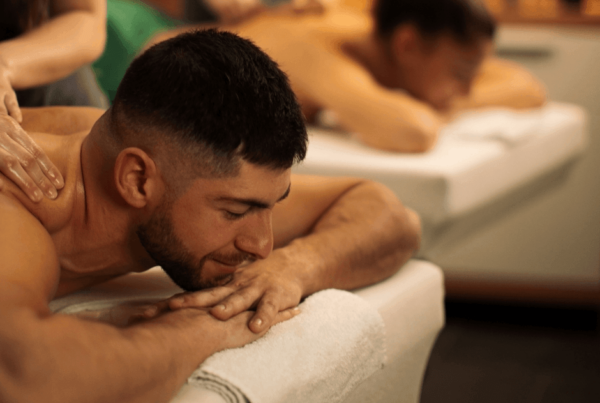
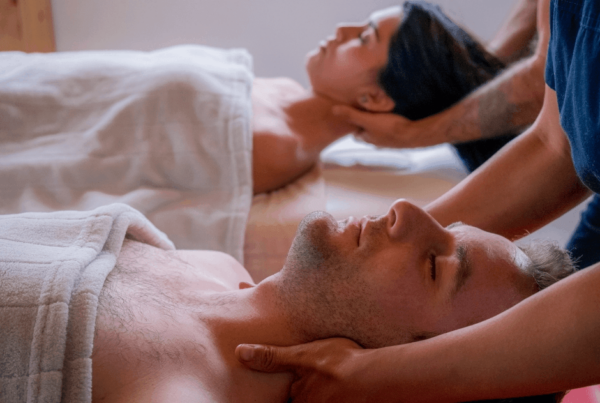
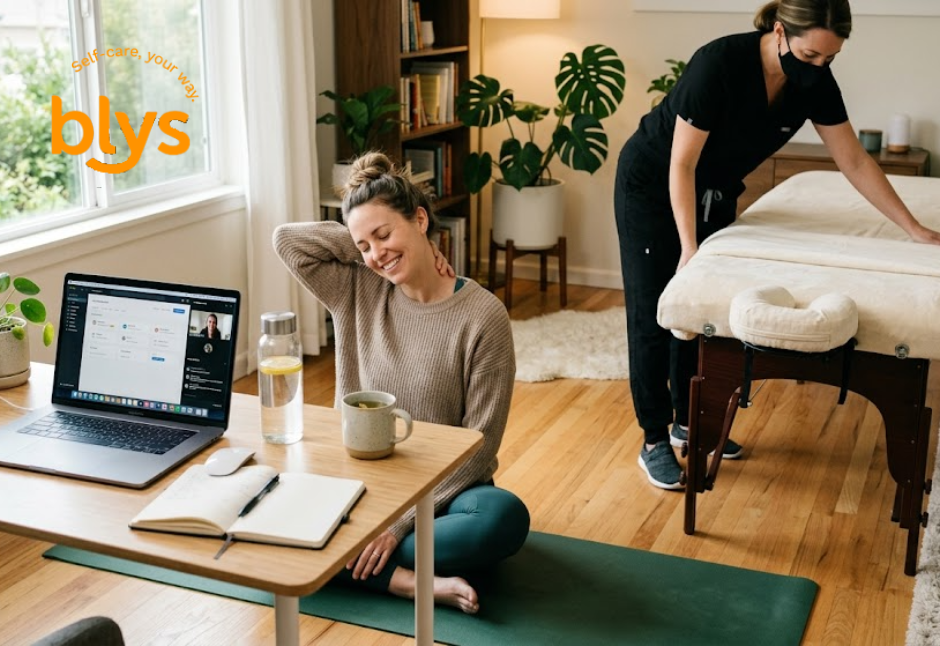
The logic behind Blys is straightforward: instead of asking your employees to travel to wellness, wellness comes to them. Through the platform, organisations can give staff access to vetted, insured, professional providers massage therapists, physiotherapists, and sports recovery specialists who travel directly to an employee’s home or chosen location at a time that works for them.
That single shift in delivery model removes the three barriers that most consistently undermine wellness programme participation.
No Commute, No Clinic, No Barrier
For a shift worker finishing at 7am, a remote employee in regional Queensland, or an aged care worker who’s been on their feet for ten hours straight, the idea of travelling somewhere for a wellness appointment afterwards is rarely realistic. The intention might be there; the practicalities usually aren’t.
When a trusted, professional provider comes to them instead, the barrier disappears entirely. An at-home session can happen after a late shift ends, on a rostered day off, or on a weekend morning fitting around the employee’s actual life rather than requiring them to reorganise their day around a clinic’s availability. Providers you book through Blys bring everything they need, so there’s nothing to set up on the employee’s end and no travel cost to absorb.
Flexibility That Works Around Rosters, Not Business Hours
Shift-based employees can’t always commit to a standing weekly appointment. Rosters change, overtime disrupts plans, and the concept of a reliably free weekday slot doesn’t apply in the same way it does for desk-based workers.
Blys operates across a wide range of times, including evenings and weekends, with on-demand booking through the platform. Staff schedule sessions when their particular pattern allows, rather than competing for a clinic’s limited appointment slots.
For healthcare organisations trying to support employee wellness across rolling rosters and unpredictable hours, this flexibility is one of the most meaningful parts of the model and it’s a core reason why wellness programmes built for healthcare and shift-based workforces increasingly centre on at-home delivery.
Which Teams Get The Most Out Of At-Home Employee Wellness?
Not every workforce looks the same and the teams that gain the most from at-home delivery tend to be the ones conventional wellness programmes consistently underserve. Here’s where the difference is felt most.
Healthcare, Aged Care And Emergency Services Workers
Healthcare and aged care workers carry some of the highest rates of work-related musculoskeletal disorders of any occupational group in Australia. Patient handling, prolonged standing, repetitive clinical tasks, and irregular sleep layered on top of the emotional intensity of care work create a cumulative physical load that standard wellness programmes are poorly equipped to address.
The gap is particularly sharp in aged care, where staff shortages, heavy workloads, and demanding rosters have made workforce retention a sector-wide crisis. A wellness benefit that actually reaches frontline care staff wherever they are, whenever they finish their shift is a meaningful signal that their wellbeing has been taken seriously, not just listed in a handbook.
At-home delivery changes the access equation entirely. A nurse finishing a night rotation doesn’t need to travel anywhere. A paramedic on a variable roster can book a recovery session on their own timeline. For hospitals, aged care providers, and private healthcare employers across Australia, giving staff access to expert, trusted providers through Blys means the employee wellness benefit reaches every member of the team regardless of what time they clock off or where they live.
Remote, Regional And FIFO Workforces
Australia’s geography creates a wellness access challenge that is genuinely unique by global standards. Employees in regional and remote communities, and particularly FIFO workers in the mining and resources sector, are almost entirely outside the reach of conventional corporate wellness infrastructure. A gym network, a corporate physio partnership, or an on-site wellness day simply cannot serve a workforce that is split between a mine site in the Pilbara and a home suburb in Perth.
This is where at-home delivery has a distinct and underappreciated advantage. When a FIFO worker returns home after three weeks on site, they can book a recovery session that arrives at their door no travel, no clinic, no planning required. The benefit follows the employee rather than waiting for the employee to come to it. For organisations in the resources sector, this is one of the clearest examples of a wellness benefit that reflects the reality of how their people actually work.
For regional employees more broadly, the at-home model removes the geographic penalty that most wellness programmes quietly impose. An employee in Ballarat or Cairns has the same access as one in Melbourne or Brisbane.
Logistics, Retail, And Frontline Workforces
Warehouse workers, transport drivers, and retail staff carry significant physical loads in demanding roles that are rarely associated with comprehensive wellness infrastructure. On-site facilities don’t exist. Clinic networks are concentrated in metropolitan areas. And the irregular hours of these industries mean that even well-funded wellness programmes rarely find genuine traction with the staff they’re supposed to serve.
The at-home model works in these environments specifically because it requires nothing from the employer in terms of physical space or on-site provision. Staff receive access to the Blys platform, book vetted, insured providers independently when they need them, and the investment flows directly to the employee no facility overhead, no minimum group size, no geographic restriction on who can participate.
How Do You Set Up At-Home Wellness As A Staff Benefit?
Getting at-home wellness up and running through Blys is designed to be low-friction for HR and people teams. The right structure depends on your organisation’s size, how your benefits budget is managed, and how much autonomy you want to give employees. The most common approaches are outlined below.
| Implementation Option | How It Works | Best For | Typical Outcome |
| Wellness Credits / Vouchers | Employer purchases Blys credits; staff redeem via the platform for any available service at a time that suits them | Teams wanting flexible, employee-directed usage | High uptake; predictable per-head spend; strong employee satisfaction |
| Flexible Benefits Integration | Blys sits within an existing monthly or quarterly wellness allowance as an eligible spend category | Organisations already running a flex-perks model | Easy rollout; integrates with existing benefits infrastructure |
| Group / Team Sessions | Vetted providers attend a shared location for a team day, company event, or regular wellbeing session | Hybrid or co-located teams that come together periodically | Shared experience; visible investment in team wellbeing |
| Recognition Credits | Credits issued as part of milestone acknowledgment, performance recognition, or team appreciation | Acknowledging effort during demanding periods or project completions | Personal, practical, and genuinely valued by recipients |
The setup process begins with a conversation with the Blys corporate team, who help identify the right structure for your organisation, handle provider logistics, and build the internal communication that drives staff awareness and uptake. There’s no complex system integration required the platform manages provider matching, scheduling, and payment centrally.
To see what’s available for Australian organisations from individual employee vouchers through to ongoing team programmes the Blys corporate wellness page is the right starting point. For a broader look at employee appreciation and wellness ideas that work for distributed and remote teams, the key filter is always the same: does this benefit require physical proximity to work?
Build An Employee Wellness Benefit That Reaches Your Whole Team
Employee wellness investment delivers returns when your people can genuinely access it. That sounds obvious but the number of Australian organisations spending on programmes that only work for a fraction of their workforce suggests the lesson is still being learned.
At-home delivery isn’t a tweak to the existing model. It’s a fundamental shift in who your employee wellness benefit can actually reach. For any organisation with shift workers, FIFO employees, regional or remote staff, or a distributed team spread across the country, the traditional clinic-based model was always going to leave people out not through poor intent, but because it was never designed for them in the first place.
When vetted, professional providers come to your employees wherever they are in Australia, whenever their schedule allows the access barriers that quietly undermine most wellness programmes stop applying. If your current programme isn’t reaching your whole team, the answer is probably in the delivery, not the design.