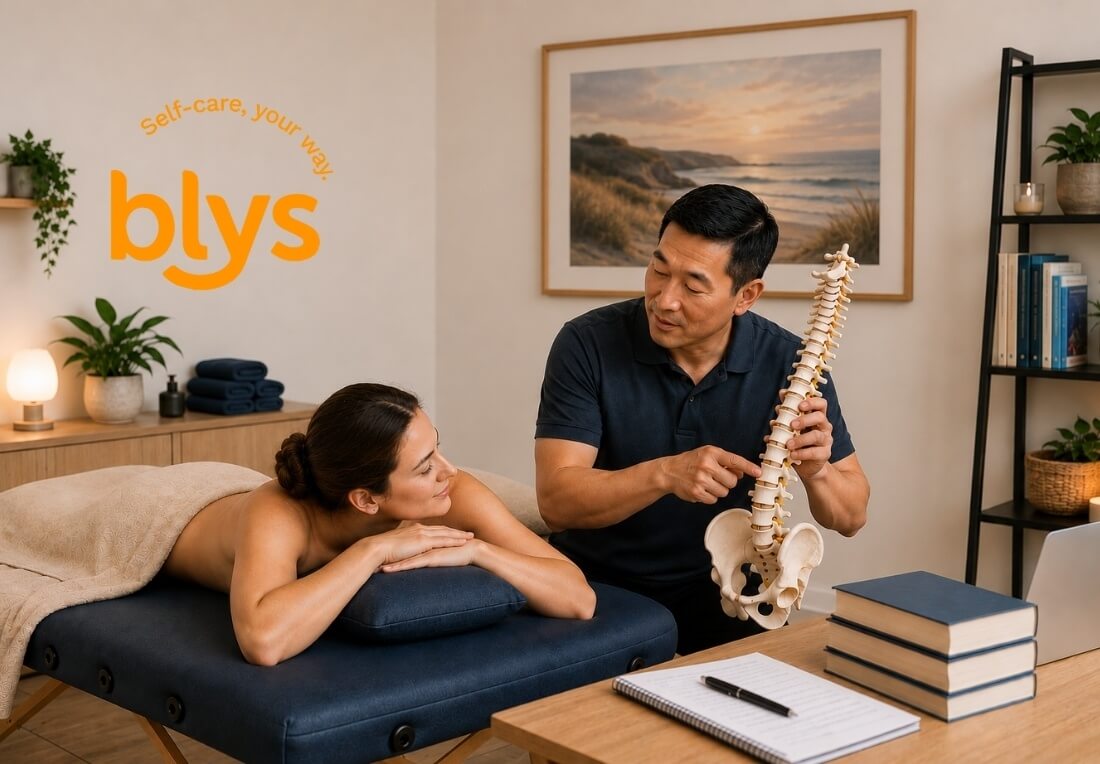
Remedial massage therapy is one of the more clinically grounded careers in the Australian allied health space. It sits between general massage therapy and more regulated professions like physiotherapy, and it attracts people who want to do meaningful physical work, run their own practice, and build something sustainable over time. This guide covers what the role actually involves, what you need to get registered, and how mobile remedial massage work compares to clinic-based practice.
What a Remedial Massage Therapist Does
A remedial massage therapist assesses and treats musculoskeletal conditions using manual therapy techniques. The work is more targeted than general relaxation massage. It involves identifying the source of a client’s pain or dysfunction, applying appropriate techniques to address it, and tracking progress across sessions.
Day to day, that might look like treating a client with chronic lower back pain, working through postural issues caused by prolonged desk work, supporting someone recovering from a soft tissue injury, or helping an athlete manage the physical demands of training. The techniques used include deep tissue work, trigger point therapy, myofascial release, joint mobilisation, and muscle energy techniques, among others.
A remedial massage therapist also takes client histories, carries out postural and movement assessments, and documents treatment notes. This is what separates remedial practice from general massage work. The clinical assessment component is central to what makes the role distinct.
Registration Requirements for Remedial Massage Therapists in Australia
Massage therapy is not nationally regulated in Australia. There is no single government body that licenses massage therapists the way medicine or physiotherapy is regulated. Instead, the profession is governed by industry associations that set standards for membership, insurance eligibility, and private health fund recognition.
The main associations for remedial massage therapists in Australia are:
- Massage and Myotherapy Australia (MMA): the largest body specifically for remedial massage and myotherapy, formerly known as the Australian Association of Massage Therapists (AAMT). Membership requires a Diploma of Remedial Massage as a minimum.
- Australian Traditional Medicine Society (ATMS): one of the largest natural therapies associations in Australia, accepting remedial massage therapists who meet their qualification requirements.
- Association of Massage Therapists (AMT): accepts members holding a Certificate IV in Massage Therapy or a Diploma of Remedial Massage.
Membership with a recognised association is important for two reasons. First, it is typically required to obtain professional indemnity insurance. Second, private health funds in Australia only provide rebates for remedial massage when the treating therapist is a registered member of a recognised association. Without this, clients cannot claim back the cost of their sessions, which affects your ability to attract and retain clients.
For Bupa recognition specifically, therapists must hold a Diploma of Remedial Massage from an Australian Registered Training Organisation (RTO). The Australian Regional Health Group (ARHG) accreditation is required for recognition by Doctors Health Fund.
Qualifications and Training for Remedial Massage in Australia
The minimum qualification most employers and private health funds recognise is a Certificate IV in Massage Therapy (HLT42015). This is the entry point for general massage work.
For remedial massage specifically, a Diploma of Remedial Massage (HLT52015 or HLT52021) is the standard requirement. The Diploma covers clinical assessment, treatment planning, and a broader range of therapeutic techniques than the Certificate IV. It is the qualification required for membership with MMA and for private health fund recognition with most major funds including Bupa and Medibank.
Diploma programs are offered through registered training organisations (RTOs) across Australia and typically take one to two years to complete depending on study mode. Some providers offer accelerated pathways for students with prior experience or related qualifications.
After completing a Diploma, most therapists continue building skills through continuing professional development (CPD), which is also a requirement for maintaining association membership. MMA, ATMS, and AMT all require members to complete a minimum number of CPD hours annually.
How Mobile Remedial Massage Work Differs from Clinic Practice
Most remedial massage therapists start in a clinic or spa setting. The income is predictable, the clients come to you, and the administrative side is handled by someone else. The tradeoff is that you work to someone else’s schedule, take home a percentage of the session fee rather than the full amount, and have limited control over how you build your practice.
Mobile remedial massage works differently. You travel to the client, which means you carry your own equipment, manage your own schedule, and run your practice as a business. The earning potential is higher because you keep a significantly larger share of each session fee. The variability is also higher, particularly in the early stages when you are still building a client base.
The clinical work itself is largely the same. A remedial assessment and treatment delivered at a client’s home uses the same techniques as one delivered in a clinic. The main practical differences are the assessment environment, which requires some adaptation, and the equipment you carry, which needs to cover everything a clinic would otherwise provide.
For therapists who value flexibility and want to build something of their own, mobile practice is worth serious consideration. The overhead is lower than running a fixed premises, the working hours are more flexible, and the relationship with clients tends to be more direct.
How Blys Connects Remedial Therapists with Clients
Blys connects independent remedial massage therapists with clients looking for in-home remedial massage. Therapists on the platform set their own availability, accept bookings that suit their schedule, and keep a significant portion of each session fee.
Getting started is easy. Sign up on the Blys provider page, enter your personal details, location, service area radius, and the services you offer. Add your professional experience and qualifications, and once your credentials are verified, you can start accepting bookings in your area.
Blys handles booking, scheduling, payment, and customer support, which frees you up to focus on the sessions themselves and growing your practice. Therapists on the platform have access to demand across most major Australian cities, with bookings available 7 days a week from 6 am to midnight.
The platform also provides additional third-party liability coverage for all bookings made and paid through Blys, on top of the insurance each therapist holds individually.