On a wedding morning, the getting-ready room is either one of the best memories of the day or a logistical disaster that sets the tone for everything that follows. The difference is usually planning, specifically, who’s doing the hair and makeup, how many people need to be ready by what time, and whether the wedding hair and makeup at home option makes more sense than a salon trip for your situation.
Mobile bridal beauty is the norm for most Australian weddings now, and the reason is less about luxury and more about maths. Getting eight people to a salon and back, with hair and makeup done, before the ceremony, while someone is also getting into a dress, is a scheduling problem that mobile beauty solves by removing the travel variable entirely.
Here’s how to plan your wedding day glam, from timeline to provider selection, when bridal beauty mobile services are handling the day. If you’re also planning a spa party at home as part of the pre-wedding celebrations, the same single-booking logic applies there too.
Why Mobile Bridal Beauty Makes Sense on a Wedding Day
The Travel Problem
A salon appointment for eight people takes eight appointment slots, usually spread across two or three stylists, in a location that isn’t where the bride is getting dressed, near transport, and accessible in morning traffic on a day when everyone is running slightly behind schedule. Mobile beauty removes the travel problem in both directions, the artists come to you, set up in your space, and leave when they’re done.
For anyone getting married at home, at a venue with getting-ready rooms, or at a hotel, mobile beauty is the cleaner option in almost every case. The getting-ready room becomes the salon, which means the bride and bridal party stay in the same space from start to finish rather than getting in and out of cars between appointments.
The Environment Matters
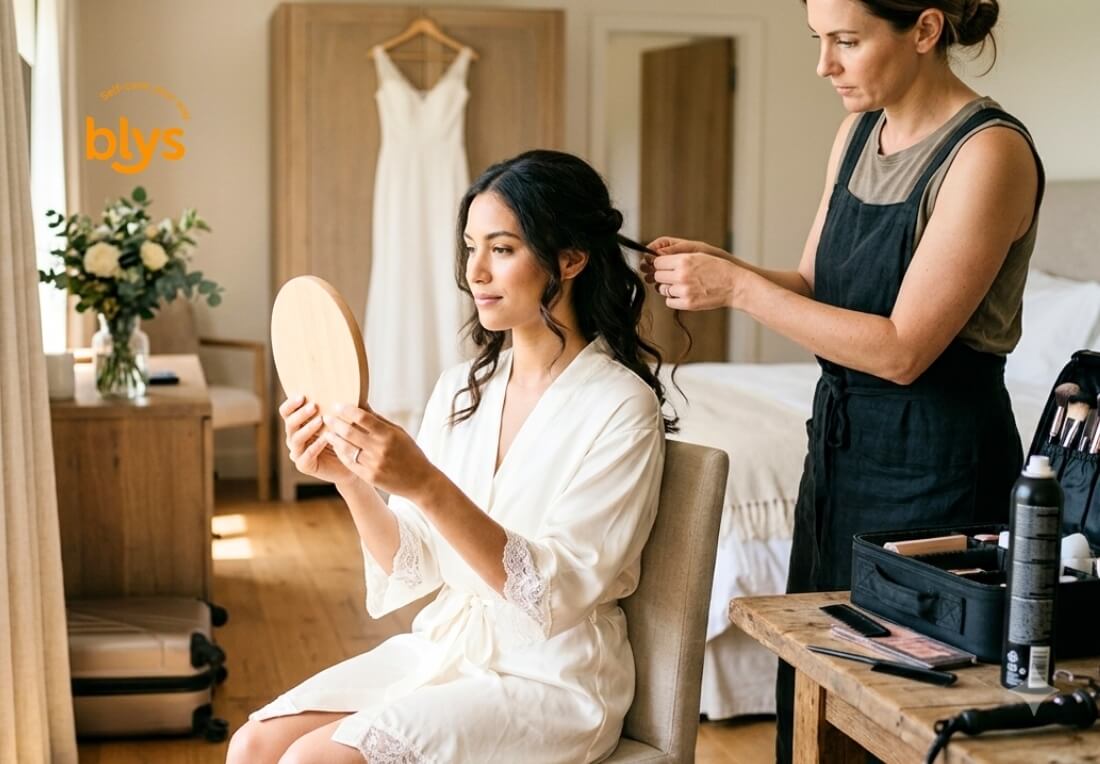
Most brides don’t realise until it’s too late that the getting-ready photos, the champagne, the nervous laughter, and the moment someone cries while helping with the veil all happen in the same room where the hair and makeup is being done. A mobile setup means that room is wherever you choose it to be, a hotel suite, a family home, the bridal suite at the venue, rather than a salon that wasn’t designed for wedding morning memories.
Everything Stays in One Place
When the hair and makeup artist comes to you, the bride doesn’t have to transport a finished updo across the city in a car. Touch-up kits stay on site. If something needs adjusting before the ceremony, the artist is already there. This sounds like a minor convenience and becomes a major one at approximately 8:45am when someone’s hair pin has come loose and there are forty minutes until the ceremony.
Timeline Planning for a Wedding Morning
This is the part that most couples underestimate. Hair and makeup takes longer than people expect, and the number of people being done multiplies that time in ways that aren’t always obvious when you first start planning.
How Long Each Service Takes
A bridal hair and makeup session typically runs 60 to 90 minutes for the bride, longer if the look is complex or involves extensions. Bridesmaids, mothers, and other members of the wedding party typically run 45 to 60 minutes each. These are averages, and your specific artists will give you their actual timings at the trial.
The key number is this: one artist, working alone, can do approximately one person per hour. Two artists working simultaneously can do two people per hour. For a wedding party of six, that’s three hours minimum with two artists, and that’s assuming no delays, no late arrivals, and no one needing touch-ups.
Working Backwards From the Ceremony
Start with the ceremony time. Subtract the travel time to the venue. Subtract 30 minutes for getting dressed, photographs, and inevitable last-minute moments. That’s when the last person needs to be finished. Work backwards from there to figure out when the first person needs to sit down.
For a midday ceremony with 45 minutes of travel time and a six-person bridal party, the maths usually puts the first appointment at 6:30 to 7:00am. That’s earlier than most people initially plan for and later than most weddings actually start.
Who Gets Done When
The bride goes last. This is the near-universal rule for good reason, the bride’s look needs to be freshest for the ceremony and photographs, and going last means any timing delays in the morning don’t accumulate into a crisis before the most important appointment. If the bride goes first, a 20-minute delay at any point in the morning becomes the bride’s problem.
The order for everyone else is generally: mothers first (as they typically need to leave to greet guests earlier), then bridesmaids in reverse order of how long their looks take, saving the simplest look for second-to-last so the bride has the clearest run to the chair.
What to Ask Your Provider
Trial First, Always
A trial appointment before the wedding is not optional, it’s the appointment where the actual decisions get made. This applies to mobile bridal hair and makeup just as much as a salon appointment. The wedding-day appointment is not the time to discover that the updo doesn’t hold in your hair texture, that the foundation oxidises on your skin, or that the look you had in mind doesn’t translate to how your features actually sit. A trial fixes all of this in advance.
Book the trial at the same time of day as the wedding morning appointment where possible, and use the same products on your skin that you’ll use on the day. Photograph the result in natural light. Then sleep on it, literally, and see how the look settles.
Experience With Bridal Work Specifically
Bridal hair and makeup is a different skill set from editorial or event work. The look needs to last eight to twelve hours, photograph well in different lighting conditions, and hold through heat, humidity, sweat, and the occasional emotional moment. Ask for a portfolio of specifically bridal work, not just beauty work generally.
Timing and Party Size
Be clear upfront about the full number of people requiring services, including anyone who might be “thinking about it.” An artist who quotes for six and arrives to find eight has a scheduling problem that becomes your scheduling problem. Confirm the headcount at the time of booking and again at the trial.
Most mobile hair and makeup artists work with a partner or as part of a team for larger bridal parties. For groups of more than four, ask how they handle the timing, whether they bring an additional artist, how they’ve managed similar-sized parties, and whether the timeline they quote is based on solo work or a team.
What’s Included and What Isn’t
Confirm what the quote covers: travel, trials, touch-up kits for the day, and whether the artist stays for ceremony touch-ups or leaves after the final look is complete. Some artists offer a half-day rate that keeps them on site through the ceremony and photographs. For brides who want the security of having their artist available for the full morning, this is worth asking about.
Booking for a Full Bridal Party
Get a Single Point of Coordination
For a party of more than four, having a single coordinator, usually the bride or maid of honour, managing the booking, the timeline, and the communication with the artists removes a layer of confusion that multiplies quickly in a group. One person confirms the headcount, one person manages the schedule, and one person handles the payments. Everyone else shows up when they’re told to.
Book Early
Bridal hair and makeup artists book out. A popular artist in your city can have Saturday bookings closed twelve to eighteen months in advance, especially during peak season from October through March in Australia. If you have a specific date and a specific artist in mind, booking as soon as you have both pieces of information is the right move.
Have a Backup Plan
For large parties, asking your primary artist whether they have a colleague they work with and trust is worth doing at the booking stage. If someone cancels close to the date, having a name to call rather than starting the search from scratch on short notice matters more than most couples expect.
For the full pre-wedding beauty prep countdown, the summer wedding beauty timeline covers what to book and when in the weeks before the wedding.
Blys connects Australian brides with qualified bridal hair and makeup artists who come to you on the day, covering the trial, the day-of appointment, and any bridesmaids or party members in a single booking. The booking platform handles coordination so you’re not managing multiple separate artists on the morning itself.
Book bridal hair and makeup at home through Blys, available 7 days a week across Australia.