A morning tea and a certificate is a nice gesture, right up until Monday, when the roster’s still short two staff and everyone’s back to running on fumes. Aged Care Employee Day, marked every year on 7 August, exists for a good reason, and the people it’s recognising properly deserve the acknowledgement. But one day of thank-yous doesn’t undo the other three hundred and sixty-four spent carrying one of the most physically and emotionally demanding jobs in the workforce. If your facility is planning something for the day itself, here’s how to make sure it’s actually followed by something that lasts.
Why Aged Care Employee Day Exists (and Why One Day Isn’t Enough)
Aged Care Employee Day was established by aged care provider Whiddon in 2018 and made a national event by Leading Age Services Australia, now Ageing Australia, in 2019, to formally acknowledge a workforce that’s historically been undervalued relative to the demands of the job. Staff notice when an organisation marks the day sincerely, and they notice just as clearly when it’s the only wellbeing gesture that shows up all year.
A card, a certificate, or a group photo acknowledges the work, but none of it changes the workload underneath it, which is the actual source of the burnout being recognised in the first place. Recognition and relief are both needed, and a facility that only offers one of them is solving half the problem at best. Staff can’t feel a policy document, but they can absolutely feel twenty minutes of someone working out the knot that’s been living in their shoulder since Tuesday, which is exactly why physical, felt support lands so much harder than a wellness newsletter or a generic webinar nobody has time to watch.
The Real Pressure Aged Care Staff Are Carrying
Understanding what staff are actually dealing with day to day is what separates a wellbeing initiative that lands from one that reads as an afterthought.
Understaffing and Turnover Aren’t New Problems in This Sector
Workforce shortages and high staff turnover have been documented extensively in aged care, including through Australia’s own Royal Commission into Aged Care Quality and Safety, which flagged working conditions and staffing levels as core issues facing the sector.
A 2025 workforce study found burnout remains a leading cause of attrition in the sector, with up to 30% of workers considering leaving their roles within the next 12 months, and Monash University’s workforce wellbeing research found that nearly half of aged care workers who wanted to leave the sector in 2024 cited burnout as the reason. These aren’t new or surprising findings to anyone managing a facility. The harder part is translating that awareness into something staff actually feel day to day.
Physical and Emotional Load That Doesn’t Clock Off
Aged care work combines constant physical strain, lifting, repositioning, being on your feet for entire shifts, with an emotional load that comes from caring for people at some of the most vulnerable points in their lives. That combination doesn’t switch off at the end of a shift the way a desk job’s stress often can, which is part of why burnout in this sector usually builds over months rather than showing up as a single bad week.
Why Burnout Costs More Than a Wellbeing Program Ever Would
Turnover, sick leave, and the cost of constantly recruiting and retraining new staff all cost a facility more, in real dollar terms, than an ongoing wellbeing investment does. A facility known for real, ongoing staff support also has an easier time recruiting in a sector already facing well-documented shortages, since word travels fast among aged care workers about which facilities back up their recognition days with actual support and which ones don’t.
What Actually Helps: Ongoing Wellbeing Support That Shows Up
The initiatives that move the needle on staff wellbeing share one thing in common: they show up consistently, not just around a calendar date, and fit into a shift rather than competing with the rest of someone’s life. An after-hours webinar or a weekend workshop asks staff to find more time on top of an already demanding roster, which is exactly why it usually loses.
Short Sessions That Fit Around Rostered Shifts
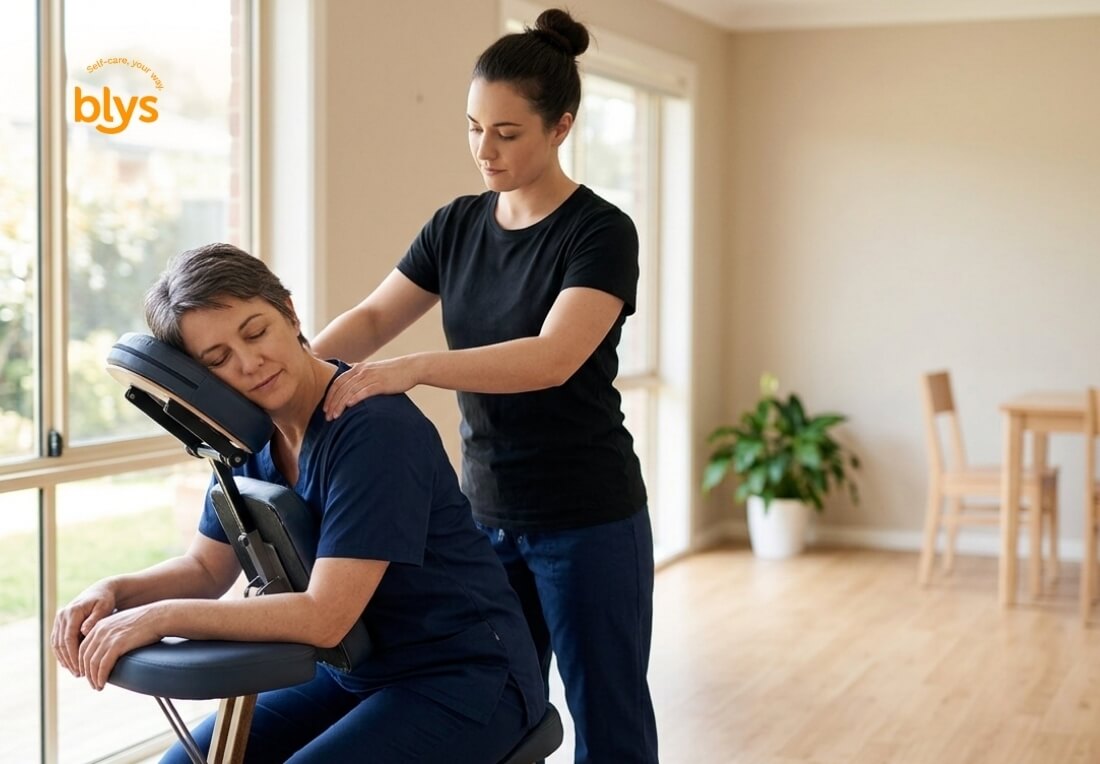
Short sessions, often 15 to 20 minutes, can be scheduled around existing shift schedules without staff needing to leave the building, book their own appointment, or use personal time. Group bookings for the whole team mean an entire shift can be covered in a single scheduled visit, rather than trying to coordinate individual appointments for dozens of staff across different rosters, turning a wellbeing perk from something logistically complicated into something a facility manager can actually set up without a headache.
Massage also targets the exact kind of built-up physical strain aged care work creates, tight shoulders and lower backs from lifting and repositioning, tension from long hours on your feet, rather than being a generic wellness perk borrowed from a desk-based industry.
How to Bring On-Site Massage to Your Facility
Setting this up is simpler than most facility managers expect, and it doesn’t require overhauling an existing wellbeing budget.
Getting Started Through Blys for Business
Corporate massage sessions built around a workplace’s actual schedule, rather than a generic template, are what most facilities start with. Getting a session scheduled starts with a conversation about staff numbers, shift schedules, and how often sessions would run, all of which gets worked out through a quick enquiry with the corporate team.
Building It Into an Ongoing Program, Not a One-Off Day
The facilities that get the most out of this treat it as a recurring line item, monthly or fortnightly sessions, rather than a one-off booked around Aged Care Employee Day and then forgotten until next year. Starting with a single session around the day itself is a reasonable way in, but the actual retention benefit comes from what happens after that first booking.
Aged Care Employee Day is a good moment to say thank you. What happens the rest of the year is what actually tells staff whether that thank-you meant anything.
Enquire About Corporate Wellness for Your Facility →
Frequently Asked Questions
What Is Aged Care Employee Day?
Aged Care Employee Day is an annual day of recognition for the aged care workforce in Australia, marked on 7 August and acknowledging staff who provide direct care and support to older Australians. It’s typically marked with events, thank-you gestures, and awareness campaigns at a facility or organisational level.
How Can Facilities Support Aged Care Worker Wellbeing Beyond a Single Day?
Ongoing support that fits around existing shifts, rather than a one-off gesture tied to a single date, usually has a far bigger impact on how supported staff actually feel. On-site wellbeing initiatives like massage, built into a recurring schedule rather than a single event, are one way to extend recognition into something staff experience regularly.
Does On-Site Massage Help With Aged Care Staff Burnout?
On-site massage addresses the physical strain that builds up from lifting, repositioning, and long shifts on your feet, which is a real contributor to burnout in physically demanding roles like aged care, where a 2026 npj Mental Health Research study found 56% of residential aged care workers report elevated burnout. It’s not a complete fix for structural workforce pressures, but it’s a low-barrier form of relief that staff can access without using personal time.
How Does Corporate Massage Work for Aged Care Facilities?
Corporate massage for aged care facilities typically involves short, scheduled sessions delivered on-site, timed around shift schedules so staff don’t need to leave the building or use personal time. Group bookings allow an entire team or shift to be covered in one visit, making it manageable for facilities with multiple staff and varied rosters.
How Do I Set Up Staff Wellness Massage for My Aged Care Facility?
Getting started usually begins with a conversation about staff numbers, shift schedules, and how often sessions should run, which a corporate enquiry can help work out. From there, sessions can be scheduled as a one-off for a specific occasion or set up as an ongoing, recurring program.
Does Staff Wellbeing Support Affect Recruitment in Aged Care?
Yes, in a sector already facing well-documented workforce shortages, a facility’s reputation for actually supporting staff, not just recognising them once a year, plays into who applies for open roles as much as who chooses to stay. Word travels within the aged care workforce about which facilities follow through on wellbeing support and which only mark the day itself.
Is On-Site Massage a Cost-Effective Staff Retention Strategy?
Turnover and recruitment costs in aged care are real, and ongoing wellbeing support is generally far less expensive than the cost of constantly replacing and retraining staff. Treating on-site massage as part of a retention strategy, rather than a one-off perk, is where most of the value shows up over time.