 If you’re considering a career as a facial therapist or you’re already working in the field and wondering whether your pay is keeping up understanding the realistic facial therapist salary in Australia is a good place to start. The range can be surprisingly wide, and where you land within it depends on your experience, qualifications, location and the way you choose to work.
This post breaks down what you can realistically expect to earn at each stage of your career, from your first role out of training through to an experienced specialist running your own books. We’ll also look at how your employment arrangement, employed versus freelance shifts those numbers significantly and what you can do to push toward the higher end of the scale.
For context, the beauty therapy sector is one of the most accessible and versatile industries to build a career in. Whether you’re drawn to day spas, dermal clinics or mobile therapy, the earning potential is real especially once you start to explore the highest-paying roles in the beauty industry.
What A Facial Therapist Does And Why It Affects Your Salary
Facial therapists focus on skin health through hands-on treatments including cleansing facials, chemical peels, microdermabrasion, LED therapy, dermaplaning and more advanced modalities depending on their training. Unlike general beauty therapists, those who recognise facials as their core speciality tend to invest more in skincare education and that investment usually translates to better pay.
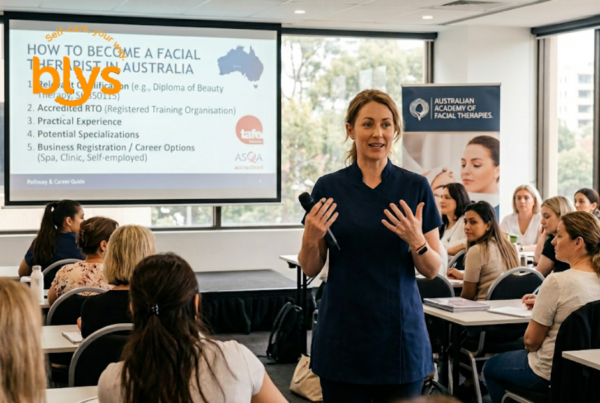
In Australia, the typical starting point is completing a certificate III or IV in beauty therapy. From there, therapists can pursue advanced qualifications in specific modalities, opening doors to higher-value roles in dermal clinics, medi-spas or as self-employed specialists.
The scope of a facial therapist’s work varies considerably across settings. In a day spa, you might deliver a high volume of express and relaxation facials. In a clinical or dermal setting, you’re likely working with clients on concerns like acne, hyperpigmentation or premature ageing which demands deeper knowledge and typically commands higher pay. A is a useful resource for understanding professional standards and qualifications in Australia.
Facial Therapist Salary In Australia By Career Stage
Salary ranges for facial therapists in Australia vary meaningfully depending on your experience level. Here’s a realistic breakdown of what to expect at each stage.
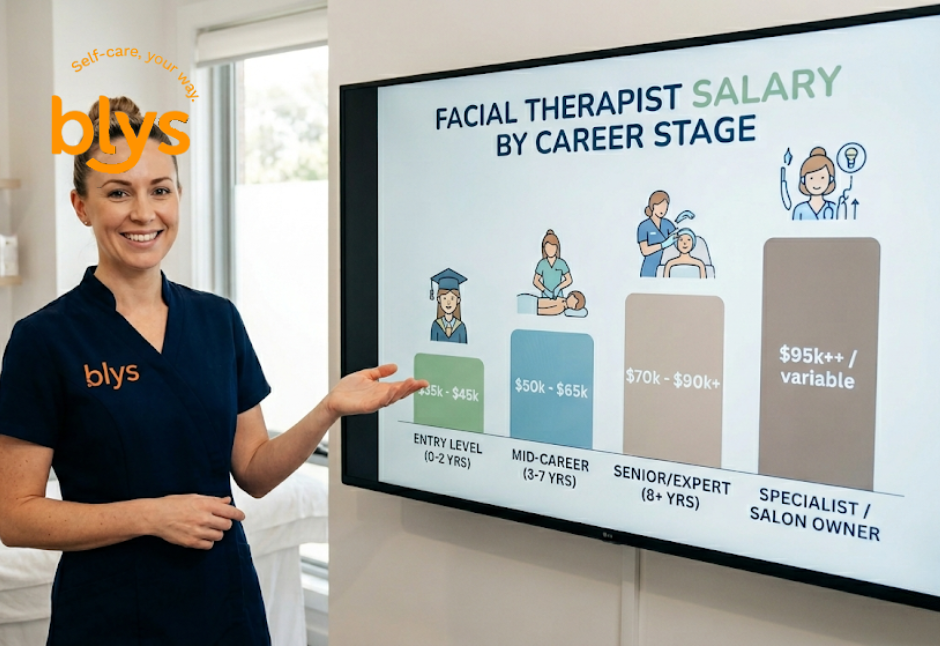
Entry Level: 0–2 Years
If you’ve recently completed your training, you can expect to earn in the range of $45,000–$55,000 per year in a salaried role, or roughly $22–$27 per hour. At this stage, most roles involve working under supervision in a spa, salon or beauty clinic while you build your treatment confidence and client-handling skills.
Pay at this level can feel modest, but the foundation you’re building is what determines how quickly you move up. Therapists who invest in additional training early and build strong client relationships often progress to mid-level income faster than those who stay in a single role without upskilling.
Mid-Level: 3–6 Years
With a few years of experience and a solid client base, you can expect to earn $55,000–$70,000 per year, or around $27–$34 per hour in a salaried role. At this stage, many therapists begin specialising in particular facial modalities or moving into senior positions within a salon or spa.
This is also the career stage where a lot of therapists explore the shift to freelance work — either part-time alongside an employed role or fully self-employed. Handled well, that shift can represent a meaningful jump in income.
Senior And Specialist Level
Experienced facial therapists with advanced qualifications or a strong specialist reputation can earn $70,000–$90,000 per year, or $34–$43 per hour. At this level, you might be working as a lead therapist, clinic manager or an independent specialist with a loyal client base.
In cities like Sydney and Melbourne, demand for high-end facial services continues to grow, which means trained specialists often command premium rates. Therapists holding qualifications in advanced treatments such as microneedling, clinical-grade peels or collagen induction therapy are typically in a category of their own when it comes to earning potential.
Employed Versus Freelance: How Your Working Arrangement Affects Income
One of the biggest variables in a facial therapist’s income is whether they work as an employee or run their own freelance practice. Both paths have genuine advantages the right choice depends on your lifestyle, risk tolerance and business skills.
As an employee, you get the security of a regular wage, paid leave, and the support of an established workplace. For therapists newer to the industry or those who prefer structure, this is often the right place to start.
As a freelancer, you set your own rates typically $80–$150 per hour for facial treatments in Australia and keep the majority of what you earn. With 15–20 bookings per week, your gross income can sit in the $60,000–$100,000 range, though you’ll need to account for self-employment taxes, professional insurance, products and any platform or booking fees.
Blys connects facial therapists with clients across Australia for mobile appointments. If you’re building a freelance client base, platforms like Blys can help you fill your calendar consistently while you grow your reputation. For more on building a sustainable client base from scratch, our guide on how to become a beauty therapist and get clients covers the practical steps in detail.
How Specialising In Facials Can Boost Your Earning Potential
Not all facials are priced equally. A standard relaxation facial sits at the lower end of the market, while an advanced treatment using high-end technology or clinical-grade products can command two to three times the rate and clients willingly pay it when the therapist clearly demonstrates expertise.
The most in-demand specialist facial skills in Australia right now include:
- Advanced chemical peels and enzyme treatments
- LED light therapy and photobiomodulation
- Microdermabrasion and dermaplaning
- Microneedling and collagen induction therapy
- Results-driven skincare programmes for specific skin concerns
Investing in post-certificate courses or manufacturer training in these areas is one of the most direct routes to the higher salary brackets. There is a growing body of evidence supporting the clinical effectiveness of several of these modalities research published on PubMed is a good starting point if you want to review the research behind specific facial techniques.
Other Factors That Influence What You Earn
Beyond experience and specialisations, several other factors shape where a facial therapist’s income lands in Australia.
Location plays a significant role. Therapists working in major urban centres like Sydney, Melbourne, Brisbane and Perth tend to earn more than those in regional areas, largely because clients in cities are accustomed to paying higher prices for premium services and the cost of living reflects that, too.
The type of venue matters as well. A clinical or medi-spa setting generally pays more than a traditional beauty salon, reflecting the higher level of technical knowledge required and the premium positioning of the services offered.
Your client retention rate has a direct impact on income particularly if you’re freelance or working on commission. Therapists who are consistent, results-focused and genuinely invested in their clients’ skin health naturally attract repeat bookings and referrals, which compounds over time in ways that a simple hourly rate can’t capture.
Finally, how you present your professional brand your online presence, your consultation style, your follow-up process all contribute to your perceived value in the market. Therapists who treat their career like a business, rather than just a job, tend to earn at the higher end of the range regardless of their years of experience.
Wrapping Up
A facial therapist salary in Australia isn’t one fixed number it’s a range shaped by your experience, your specialisations, how you work and where you work. The good news is that the industry rewards therapists who invest in their skills and treat their career with intention.
Whether you’re just starting out or you’re a mid-career therapist ready to increase your rates, there are clear pathways to improving your income.
If you’re ready to take the next step, browse facial therapy services on Blys to see how Blys connects therapists with clients who are already looking for what you offer or read our guide on how to become a beauty therapist and get clients to map out your path forward.