 Skin care is one of the fastest-growing corners of the Australian wellness industry and behind every great facial is a therapist who really knows their craft. If you’re thinking about how to become a facial therapist, you’re stepping into a career that blends science, artistry, and genuine client connection. It’s hands-on, flexible, and in serious demand across major cities and regional areas alike.
The appeal is real: facial therapy offers a clear training pathway, multiple career directions, and the kind of work satisfaction that comes from seeing tangible results for your clients. Whether you’re drawn to the science of skin, the meditative nature of facial massage, or the business of building your own client base, this profession has room for all of it.
Whether you’re starting completely fresh or transitioning from another role in the beauty or health sector, this guide walks you through what training is required, which qualifications matter, how professional registration works, and what the career landscape looks like once you’re qualified.
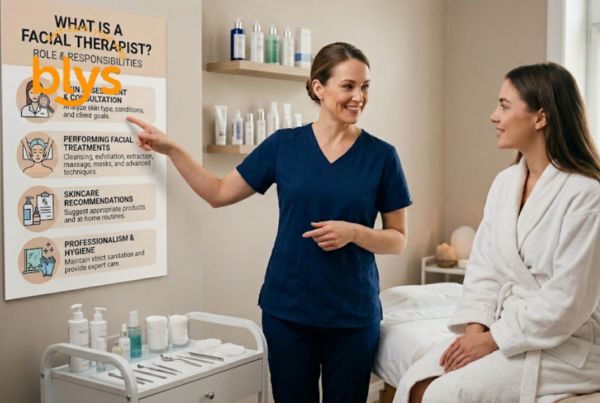
What Is A Facial Therapist?
A facial therapist specialises in skin care treatments for the face. Their core work includes facial cleansing, exfoliation, extractions, masks, targeted serums and moisturisers, and facial massage all tailored to the individual client’s skin type and specific concerns. Unlike a general beauty therapist who may cover a wide range of services from waxing to nail care, a facial therapist focuses specifically on the face and skin health.
A common question that comes up is: can a massage therapist give a facial? Technically yes, if their training includes facial techniques but there’s an important distinction. A dedicated facial therapist is trained specifically in skin analysis, cosmetic ingredient science, contraindication management, and targeted facial protocols. That depth of knowledge is what separates a true skin specialist from someone who simply adds a facial step to a massage menu. Clients who see a facial therapist are investing in that expertise.
Another question that often surfaces is: what facial cream do beauty therapists use? The honest answer is that product choice varies significantly by therapist, clinic, and skin concern but most trained facial therapists work with professional-grade ranges such as Dermalogica, BABOR, Ultraceuticals, Aspect Dr, or O Cosmedics. These brands are formulated with higher concentrations of active ingredients than retail products and are often only available through registered therapists.
Facial therapists can be found working in day spas, beauty clinics, dermatology centres, wellness retreats, hotel spas, and through mobile therapy platforms. Some specialise further in advanced treatments such as LED light therapy, chemical peels, microdermabrasion, dermaplaning, high-frequency facials, or dermal needling all of which require additional training and, in some cases, specific certifications.
Training And Qualifications In Australia
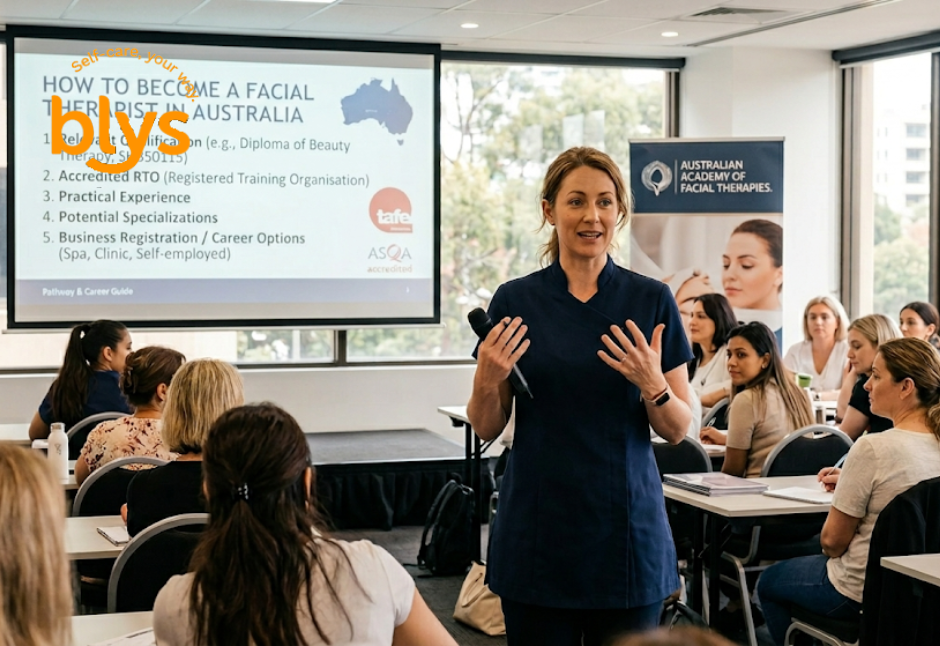
In Australia, facial therapy sits within the broader beauty therapy training framework, regulated through the Australian Skills Quality Authority (ASQA). All registered training organisations (RTOs) that deliver beauty qualifications must meet ASQA’s standards, which gives you a degree of confidence in the quality of programmes on offer. Most facial therapists begin with a nationally recognised qualification and build on it over time.
Certificate III In Beauty Services (SHB30115 Or Current Equivalent)
This is the entry-level qualification for anyone entering the beauty and facial therapy space. It covers the core practical skills needed for facial treatments, skin analysis, waxing, nail care, and basic client consultation. Most employers will expect at least a Certificate III if you’re applying for a role in a salon or spa, even for a junior position.
Full-time, it typically takes six to twelve months to complete, though many providers offer part-time and flexible study options to accommodate those already working in the industry.
Certificate IV In Beauty Therapy (SHB40121 Or Current Equivalent)
This is the standard benchmark qualification for a fully trained beauty or facial therapist in Australia. It builds significantly on the Certificate III, covering advanced skin analysis, facial massage techniques, cosmeceutical knowledge, cosmetic chemistry basics, client consultation skills, and a broader range of facial treatment protocols.
It is a prerequisite for many advanced training courses and is what most senior salon and spa roles will require. Study can typically be completed full-time in twelve to eighteen months, or longer if studied part-time.
Some RTOs offer combined Certificate III and IV pathways, which can be a more efficient route for those committed to the full qualification from the outset. It is worth comparing programmes across providers, as delivery methods, practical hours, and industry placement opportunities can vary considerably.
Advanced Diplomas And Specialist Courses
Once qualified, many facial therapists pursue short courses and specialist certifications in specific modalities. Popular areas include LED light therapy, microdermabrasion, dermaplaning, chemical peels, microneedling, and cosmeceutical treatment protocols. These are typically offered through product houses, industry training providers, or RTOs.
Brands like Dermalogica, BABOR, and O Cosmedics run their own training academies that are well-regarded across the industry and can add real weight to your professional profile. Specialist training not only expands your treatment menu but also allows you to charge at a higher rate for advanced services.
Industry Bodies And Professional Recognition
Joining a professional association is not legally required in Australia, but it adds credibility, keeps you connected to industry developments, and can support access to professional insurance, particularly important for self-employed therapists.
Two of the main organisations for facial and beauty therapists in Australia are:
- ABIC (Australian Beauty Industry Council) the peak industry body representing beauty businesses and professionals across Australia, offering advocacy, education, and industry resources.
- APAN (Aesthetics Practitioners Advisory Network) focuses specifically on skin and aesthetics professionals, with a strong emphasis on education, ethics, and professional development.
Membership with either organisation can support your professional development, provide access to industry events, and signal to clients that you hold yourself to recognised professional standards.
For self-employed therapists, membership often also opens doors to insurance providers who require professional body affiliation as a condition of coverage. It is worth researching both organisations and their specific membership tiers to find the right fit for your career stage.
Skills That Set Great Facial Therapists Apart
Qualifications get you in the door, but the following skills are what build a lasting and rewarding career in facial therapy.
- Skin analysis: accurately reading a client’s skin understanding type, condition, and underlying concerns is the foundation of every effective treatment plan. This takes time and practice to develop, and the best therapists continue refining it throughout their career.
- Manual dexterity: facial massage and extraction work require precise, confident, and consistent touch. This improves significantly with supervised practice and repetition.
- Client communication: the ability to conduct thorough consultations, ask the right questions, and have honest conversations about skin concerns builds trust and drives repeat bookings.
- Product and ingredient knowledge: understanding active ingredients, how they interact with different skin types, and what contraindications to watch for is increasingly expected even at entry level.
- Business acumen: whether employed or self-employed, managing appointments, retailing products thoughtfully, and building genuine client relationships is part of the day-to-day reality of the job.
Therapists who invest in both their technical skills and their client communication tend to build stronger, more loyal client bases. If you’re curious about earning potential and how facial therapy fits into the broader beauty landscape, our guide on the highest-paying jobs in the beauty industry places skin specialisation in context alongside other well-paid career paths.
Career Pathways For Facial Therapists In Australia
Once qualified, the career options are genuinely varied. Most therapists begin in a salon or day spa to build experience and client confidence in a supervised environment. From there, the directions you can take are wide, and the profession offers flexibility that many other industries simply don’t.
Mobile facial therapy is a fast-growing area, and platforms like Blys connect qualified therapists with clients who prefer in-home treatments. This model offers schedule flexibility, direct client relationships, and the ability to build a business that works around your life rather than the other way around. It is particularly popular with therapists who have built a loyal client base and want greater independence from a fixed workplace.
Clinic-based roles in dermatology clinics, cosmetic medicine practices, or medical spas offer another strong pathway, often requiring additional training in clinical skin treatments and a comfort level with more results-driven protocols. These environments tend to attract therapists with a strong interest in the science side of skin care, and they often offer higher earning potential and exposure to advanced technologies.
Corporate and resort-based roles in hotel spas, cruise ships, and wellness retreats provide a different kind of variety, often with accommodation, travel, and competitive packages. These roles suit therapists who are adaptable, personable, and enjoy working in high-volume, hospitality-focused settings.
Teaching and training is another long-term direction: working as an educator for a brand, RTO, or industry body once you have several years of solid practical experience behind you. If you’re exploring how the career-building side of this profession works, our guide on how to become a beauty therapist and get clients covers the business side in detail.
What Facial Treatments Look Like In Practice
Understanding what a professional facial actually involves can help you determine whether this career is the right fit. A standard session typically includes a skin analysis and consultation, a double cleanse, exfoliation (manual or enzymatic), extractions where appropriate, a targeted mask, application of serums and moisturisers, and a facial massage. Advanced sessions may also incorporate tools like high-frequency wands, LED panels, microcurrent devices, or ultrasonic technology.
The best facial therapists treat each session as a genuine clinical assessment rather than a fixed routine. That means reading the skin on the day, adapting the treatment to what the client’s skin actually needs at that moment, and explaining what you’re doing and why. This level of personalisation is what keeps clients coming back and what builds a reputation in the industry.
For therapists who want to deepen their understanding of the evidence behind their practice, research published through PubMed/NCBI covers the physiological effects of facial massage on circulation and lymphatic drainage, the skin barrier’s role in treatment outcomes, and the evidence base for many commonly used active ingredients.
Making a habit of reading this kind of material separates technically proficient therapists from those who can genuinely explain and justify their treatment decisions.
Wrapping Up
Becoming a facial therapist in Australia is a structured and achievable goal. The path is clear: begin with a Certificate III or IV in beauty therapy through an ASQA-registered provider, develop your skills in a supported employment environment, join a professional body, and keep investing in specialised training as your interests and client base grow.
The career offers genuine flexibility, consistent demand, and the satisfaction of work that delivers visible results for your clients. If you’re already qualified and looking for a flexible way to grow your practice, exploring how Blys works for therapists is a natural next step a platform built for therapists who want to work on their own terms, reach clients directly, and build a career that fits around their life.