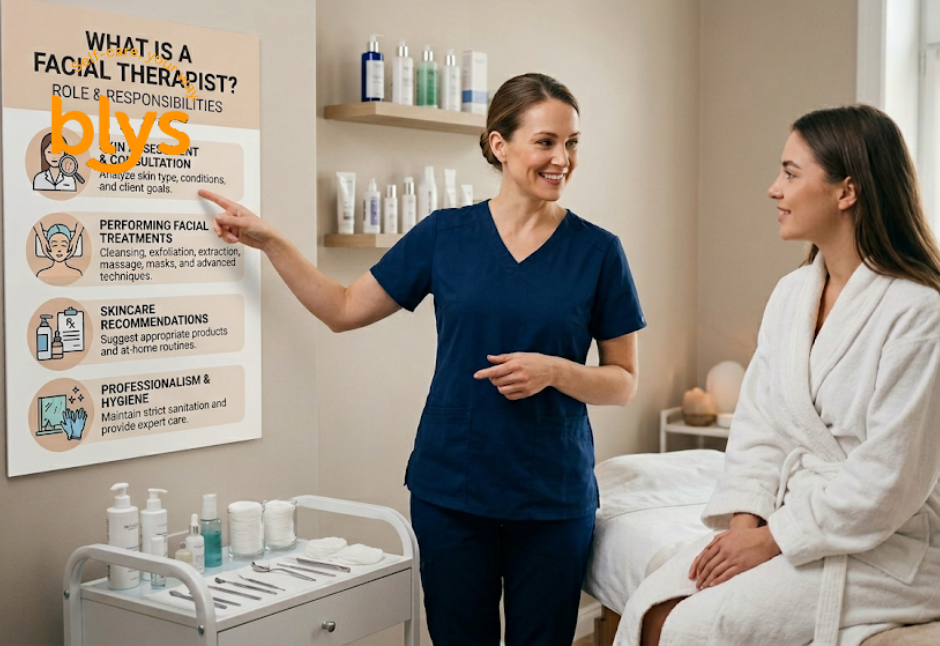
 If you’ve ever booked a professional facial and wondered who’s actually behind the treatment, what they studied, what they’re assessing, and why the experience feels so different from a DIY skincare routine, you’re not alone.
A facial therapist does far more than apply creams and masks. They’re trained skin specialists who combine technical knowledge, hands-on technique, and genuine care to deliver real results for their clients.
Whether you’re curious about what a facial therapist does because you’re considering a career in beauty, or because you want to understand the value of the service before your next booking, this post covers everything you need to know.
That includes the day-to-day role, the responsibilities involved, the skills required, and how the profession sits within the broader world of beauty therapy in Australia.
What Is A Facial Therapist?
A facial therapist is a trained beauty professional who specialises in the health and appearance of the skin on the face, neck, and décolletage. They perform a wide range of facial treatments from basic cleansing facials to more advanced procedures such as microdermabrasion, chemical peels, LED light therapy, and lymphatic drainage massage, all tailored to each client’s skin type and individual concerns.
Unlike a general beauty therapist who may offer a broad menu of services including waxing, nail care, and body treatments, a facial therapist has a particular focus on the skin. Their role requires a solid understanding of skin anatomy, physiology, and how different products and techniques interact with the skin’s various layers.
At its core, the job is about assessment and personalisation. A skilled facial therapist doesn’t apply a one-size-fits-all approach. They analyse the client’s skin condition, whether that’s dehydration, hyperpigmentation, acne, sensitivity, or signs of ageing, and design a treatment plan accordingly.
That clinical thinking is what separates a professional facial therapist from a basic beauty service. It’s the difference between someone who follows a set routine and someone who reads the skin and responds to what it actually needs.
In Australia, facial therapists typically hold a Certificate III or Certificate IV in beauty therapy, with many pursuing diploma-level qualifications that cover more advanced skin treatments, professional equipment, and business practice.
What Does A Facial Therapist Do Day-To-Day?
The day-to-day work of a facial therapist is more varied than most people expect. A single shift can move between in-depth consultations, hands-on treatments, product education, and careful record-keeping.
Here’s a closer look at what the role actually involves:
Client Consultations
Before any treatment begins, a facial therapist conducts a thorough consultation. This involves reviewing the client’s skin history, any medical conditions or medications that could affect the skin, their current skincare routine, and their treatment goals.
This intake process isn’t just a formality it’s essential for identifying contraindications (conditions that would make certain treatments unsafe) and for building a clear picture of what the skin actually needs.
Consultations also require strong communication skills. Clients don’t always know how to describe their skin concerns accurately, so a good therapist asks the right questions, listens carefully, and translates what they see on the skin into plain language the client can understand.
Performing Facial Treatments
The bulk of the role involves hands-on treatment. Depending on their training and the salon or clinic they work in, a facial therapist might perform the following:
- Cleansing and exfoliation facials
- Extractions (manual removal of congestion and blocked pores)
- Facial massage, including lymphatic drainage and contouring techniques
- Mask application: clay, enzyme, sheet, or peel-off
- Microdermabrasion and microneedling
- Superficial to medium-depth chemical peels
- LED light therapy for acne, ageing, or pigmentation concerns
- High-frequency treatments
- Eye treatments and brow grooming paired with facials
Research published through NCBI supports the role of facial massage in improving circulation and skin tone, something experienced therapists understand intuitively and apply with purpose, not just as a relaxing finishing touch.
Product Knowledge And Retail Recommendations
Facial therapists need in-depth knowledge of skincare ingredients and the product lines they work with. During and after a treatment, they’ll often walk clients through what was used, why it was chosen, and what they’d recommend for at-home maintenance.
This is a meaningful part of the role; it builds genuine trust and helps clients maintain their results between appointments. Most salons and clinics carry professional-grade product lines that aren’t available over the counter, so therapists become skilled advisors as well as practitioners.
Understanding ingredients like retinol, AHAs, niacinamide, and peptides and being able to explain them clearly is increasingly expected in this field.
Record-Keeping And Treatment Notes
After each appointment, therapists document what was performed, any skin changes they noticed, and what was recommended. These treatment notes inform future sessions and ensure continuity of care, which is particularly important when a client is being treated for a specific skin condition over multiple visits.
Good record-keeping also protects both the therapist and the client if any questions arise about a past treatment.
Can A Massage Therapist Give A Facial?
This is a question that comes up regularly, and the answer depends on where you’re practising and what qualifications you hold.
In Australia, massage therapists and beauty therapists are trained in distinct disciplines. A remedial or relaxation massage therapist is authorized to work on muscles, soft tissue, and the body, but performing facial treatments, including the use of professional skincare products, specialised equipment, or extraction tools on the face, typically requires a separate beauty therapy qualification.
So can a massage therapist give a facial? A basic relaxation facial massage involving touch only and no professional products may fall within a massage therapist’s scope in some contexts, but this varies by state and setting. A full facial treatment one that involves professional actives, exfoliating agents, masks, or devices requires beauty therapy training to be performed safely and effectively.
Can a massage therapist use a facial steamer?
A facial steamer is a professional piece of equipment used in the context of a facial treatment to soften the skin and prepare follicles before extraction or deeper product absorption. Using one correctly requires knowledge of contraindications, appropriate distances, steam duration, and which skin types should and shouldn’t be exposed to steam.
These are skills taught within beauty therapy programmes, not remedial massage courses. Without that training, there’s a real risk of causing burns, aggravating rosacea, or worsening sensitive and reactive skin.
If you’re a massage therapist looking to expand into facial services, completing a recognised beauty therapy qualification is the right pathway. You can read more about what that journey looks like in our guide on how to become a beauty therapist and get clients.
How To Become A Facial Therapist In Australia
Becoming a facial therapist in Australia involves formal training followed by practical experience in a professional setting. Here’s an overview of the typical pathway.
Study A: A Recognised Qualification
Most facial therapists begin with a Certificate III in Beauty Services, followed by a Certificate IV in Beauty Therapy or a Diploma of Beauty Therapy. These programmes cover skin analysis, facial anatomy, treatment protocols, product chemistry, professional equipment use, and business practice.
They’re offered by a range of Registered Training Organisations (RTOs) across Australia, usually through a combination of classroom learning and supervised clinic hours.
For those specifically drawn to skin rather than the full scope of beauty therapy, some providers offer dedicated skin therapy diplomas that go deeper into conditions like acne, rosacea, and pigmentation and introduce more advanced clinical tools and techniques.
Build Practical Experience
Formal qualifications open the door, but real skill comes from practice. Graduate therapists often begin their careers at day spas, medi-aesthetic clinics, or beauty salons where they can build confidence treating a wide variety of skin types and concerns. Working alongside experienced senior therapists is invaluable in those early years; it’s where theoretical knowledge gets put to the test in real client situations.
Consider Independent Or Mobile Work
Many experienced facial therapists eventually move into freelance or mobile work, building a loyal client base and setting their own schedule. Platforms like Blys connect licensed beauty therapists with clients seeking professional treatments at home, making it easier than ever to build an independent practice without the overhead of a salon.
If you’re mapping out your options in the beauty industry, our breakdown of the highest-paying jobs in the beauty industry is worth a read it provides useful context on where skin therapy sits on the earning scale, particularly as demand for clinical and results-driven facials continues to rise.
Key Skills Every Facial Therapist Needs
A facial therapist needs more than technical training to do the job well. Strong results also depend on how they assess skin, communicate with clients, and stay current with industry standards.
As client expectations continue to grow, these skills matter more than ever. The most trusted facial therapists combine hands-on ability with clear communication, attention to detail, and ongoing learning.
- Skin knowledge and ongoing learning: Facial therapists need to keep up with new ingredients, treatment methods, and equipment. Ongoing training helps them offer safe, current, and effective care.
- Attention to detail: Small changes in the skin can reveal a lot. A careful therapist can spot sensitivity, dryness, congestion, or signs that may need further attention.
- Client communication: Clients often feel unsure or self-conscious about their skin. A good therapist explains things clearly, builds trust, and helps clients feel at ease.
- Physical stamina and hand care: This role can be physically demanding, with long hours on your feet and constant hand work. Good posture and self-care help therapists work well over time.
- Business and retail awareness: Facial therapists also need to understand client retention, homecare advice, and professional product recommendations. These skills support better results and long-term career growth.
Taken together, these skills support both the quality of the treatment and the success of the therapist. They help facial therapists build trust, deliver better care, and grow a career that is both professional and sustainable.
Why Facial Therapy Takes Real Skill
A facial therapist is far more than someone who applies a face mask and leaves the room. They’re trained skin specialists who assess, treat, educate, and adapt with every decision shaped by what the individual in front of them actually needs.
If you’re thinking about a career in this field, the blend of science, skill, and genuine client connection makes it a deeply rewarding path. And if you’d simply like to experience the difference a competent therapist can make, you can book a professional facial through Blys and have a trained therapist come directly to your door.