If you are exploring how to start a massage business at home in Australia, the legal pathway is fairly accessible. There is no mandatory federal licence for massage therapists, but you still need the right business setup, insurance, tax records, and professional standards in place before you start seeing clients.
At-home and mobile massage has become a popular choice across Sydney, Melbourne, Brisbane, Perth, and beyond, which means clients expect a professional, reliable experience from the moment they book. This guide covers the key legal steps, the standards worth meeting, and how a platform like Blys can support mobile massage work.
Is Massage Therapy A Regulated Profession In Australia?
Massage therapy is not a registered profession under AHPRA (the Australian Health Practitioner Regulation Agency). You will not find massage therapists on the same national register as physiotherapists, chiropractors, or osteopaths and that is not an oversight. It reflects how the Australian health system currently views massage as an important complementary health service, but one without the same statutory regulation as clinical professions.
What this means for you is straightforward: you do not need a government-issued licence to offer massage services in Australia. There is no mandatory national exam, no regulated title you must hold, and no central register you are required to join before you can legally charge for a session.
That said, the absence of mandatory regulation does not mean the industry operates without standards. Professional associations, insurance providers, and platforms like Blys all apply their own requirements and most clients do their research before inviting someone into their home.
What State And Territory Rules Apply?
While federal law does not require registration, individual states and territories have their own business, health, and safety obligations that apply to mobile service providers. If you plan to work across council areas, operate from a vehicle, or run sessions in commercial or event spaces, check with your local council and state government before you start.
Some councils require permits for mobile service businesses operating in public spaces, and home-based business regulations can vary significantly by suburb. Certain residential zoning rules restrict the number of clients you can receive at a home address per week, or the type of signage and equipment storage permitted on the property so it is always worth confirming upfront.
What Do You Need To Start A Massage Business At Home In Australia?
Starting a massage business at home in Australia means the very first admin step is registering for an Australian Business Number (ABN). Registering is free through the Australian Business Register (ABR) and takes around ten minutes. You will need an ABN to issue invoices, receive platform payments, and meet your ATO obligations. Operating without one while earning self-employment income is a compliance risk that is genuinely easy to avoid.
Beyond your ABN, think carefully about your GST position from the outset. If your annual turnover reaches $75,000 or more, you must register for GST. Below that threshold, registration is optional, but many therapists register voluntarily early on to claim input tax credits on business expenses like equipment, massage oils, table servicing, and professional development courses. Keeping clean records from day one also makes tax time far more straightforward as your practice scales up.
If you plan to trade under a business name rather than your own personal name, you will also need to register that name with the Australian Securities and Investments Commission (ASIC). Business name registration is separate from your ABN and carries a small annual fee. It is not mandatory, but operating under a distinct brand name can strengthen your professional image and support more consistent marketing across your channels.
What Insurance Does A Mobile Massage Therapist Need In Australia?
When you start a massage business at home in Australia, operating without proper insurance is the most common and most serious oversight new mobile therapists make. Two types of cover are essential, and neither is negotiable if you want to build a practice on solid ground.
Professional Indemnity Insurance
Professional indemnity (PI) insurance protects you if a client claims your services caused harm, injury, or made an existing condition worse. Even with excellent technique and genuine care, a client can allege that a session aggravated a pre-existing injury, caused a muscle strain, or contributed to a flare-up of a chronic condition.
PI insurance covers your legal defence costs and any compensation that results from a successful claim. Without it, you are personally liable for those costs which can run into tens of thousands of dollars even in relatively routine disputes.
Public Liability Insurance
Public liability insurance covers you if a client or third party is injured during your service, or if you accidentally damage property while visiting a client. As a mobile therapist working in other people’s homes, offices, and event spaces, this cover matters more than it would in a fixed clinic setting.
A minor incident a spilled bottle of oil on a carpet, a client tripping over your equipment bag, or a damaged piece of furniture can quickly escalate into a formal claim when it happens on someone else’s property.
Most major massage therapy associations in Australia including the Australian Traditional Medicine Society (ATMS), the Association of Massage Therapists (AMT), and Massage and Myotherapy Australia include or facilitate access to both PI and public liability insurance for their members.
Bundling insurance through an association membership is often more cost-effective than sourcing both policies independently, and it keeps your professional credentials and cover in one place.
What Does A Professional Mobile Massage Setup Look Like?
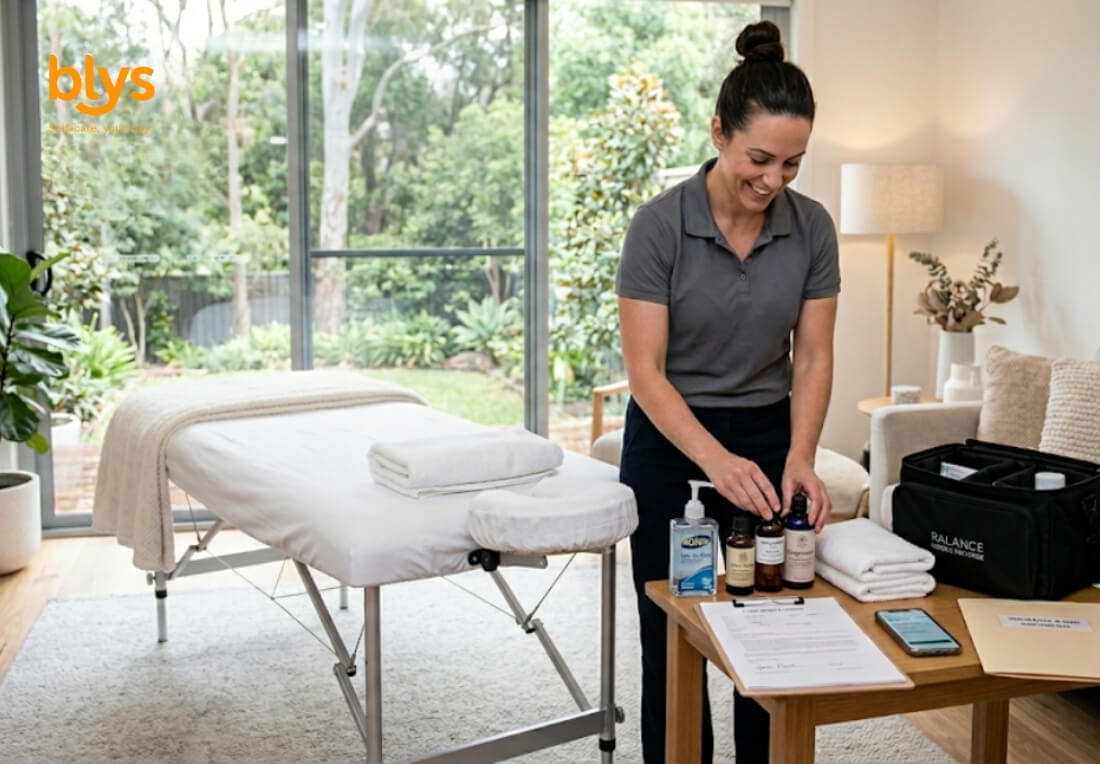
The legal requirements are only the starting point. When clients book an at-home massage, they are inviting a professional into their personal space, so the full experience matters. From your first message to the way you pack up after the session, every detail helps build trust, repeat bookings, and referrals.
A strong mobile setup should include:
- A clean, well-maintained massage table with fresh linen for every client.
- Professional products, towels, bolsters, and headrest covers packed neatly.
- Hand sanitiser, hygiene supplies, and a clear equipment cleaning routine.
- A simple intake form that covers client preferences, health notes, and areas to avoid.
- A short post-session check-in to confirm comfort, pressure, and overall experience.
These small details help clients feel safe, comfortable, and confident in your service. In mobile massage, professionalism is not only about technique. It is also about how prepared, organised, and respectful you are in someone else’s home.
Should You Join A Professional Massage Association In Australia?
Membership with an Australian massage association is not legally required, but it carries real practical value for anyone who has decided to start a massage business at home in Australia. Building a mobile client base from scratch means you need every credibility signal working in your favour.
Being a member of a recognised association tells clients that you hold relevant training, maintain ongoing professional development, and operate within a code of ethics. It also opens the door to private health fund rebates. Many Australian funds including Medibank, Bupa, HCF, and nib offer rebates for massage services delivered by therapists registered with an approved association.
If your clients hold private health cover, your association status directly influences their decision to book and their likelihood of returning. Not all associations carry equal health fund recognition, and the requirements vary by fund, so research which associations are recognised by the funds your target clients are most likely to hold before deciding where to register.
How Does Working Through Blys Support Mobile Therapist Compliance?
Working through Blys means holding current professional indemnity and public liability insurance and being registered with a recognised professional body. This process is what lets Blys connect clients with insured, professional therapists who’ve already met the platform’s standards, and meeting these requirements yourself is what gets a profile in front of actual bookings in the first place.
Knowing what clients typically expect from an at-home appointment helps in structuring sessions to meet that standard from the very first booking, and the full body massage guide breaks down how a mobile session is generally expected to run from start to finish.
Working through Blys can help by:
- Connecting providers with clients looking for at-home massage.
- Managing booking logistics and client messages.
- Processing payments through the platform.
- Helping clients understand what to expect before their session.
- Reducing the back-office work that comes with a mobile practice.
This does not replace your own professional responsibilities. You still need to keep your insurance current, declare your income correctly with the ATO, meet any relevant association standards, and deliver every session with care and professionalism. But for massage professionals who want to grow their mobile client base with less admin pressure, Blys offers a practical and well-structured way to get started.
What Should You Have In Place Before Your First Mobile Booking In Australia?
Starting a massage business at home in Australia and running it legally requires a few non-negotiable steps: register your ABN, secure professional indemnity and public liability cover, and consider whether association membership aligns with your goals.
Beyond the legal baseline, the trusted therapists who build strong mobile practices are the ones who approach every client interaction from intake form to post-session check-in as an opportunity to demonstrate genuine professionalism.
If you want to get in front of clients faster while the administrative side is handled, providers working through Blys benefit from a platform that manages bookings, payments, and client connections.
Explore mobile massage near you to see how the platform works and learn more about in-demand services like hot stone massage to expand your offering and attract a broader range of clients.