 No two trimesters of pregnancy feel the same and no two massage sessions should either. The first trimester brings nausea, fatigue and a lot of uncertainty about what’s safe. The second opens up a more comfortable window. By the third, your hips are aching, sleep is broken and relief can’t come fast enough.
Pregnancy massage trimester by trimester is something most guides don’t cover clearly. They’ll tell you massage is generally safe or hand you a blanket list of precautions, but they rarely map out what actually changes at each stage in technique, positioning, pressure and focus. That’s what this guide does.
Whether you’re eight weeks in and wondering if it’s too early, or 34 weeks and counting down the days, you’ll find practical answers here. For a broader safety overview, the complete guide to pregnancy massage is a good place to start before you book.
First Trimester: What’s Possible And What To Approach With Care
The first trimester (weeks 1–13) is when caution is highest and understandably so. Your body is doing enormous work, even if little of it is visible yet. Hormones are surging, the risk of miscarriage is statistically highest in these early weeks, and many women feel too exhausted or nauseous to consider much beyond getting through the day.
What Massage Can Help With In The First Trimester
For low-risk pregnancies, gentle relaxation massage focusing on the back, shoulders, neck and lower limbs is widely considered safe from early in the first trimester. Tension headaches, tight shoulders and the low-grade lower back ache that begins almost immediately are all areas where light, skilled touch can make a real difference.
Breathwork-integrated techniques, slow effleurage and gentle stretching can also help regulate the nervous system at a time when anxiety about the pregnancy itself runs high. Research published in the International Journal of Neuroscience found that regular massage during pregnancy reduced anxiety scores and cortisol levels benefits that apply from the very early weeks.
What To Leave Out In The First Trimester
Knowing what to avoid is just as important as knowing what’s safe. Here’s what experienced prenatal therapists remove from first trimester sessions:
- Deep abdominal work off the table entirely from week one, regardless of pregnancy risk classification.
- Spleen 6 (SP6) and lower calf acupressure points traditionally avoided due to association with uterine stimulation; most therapists follow this as standard practice.
- Deep tissue pressure across the body overall pressure is kept light; the first trimester is not the time for heavy remedial work.
- Prone positioning lying face-down becomes uncomfortable and inappropriate earlier than many expect.
- Extended supine positioning prolonged time flat on your back should be minimised even in the early weeks.
Some therapists choose not to work with clients before week 13, particularly those with a history of pregnancy loss or a high-risk classification. If that applies to your situation, a conversation with your midwife or obstetrician before booking is the right first step. Be upfront when you book every provider you book through Blys will ask, but volunteering the information upfront helps.
Second Trimester: The Most Comfortable Window For Massage
Weeks 14–26 are often called the golden window nausea typically eases, energy returns, and the belly isn’t yet large enough to make positioning complicated. For most women, this is the most straightforward time to begin regular pregnancy massage, or to increase the frequency of sessions already in progress.
How Technique And Positioning Shift
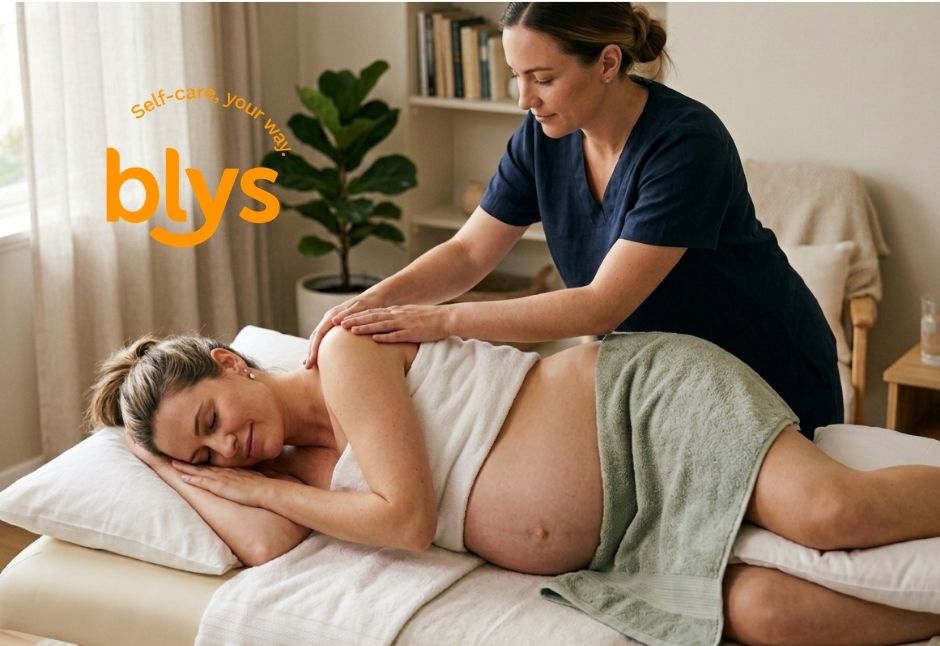
From around 16–20 weeks, lying face-down is no longer appropriate, and therapists begin transitioning fully to side-lying positioning. Lying flat on your back for extended periods also becomes inadvisable from roughly 20 weeks, as pressure on the vena cava can reduce blood flow. Side-lying with good pillow support one under the head, one between the knees, one supporting the belly becomes the standard from here.
This is one reason booking a mobile pregnancy massage works so well in the second trimester. You’re already at home, on a familiar surface, with your own pillows. There’s no travel, no waiting room and no negotiating an unfamiliar clinic chair. Providers you book through Blys come to you, set up around your needs, and you stay comfortable throughout.
What The Second Trimester Focus Shifts To
As your centre of gravity changes and your pelvis tilts forward, the glutes, hip flexors and lower back take on considerably more load. Sciatic discomfort, round ligament tenderness and leg cramps all begin appearing in this window all of which respond well to targeted work on the posterior chain and hip region.
Deep abdominal work and the avoided acupressure points remain off-limits. If you have pelvic girdle pain (PGP) or have been told you have placenta praevia, flag this before your session starts so your therapist can modify accordingly.
Third Trimester: Staying Consistent When It Matters Most
By weeks 27 to 40 (and beyond), your body is carrying serious load. Back pain intensifies, sleep deteriorates, swelling builds in the feet and ankles, and the sheer physical weight of late pregnancy changes how everything feels. This is also the stage where many women either reduce activity or push through without support both of which make things harder than they need to be.
Positioning And Practical Setup At Home
Full side-lying is standard throughout the third trimester. At a home visit, providers you book through Blys will work with the positioning you have available a firm surface with supportive pillows along the back, under the belly and between the knees. Some therapists carry pregnancy-specific bolsters; it’s worth confirming when you book.
What The Evidence Supports In Late Pregnancy
A 2012 study in the Journal of Perinatal Education found that massage therapy in the third trimester was associated with reduced back and leg pain, lower anxiety scores and measurably improved sleep quality. Sleep disruption in the final trimester is one of the most common complaints and one of the least addressed. That finding alone makes a strong case for consistent sessions in the final weeks.
Third Trimester Areas Of Focus
The lower back, hips, glutes and legs carry the most load and benefit from regular attention. Gentle lymphatic drainage techniques address oedema in the lower limbs, which builds steadily from around week 28 onwards. The upper back and neck strained by the forward postural shift also benefit significantly from this stage.
From around 36–38 weeks, some therapists take extra precaution around acupressure points sometimes associated with labour stimulation. The evidence is mixed, but it’s a sensible precaution worth discussing openly with your provider heading into the final month.
Trimester-By-Trimester Quick Reference
Use this table as an at-a-glance guide to how pregnancy massage changes across each stage. Every session with a vetted, insured provider should be adapted to where you are on this timeline.
| First Trimester (Wks 1–13) | Second Trimester (Wks 14–26) | Third Trimester (Wks 27–40) | |
| Positioning | Semi-reclined or side-lying; no prone | Transitioning to full side-lying from ~wk 20 | Full side-lying only |
| Pressure | Light throughout | Moderate; firmer on posterior chain | Moderate; gentle on lower limbs |
| Key Focus Areas | Shoulders, neck, upper/lower back, legs | Glutes, hip flexors, lower back, sciatic region | Lower back, hips, glutes, legs, ankles, upper back |
| What To Avoid | Deep abdomen, SP6, deep tissue, extended supine | Deep abdomen, SP6; caution with PGP/placenta praevia | Deep pressure; caution with labour acupressure points from ~wk 36 |
| Session Length | 45–60 min | 60–75 min | 60–75 min |
| Suggested Frequency | Occasional, as needed | Fortnightly from ~wk 16 | Fortnightly → weekly from wk 36 |
When To Start Booking And How Often Each Trimester
The right booking frequency shifts as your pregnancy progresses. Here’s what works for most women at each stage and what to look for when choosing a provider:
- First trimester: Possible for low-risk pregnancies from early on. Keep sessions gentle and shorter (45–60 minutes). Choose a therapist experienced in early pregnancy and always disclose your gestational age when booking.
- Second trimester: The ideal window to begin regular sessions. Fortnightly appointments from around weeks 16–20 suit most women well. Use this period to find a provider you connect with and build a consistent routine before the third trimester.
- Third trimester: Fortnightly through to around week 36 is common, with many women moving to weekly as the due date approaches. If you’re managing specific discomforts sciatica, oedema, disrupted sleep more frequent sessions are often worthwhile.
- What to always confirm at booking: Your therapist’s experience with pregnancy clients, their approach to your specific trimester, whether they carry bolsters or supports, and any conditions flagged by your midwife or GP.
One thing most guides don’t mention: by the time you’re at 32 weeks, getting to a clinic involves real logistics parking, the journey, sitting in a waiting room. Booking an in-home pregnancy massage removes that friction entirely. Providers you book through Blys are vetted, insured and experienced across all trimesters. They come to your door, adapt to where you are in your pregnancy and your specific needs, and you don’t have to go anywhere.
Explore pregnancy massage through Blys to find a trusted, local provider near you. And if you still have questions about what’s appropriate for your specific situation, is pregnancy massage safe? covers the key scenarios clearly.
Your Trimester Shapes Everything: Work With It, Not Around It
Pregnancy massage is most effective when it’s calibrated to where you actually are. A gentle first trimester session looks nothing like a week-35 appointment focused on hip decompression and sleep quality. Getting that calibration right means working with a provider who understands those differences and adjusts at every visit.
Wherever you are in your pregnancy, you don’t need to push through the aches or wait until things feel bad enough to justify help. And you certainly don’t need to leave the house to access real, skilled support.
Book a pregnancy massage through Blys and connect with a professional, insured provider who comes to you.