Most people have had someone press a spot on their foot and been surprised that they felt it somewhere else entirely. Reflexology is built around that observation: the idea that specific areas of the feet, hands, and ears map to every organ and system in the body, and that applying the right pressure to the right spot can produce effects well beyond the foot itself.
It sounds like it should not work. Then a lot of people try it and find that it does, which is probably the most honest summary of where reflexology sits in the world of body therapies right now.
What Is Reflexology: The Core Idea
Foot reflexology is one of the most common forms, but the same principles apply to the hands and ears. Reflexology is a therapy based on the idea that the body is divided into zones, and that each zone of the foot, hand, or ear corresponds to a specific organ, gland, or body system. A reflexologist applies pressure to particular points within these zones, not to release muscle tension in the foot itself, but to create a response in the corresponding part of the body.
The result, when it works, is not limited to where the pressure is applied. Someone receiving reflexology for digestive issues might have most of the session’s attention on the middle of their foot, where the digestive organs are mapped, rather than on any area that feels tense or sore. Someone receiving it for stress or anxiety might have most of the work concentrated on the solar plexus point, tucked into the arch of the foot at a spot most people have never thought about until a reflexologist puts their thumb there and they unexpectedly want to cry.
What Reflexology Is Not
Reflexology is not a foot massage, though the two get confused regularly. A foot massage works on the muscles and soft tissue of the foot itself. Reflexology is using the foot, or the hands, as a map to reach the rest of the body. The techniques overlap in places, since both involve the hands working on the feet, but the intention and the focus are entirely different.
Zone Therapy Reflexology: How the Theory Works
Zone therapy reflexology is the underlying framework that gives reflexology its structure, and understanding it explains why a reflexologist spends time on a spot on your heel when you came in with a headache.
What Zone Therapy Actually Is
Zone therapy was developed in the early twentieth century, primarily through the work of Dr William Fitzgerald, who proposed that the body could be divided into ten vertical zones running from the top of the head to the tips of the fingers and toes. Each zone passes through every part of the body it crosses, which means that any point within a zone can theoretically affect every organ and structure the zone passes through.
Reflexology builds on this framework by adding a more detailed map, the reflexology foot chart, which assigns specific points on the foot to specific organs, glands, and body systems based on their position within the zone structure. The liver sits in a different place on the foot chart than the kidneys, which sit in a different place than the lungs, and a trained reflexologist knows where each of these is and what applying pressure there is meant to do.
How Reflexology Points Are Used in a Session
A reflexologist works through the key pressure points on the foot, covering the whole map and spending additional time on points that feel different under pressure, often described as crunchy, gritty, or tender in a way that is different from ordinary sensitivity. These areas are understood to indicate congestion or imbalance in the corresponding body system, and the work at those points is meant to clear the congestion and restore normal function.
“How does reflexology work at a physiological level?” is a question the research has not yet fully answered, but the clinical evidence for improvement in specific conditions is more substantial than most people expect before they look into it. The short version is that nobody is entirely sure of the mechanism, and it keeps producing results anyway.
What Does Reflexology Do: What the Research Actually Says
This section is worth being honest about, because reflexology sits in an interesting position in the evidence base, not as well-studied as it deserves to be, but more supported than its doubters usually acknowledge.
What the Evidence Supports
Studies on reflexology for anxiety, stress, and sleep keep finding the same thing: people who get regular sessions report lower anxiety and better sleep, and several randomised trials back this up. Nobody fully understands why it works yet, but the results are consistent enough to take seriously.
The evidence for specific physical conditions is more mixed. Some studies show real benefit for premenstrual syndrome, pregnancy-related symptoms, multiple sclerosis symptoms, and certain types of chronic pain. Other studies show smaller or less consistent results. Reflexology is not a replacement for medical treatment of serious conditions, but it does have a real evidence base for managing symptoms and for calming the kind of whole-body stress response that sits underneath a lot of chronic health problems.
Why People Book It When They Cannot Quite Explain Why It Works
The experience of reflexology often produces changes that feel more systemic than a foot session has any right to produce, and a lot of people who were doubtful before trying it become regular clients after their first session without being able to fully account for why. It is also worth knowing how reflexology differs from massage before deciding which one fits what you need, since the two are often confused but are not interchangeable. This is the part where anecdote and evidence temporarily agree, which is unusual enough to be worth mentioning.
Reflexology Explained: What a Session Actually Involves
If you have never had reflexology before, knowing what to expect makes the session more useful and less strange.
How a Reflexology Session Starts
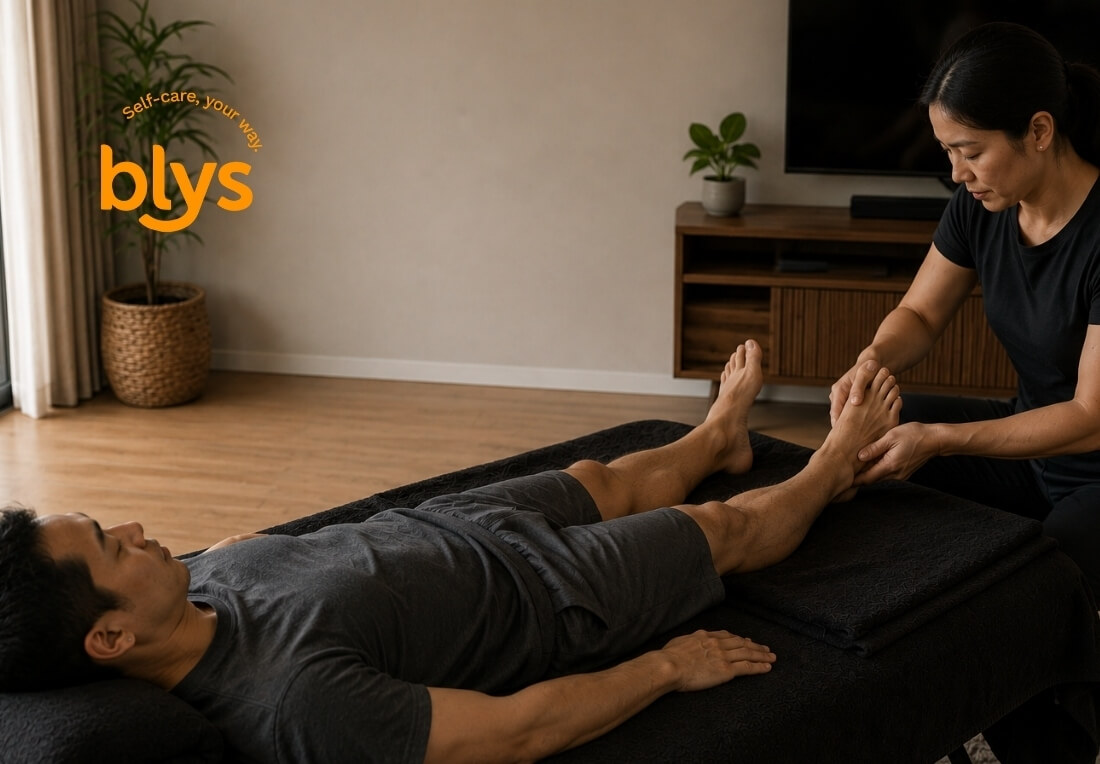
You stay fully clothed except for the feet, which are cleaned and sometimes warmed at the start of the session. For a mobile reflexology session at home, this is the entire preparation required on your end. The reflexologist begins with a brief assessment, sometimes asking about your health history and what you are hoping to address, sometimes simply starting the assessment through the feet themselves by working through the whole map and noting where you respond.
Most people are surprised by how much a reflexologist can infer from the feet before a word has been exchanged. A well-trained reflexologist will often name areas of tension or dysfunction in the body that the client has not mentioned, which is either impressive or slightly unsettling depending on how you feel about strangers knowing things about your body.
What the Pressure Feels Like
Reflexology pressure is firm but not painful. The characteristic feeling is a specific tenderness at particular points, often a dull ache or an unusual sensitivity that is different from the general tenderness of a foot that has been on its feet all day. Some points feel fine and then suddenly very much not fine when the reflexologist’s thumb finds the right spot. This is useful information rather than something to brace against.
The session typically lasts 60 to 90 minutes, though shorter and longer options are available depending on what you need. Afterwards, most people feel relaxed, occasionally tired, and sometimes notice changes in the areas that were the focus of the session over the following day or two.
Who Benefits Most from Reflexology
Reflexology suits a wide range of people and conditions, but it produces the most noticeable results for specific situations.
- People dealing with chronic stress or anxiety who want a body-based approach alongside or instead of talk-based ones.
- Anyone with sleep difficulties, where the solar plexus, diaphragm, and spine points are well-mapped to sleep quality, and many people report noticeably better sleep the night after a session.
- People managing migraines or chronic headaches who want a complementary approach alongside their existing care.
- People who are pregnant and dealing with nausea, swelling, or sleep disruption, with the right precautions in place.
- Anyone who has tried regular massage and found it helpful but not quite reaching what they need.
- People who are curious about whether the foot-body connection is real and want to find out for themselves rather than waiting for the research to fully catch up.
The last one is more common than it sounds. Reflexology has a way of converting cynics, and most reflexologists have a favourite story about the client who came in to prove it did not work and rebooked before they left.
Book a reflexology session at home through Blys, available 7 days a week, 6 am to midnight across Australia.