Most people use “reflexology” and “foot massage” to mean the same thing, and the difference between reflexology and foot massage is one of those things that is obvious once you know it and invisible until then. They are not the same thing. Booking a foot massage when you really just wanted a reflexology session is like ordering a flat white and getting a glass of milk: technically in the same family, produced by the same general equipment, and not what you asked for at all.
This is what each one actually does, and how to know which one you should be booking.
What Actually is a Foot Massage?
A foot massage works on the muscles, tendons, and tissue of the foot itself. The goal is to relieve tension in the foot, the arch, the heel, the toes, the ankle, and it does this through the same techniques used in general massage: kneading, stroking, pressing, and working through the tissue to release what has built up there.
What is Foot Massage Good For?
A foot massage is the right choice when your feet are the problem; tired feet after a long day, plantar tension from standing on hard floors, general soreness after a run, the heel pain that comes from shoes that looked great and felt terrible. If the issue is in the foot and the foot is what needs attention, a foot massage is the correct tool.
It is also deeply relaxing, because the feet are packed with nerve endings and working them produces a full-body sense of ease that extends well beyond the foot itself. This is partly why people confuse it with reflexology: both leave you feeling noticeably better, and both involve someone working on your feet. The question of is reflexology a massage is also worth answering: technically no, though it gets grouped with massage for booking purposes. The difference is in what the therapist is trying to achieve and how they go about it.
What Actually is Reflexology?
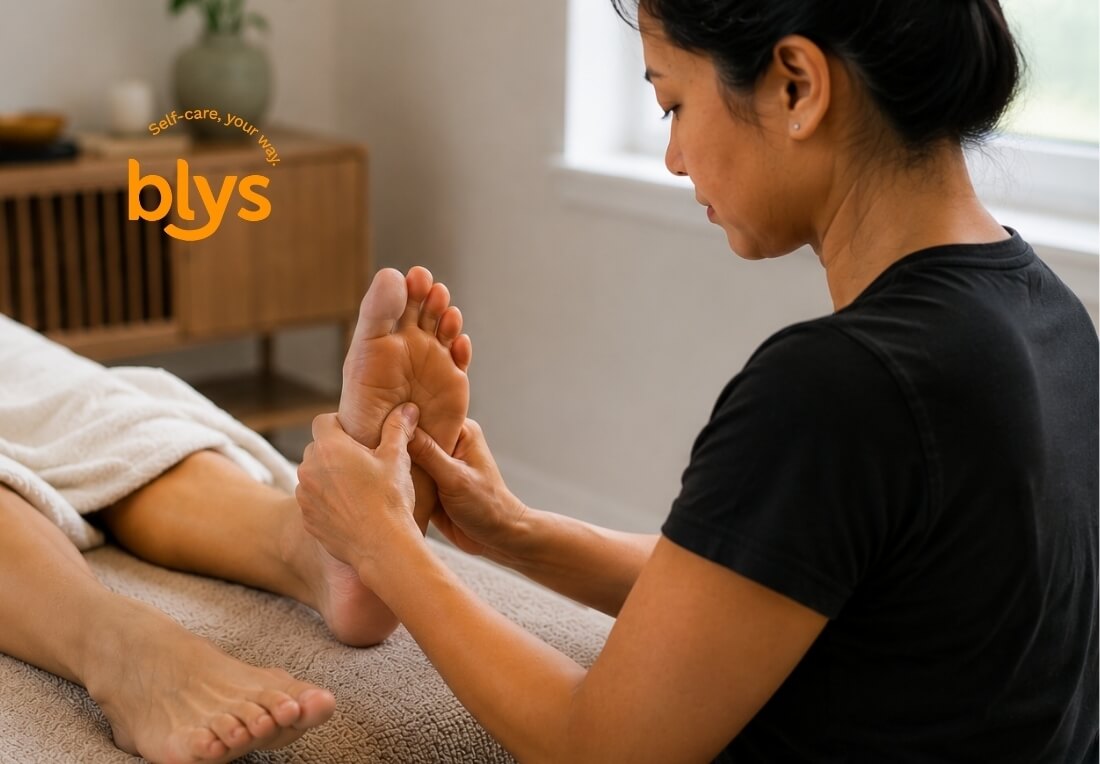
Reflexology uses the foot as a map. Rather than working on the muscles of the foot, a reflexologist applies pressure to specific points that correspond to organs and systems throughout the rest of the body. Pressing the right point is not about releasing tension in the foot but about producing a response in the area the point is connected to, whether that is the digestive system, the adrenal glands, the spine, or the sinuses.
The foot is the access point. The body is the destination.
What is Reflexology Good For?
Reflexology works best when the issue is systemic rather than located in the foot itself. It is also the reason booking a mobile reflexology session at home makes particular sense for this type of treatment, the nervous system response is stronger when you are already in a familiar, comfortable space. Stress and anxiety, where the nervous system needs resetting rather than a muscle releasing. Sleep problems, where the body needs help making the shift into rest mode. Digestive complaints, hormonal irregularity, headaches, and the general feeling that something is off without a clear structural cause.
It is also the right choice when you want the session to do something specific. A reflexologist working on stress will spend more time on the solar plexus point and adrenal reflex. One working on sleep will focus on the Heart 7 equivalent in the foot and the diaphragm reflex. One working on headaches will spend time at the base of the big toe and the neck zone. The session follows the foot map and the map follows your body.
The Key Differences Between Reflexology and Foot Massage
What the Therapist Is Trying to Do
This is the core difference. A massage therapist working your feet is trying to release the tissue in the foot. A reflexologist working your feet is trying to affect something else in your body through the foot. The techniques look similar from the outside but are doing entirely different things. One of them is treating your foot, and the other is using your foot as a remote control for the rest of you.
How the Pressure Is Applied
Foot massage uses broad strokes, kneading, and pressure across the whole foot and ankle in the style of general massage. Reflexology uses specific, concentrated pressure on individual points held for long enough to produce a response, typically 30 to 90 seconds on each point, working through the map in order rather than the muscle. If a foot massage feels like someone caring for your feet, reflexology feels like someone who knows something about your body that you have not told them yet.
What You Feel During the Session
During a foot massage, what you feel is mostly in the foot: the release of tension in the arch, the relief in the heel, the general ease that comes from something being worked properly. During reflexology, you often feel things in places the therapist is not touching. A tender point under the big toe produces a sensation behind the eye. The solar plexus point in the arch produces a sudden deeper breath. The adrenal reflex produces warmth through the chest. This is the clearest real-world difference between the two, and the one most people remember after their first proper reflexology session.
What You Feel After
Both leave you relaxed. In a foot massage vs reflexology comparison on pure relaxation, reflexology produces a fuller, whole-body sense of ease that extends well beyond the foot, the kind of looseness that makes driving home feel like a reasonable ask, but only just. A foot massage produces relief in the feet with a general relaxation effect that is real but lighter. The full range of reflexology benefits is broader than most people expect before they look into it.
Can You Get Both in One Session?
Some reflexologists incorporate elements of foot massage into their sessions alongside the pressure point map work. Whether this happens depends on the therapist’s training and approach, and it is worth mentioning when you book if you want the full reflexology map covered rather than a hybrid session.
On Blys, reflexology is the primary bookable service. Foot massage as a standalone treatment is not available as a separate booking, if that is what you are looking for. A general relaxation massage that includes foot work is the closer option.
If you are not sure which one you need, reflexology is usually the more surprising of the two for first-timers, the one that produces responses people were not expecting in places they were not anticipating. Starting with that is rarely a mistake.
The feet know what they need. The question is whether you are sending the right person to deal with it. Book a reflexology session at home through Blys, available 7 days a week, 6 am to midnight across Australia.