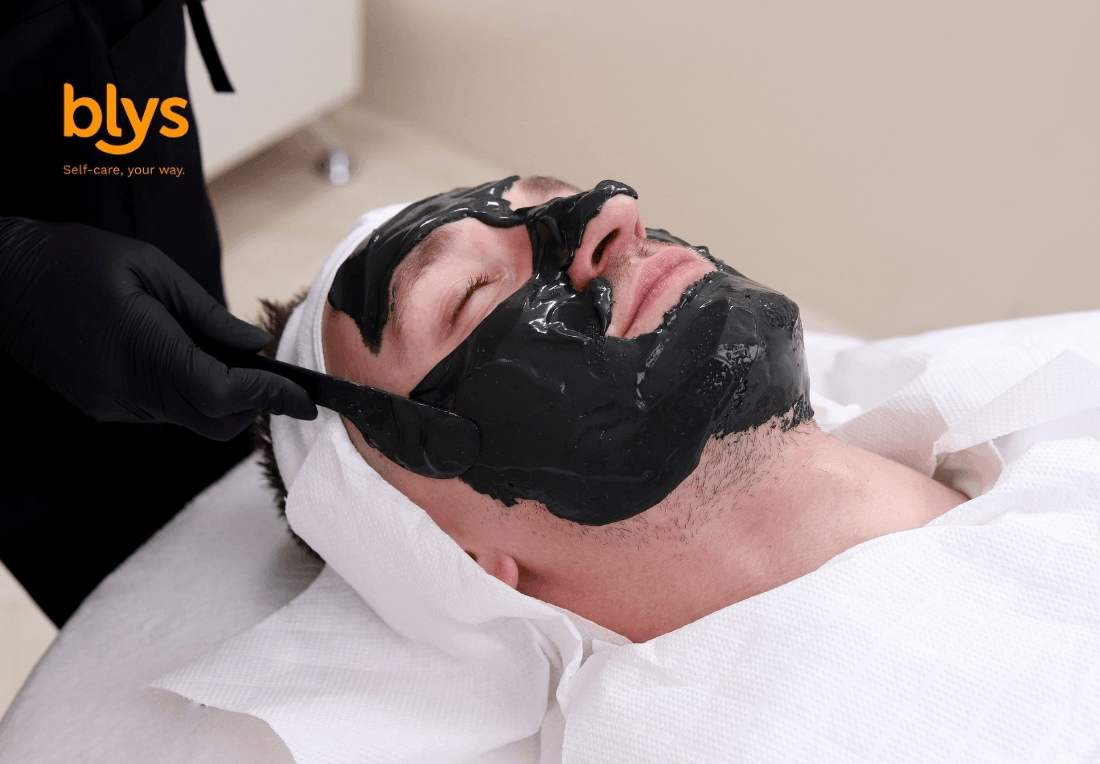
A facial for men follows the same core steps as any facial: cleansing, exfoliation, extractions where needed, a mask suited to the specific concern, and moisturising to finish, adjusted for thicker, typically oilier skin and shaving-related concerns like razor burn and ingrown hairs. Somewhere along the way facial became a word a lot of men mentally filed under not for me, despite most of them already dealing with exactly those concerns and zero actual skincare routine.
How a Men’s Facial Differs From a Standard One
Men’s skin is generally thicker and produces more oil on average, largely driven by testosterone. This changes the treatment itself: a men’s facial can use firmer pressure and different extraction technique than one built for thinner, drier skin, and it typically spends more time addressing shaving-related irritation than a standard facial would.
Thicker Skin, More Oil Production
Thicker skin with higher oil output tolerates firmer pressure and more thorough extraction than thinner, drier skin does. A facial built around this starting point adjusts technique accordingly, rather than applying the same pressure and product regardless of skin type.
Shaving Changes the Approach
Regular shaving causes ongoing micro-irritation, ingrown hairs, and razor burn that a standard facial doesn’t typically need to address. A men’s facial builds specific steps, focused exfoliation and calming treatment, around exactly this. Shaving the same patch of skin five mornings a week and never once considering what that actually does to it is an impressively specific kind of denial, and it’s usually the first thing a men’s facial actually fixes. Waxing certain areas instead of shaving removes this daily irritation cycle for anyone dealing with it regularly enough to consider the switch.
What Changes for Anyone With a Beard
A beard changes the approach rather than getting skipped over. Extractions and product application work around facial hair, and the visible skin above the beard line, the forehead, nose, and upper cheeks, gets more concentrated attention than it would on a clean-shaven face. Long-term beard growth also usually means less shaving-related irritation overall, which shifts the session toward oil control and general skin health instead. Checking a provider’s reviews beforehand confirms real experience treating men’s skin specifically, since not every esthetician has it.
Is a Men’s Facial Actually Different, or Just Marketing
Skin thickness, oil production, and shaving-related irritation are real physiological differences that change what a facial needs to address. That part is not marketing. A lot of what gets sold as a mens skincare treatment at retail, however, is the same formula in a darker bottle with a rockier font. The treatment itself can be properly adjusted for men’s skin even when the product packaging around it is pure branding.
Common Treatment Types for Men’s Facials
| Treatment type | Main focus | Best suited for |
| Deep cleanse / anti-congestion | Extractions, pore-clearing | Blackheads, ongoing congestion |
| Hydrating / barrier-repair | Calming, restoring skin barrier | Skin dehydrated by frequent shaving |
| Anti-aging / collagen-focused | Active ingredients, gentle resurfacing | Fine lines, early sun damage |
A deep cleanse is usually the first treatment recommended when congestion is the main complaint. Hydrating and barrier-repair facials often get paired with advice to shave less aggressively. Anti-aging facials get introduced once sun damage or fine lines become an actual stated concern, not as a default first booking. Combining a facial with a haircut in one appointment is a common way to cover both without arranging two separate visits.
Common Concerns Addressed
Razor burn, ingrown hairs, excess oil, blackheads, congestion, and sun damage are the concerns that come up most often in a men’s facial, tied closely to shaving habits and typically oilier skin.
Sun Damage and How Focus Shifts With Age
Sun protection habits historically got less attention from a lot of men than they should have, which is why visible sun damage and early fine lines show up as a real concern. In someone’s 20s and early 30s, sessions usually focus on prevention: oil control, congestion, and building a sunscreen habit before damage accumulates. From the 40s onward, focus often shifts toward addressing visible sun damage and fine lines head-on, layering in more active or collagen-focused treatment on top of the same ongoing oil and congestion work.
What to Expect at Your First Session
The first session opens with a consultation covering current skincare habits, shaving routine, and specific concerns, assuming no existing routine at all. It then follows the standard facial sequence, cleansing, exfoliation, extractions, mask, moisturiser, and it usually closes with a short, practical explanation of daily sunscreen use, since this is frequently new information rather than an established habit.
What a Men’s Facial Costs
Exact pricing depends on provider, location, and treatment type and is confirmed on the booking page before the appointment is booked. Deep cleanse and hydrating facials sit at the lower end of the range. Anti-aging and collagen-focused facials cost more, reflecting the extra product and technique involved, not any gender-based price difference.
Building an At-Home Routine
A basic daily routine, cleanser, moisturiser, sunscreen, does more for long-term skin health than an occasional facial on its own. An esthetician typically recommends a simple starting routine during the first session. Regular facials support that daily routine. They don’t replace it. Whether that routine actually needs to differ from a standard one comes down to a few specific biological factors that actually matter here.
How Often to Book a Men’s Facial
Most people do well with a facial every four to six weeks, matching the skin’s natural renewal cycle. Oilier, shaving-affected skin sometimes suits a slightly tighter three-to-four-week schedule. Facial frequency depends on skin type and goals more than a single blanket rule, and the same principle applies whether the client is male or female.
Booking a Mobile Men’s Facial
A mobile men’s facial follows the exact same treatment, technique, and product choices as an in-studio appointment, with the therapist bringing all equipment to the client’s home instead of the client travelling to a salon. Searching mens facial near me no longer means finding the closest studio specifically, since a trusted mobile provider covers the same ground. Facial types target different concerns regardless of where the appointment happens, and choosing the right type counts for more than choosing a location.
A mobile haircut appointment works exactly the same way, bringing the same convenience to a completely different service.
Find a Men’s Facial Provider Near You →
Frequently Asked Questions
Does a men’s facial work differently if I have a beard?
Yes, extractions and product application work around facial hair rather than through it, with more concentrated attention on the skin actually visible above the beard line. Long-term beard growth also often means less shaving-related irritation, shifting focus toward oil control and general skin health instead.
What treatment types are commonly used in a men’s facial?
Deep cleanse and anti-congestion facials target blackheads and pore congestion, hydrating and barrier-repair facials calm skin irritated by frequent shaving, and anti-aging or collagen-focused facials address fine lines and sun damage specifically. The right type depends on the actual concern being addressed.
Does the focus of a men’s facial change with age?
Often, yes. Sessions in someone’s 20s and early 30s usually focus on prevention and building sun protection habits, while sessions from the 40s onward often shift toward addressing visible sun damage and fine lines head-on, alongside the same ongoing oil and congestion concerns.
How much does a men’s facial cost?
Pricing depends on provider, location, and treatment type, with a basic cleanse-and-extract facial sitting at the lower end and more specific options like anti-aging facials typically costing more. Checking exact pricing on the booking page gives the most accurate figure.
Do I need a daily skincare routine on top of getting facials?
Yes, a basic routine, cleanser, moisturiser, and sunscreen, does more for long-term skin health than occasional facials alone. Regular facials work best as a supplement to a daily routine, not a replacement for one.
What happens during a facial for men?
A men’s facial follows the same core steps as any facial, cleansing, exfoliation, extractions, a mask, and moisturising, adjusted for thicker, typically oilier skin and shaving-related concerns like razor burn and ingrown hairs. The consultation usually assumes little to no existing skincare routine.
How is a men’s facial different from a standard facial?
Men’s skin is generally thicker and produces more oil on average, and regular shaving causes its own specific irritation that a standard facial doesn’t typically need to address. Technique, pressure, and product choice all adjust to suit this different starting point.
Where can I find a men’s facial near me?
Mobile providers bring the same treatment and expertise to a home appointment as a fixed studio would, so a men’s facial near you doesn’t necessarily mean travelling anywhere at all. Checking reviews and confirming a provider’s experience with men’s skin specifically is a reasonable step either way.
What skin concerns does a men’s facial address?
Razor burn, ingrown hairs, excess oil, blackheads, congestion, and sun damage are the concerns that come up most often, largely tied to shaving habits and typically oilier skin. Sun protection education is also frequently part of a first session.
Is men’s skincare actually different, or just marketing?
Both, in different parts. Skin thickness, oil production, and shaving-related irritation are real physiological differences that shape actual treatment, while a lot of retail men’s skincare packaging is more branding than real formula difference.
How often should men book a facial?
The same general guidance applies regardless of gender, roughly every four to six weeks for most people, though oilier, shaving-affected skin sometimes suits a slightly tighter schedule. Skin type and specific goals matter more than a blanket rule either way.
Do I need an existing skincare routine before booking a men’s facial?
No, a first session is built around whatever routine currently exists, including none at all, and the consultation adjusts from there. Most first-time male clients start with minimal or no existing routine, which is completely normal.
Will a men’s facial address razor burn specifically?
Yes, specific exfoliation and calming treatment focused on shaving-affected areas is a common and specific part of a men’s facial, addressing a concern a standard facial wouldn’t necessarily prioritise the same way.
Does a men’s facial include sunscreen advice?
Often, yes, since daily sunscreen use is frequently new information rather than an established habit for a lot of first-time male clients. This usually comes up naturally during the consultation rather than as a separate add-on.
Can men get the same facial types as anyone else?
Yes, the same range of facial types and techniques applies, just adjusted for a typically thicker, oilier starting point and shaving-related concerns. The underlying treatment options aren’t gender-restricted, only the specific approach within them.