More pregnant clients are actively searching for massage at home and the demand keeps growing. Getting to a clinic in the third trimester is uncomfortable. Parking is a hassle. Lying face-down on a standard table isn’t even an option. As a mobile pregnancy massage therapist, you’re not just offering convenience. You’re meeting clients where they genuinely need to be met.
This guide is for massage therapists ready to build or expand a mobile pregnancy and postnatal practice. You’ll find practical guidance on portable equipment, what insurance you need before showing up at a client’s door, how to communicate pre-session, and how Blys connects professional mobile therapists with a steady stream of local clients actively searching for at-home services.
If you’re already thinking about building a pregnancy massage career, this is where the operational detail lives.
What Equipment Does A Mobile Pregnancy Massage Therapist Actually Need?
Your kit needs to do more than travel well. The right setup protects your client, makes your work technically possible, and communicates professionalism the moment you walk through the door.
A Portable Table Built For Pregnancy Positioning
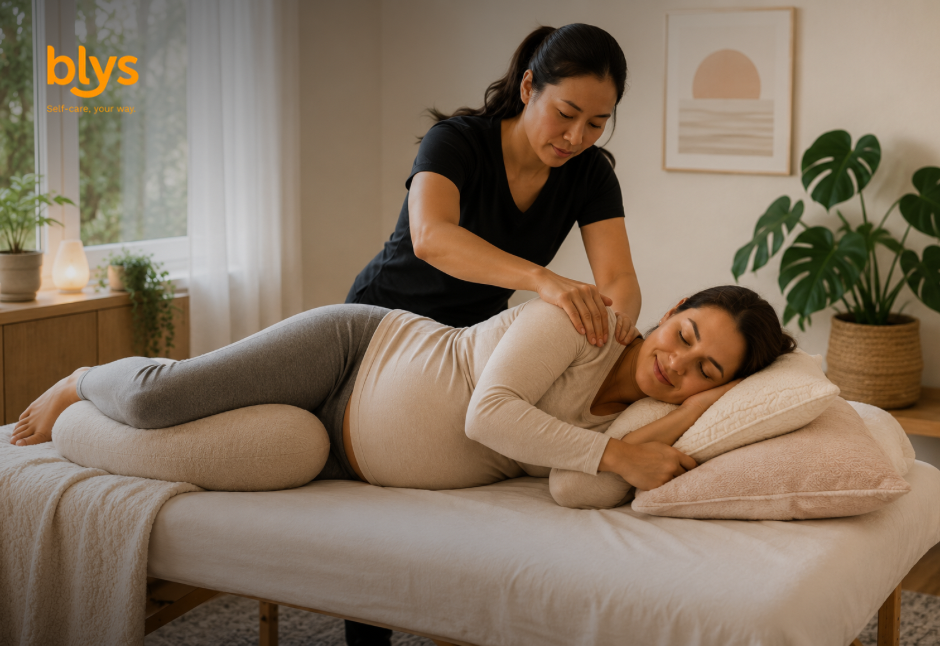
Look for a lightweight folding table under 15 kg that fits in a mid-size car without blocking rear vision. For pregnancy massage, a proper side-lying bolster system is non-negotiable. This typically includes a full-length body pillow or wedge bolster set, a small pillow for between the knees, and ankle support.
Avoid tables marketed with a “pregnancy cut-out” for prone positioning. Current practice guidance advises against prone positioning for most of pregnancy, as it can place pressure on uterine ligaments. Side-lying is the gold standard from the second trimester onward and a good bolster system makes it comfortable for both of you.
The Rest Of Your Mobile Kit
Beyond the table and bolsters, a few essentials round out a professional mobile kit, each one earns its place on every visit:
- Unscented or lightly scented massage oil. Several essential oils are contraindicated during pregnancy; when in doubt, use a plain carrier oil and let the client guide any fragrance preferences.
- Extra linens and a waterproof table protector. Non-negotiable for professionalism and hygiene.
- A bolster carry bag or integrated case so you’re not making three trips from the car.
- A digital or paper intake form that covers gestational age, pregnancy risk status, and relevant health history.
Your setup goal: clean, professional space ready within 10 minutes of arrival. Clients notice when a therapist arrives prepared. A tidy, well-organised kit sets the tone before the session has even started.
Do Mobile Pregnancy Massage Therapists Need Insurance And Registration In Australia?
This is where many therapists underestimate what mobile work actually requires.
In Australia, there is no mandatory government registration for massage therapists unlike physiotherapists or chiropractors, who are regulated under AHPRA. However, professional association membership through bodies like ATMS, AMT, or Massage & Myotherapy Australia typically includes professional indemnity and public liability insurance, which is non-negotiable the moment you’re working in someone’s home.
Mobile pregnancy massage raises the liability stakes. You’re working with a client whose health status can change rapidly, in an environment you don’t control.
Before taking a single booking, confirm your insurance policy explicitly covers:
- Pregnancy and postnatal massage (some policies exclude it by default)
- Mobile and in-home sessions
- Public liability for third-party property damage
Many mobile therapists carry separate public liability cover of $10–$20 million alongside their professional indemnity. If your table scratches a hardwood floor or oil drips on a rug, that cover matters.
Providers who list on Blys go through a vetting process that checks current insurance and professional credentials before they’re approved to take bookings giving clients confidence and protecting providers on every visit.
How Should You Communicate With Pregnant Clients Before A Session?
Pre-session communication is where mobile pregnancy massage genuinely differs from a standard clinic booking and getting it right makes everything easier.
Start with thorough health screening. Send a detailed intake form before the appointment, not on the day. You need to know gestational age, whether the pregnancy is considered high-risk, and whether there’s any history of pre-term labour, placenta previa, preeclampsia, deep vein thrombosis, or clotting disorders.
If anything flags, consult with the client’s midwife or obstetrician before proceeding. Research published in peer-reviewed literature confirms that massage in pregnancy can reduce anxiety and musculoskeletal discomfort but appropriate screening is what makes that evidence applicable to your client.
A 2010 study in the Journal of Bodywork and Movement Therapies found significant reductions in anxiety and leg pain with prenatal massage, underscoring both the benefit and the importance of doing it properly.
Sort the logistics beforehand. Ask whether the client has a suitable space (at least 3 x 2 metres of clear floor), whether stairs are involved (for carrying your table), and whether pets need to be secured. These aren’t awkward questions they’re professional ones.
Postnatal sessions need their own framing. Most postnatal clients can receive massage from around six weeks post-birth with medical clearance though caesarean recovery timelines differ and should always be confirmed with their healthcare provider. Postnatal clients often have fragmented sleep and limited time, so keep post-session notes brief and make rebooking frictionless.
How Does Blys Help Mobile Therapists Find Local Pregnancy Massage Clients?
Building a mobile pregnancy massage clientele from scratch is genuinely hard. Pregnant clients are careful about who they let into their home and rightly so. Trust is the deciding factor, far more than price or proximity.
This is the operational gap that Blys fills. Blys is a booking platform that connects vetted, insured mobile massage professionals with clients searching for at-home services. For therapists, this means access to a client base that is already actively looking for mobile pregnancy massage without needing to build a standalone website, run paid ads, or chase reviews from zero.
Unlike building an independent practice from scratch, listing on Blys puts your availability in front of local clients who are already on the platform and ready to book. The platform handles payment processing, scheduling infrastructure, and the trust signals that clients look for before inviting someone into their home. You focus on the work.
If you’re curious about what this looks like financially, our breakdown of pregnancy massage therapist earnings in Australia covers typical rates across mobile and clinic settings.
You can also explore the pregnancy massage service page to see how Blys presents this service to clients which gives you a clear picture of who is searching and what they’re looking for.
How To Reach Clients Already Looking For Mobile Pregnancy Massage In Australia
Mobile pregnancy massage is one of the most in-demand services in the massage industry right now and one of the most underserved in terms of professional, insured therapists who are genuinely set up for home visits.
The equipment, the insurance and the pre-session communication are your foundations. A consistent client pipeline is the next piece. If you’re a mobile massage therapist ready to grow your pregnancy and postnatal bookings, joining Blys as a provider puts you in front of the clients already looking for what you offer.