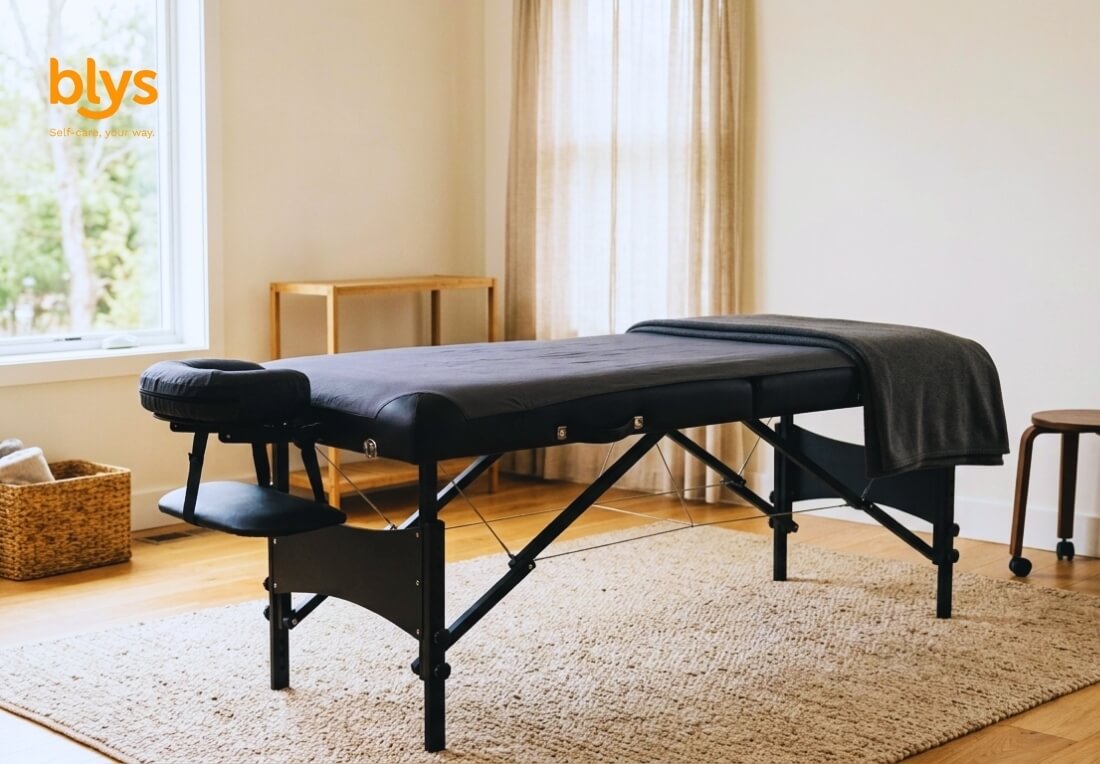
A table that collapses mid-massage is a story you’ll tell at parties for years, and not the good kind of story. Whether you’re a brand-new provider buying your first table or someone further along looking to upgrade a kit that’s seen better days, the table is the one piece of equipment that has to work every single time, in every single home, without exception. Here’s what actually matters when choosing one.
If you’re on the beauty side instead, the equipment list looks completely different, but the same core idea applies: get the kit right once, and every booking after that gets easier.
Key Features to Look For
A massage table looks fairly simple from the outside, but the details underneath decide whether it holds up over years of mobile work or gives out after a few months.
Table Width and Length That Actually Fits Your Clients
A table too narrow feels unstable under a larger client and too cramped for side-lying positions, while one too long adds unnecessary bulk to carry for very little benefit. Most mobile tables sit around 71 to 81 centimetres wide and roughly 180 to 190 centimetres long, and checking these measurements against the actual range of clients you work with beats picking whatever’s marketed as standard.
Weight Capacity Rated for Real Bodies, Not Just Averages
A stated weight capacity needs headroom above the heaviest client you’re realistically likely to treat, since the number on the box usually reflects a static load test rather than the dynamic pressure of actual massage work. Buying a table rated only just above what you expect to need is how a fine-looking spec sheet turns into a very awkward mid-booking moment.
Adjustable Height for Your Own Back, Not Just the Client’s Comfort
Height adjustability gets marketed around client comfort, but it matters just as much for the provider’s body, since working at the wrong height for hours a week is a fast way to wreck your own back doing a job that’s supposed to help other people’s. A solid range of adjustment, rather than two or three fixed notches, means the table can actually match your height instead of the other way around.
A Face Cradle That Doesn’t Feel Like an Afterthought
A face cradle that pinches a client’s nose or wobbles under light pressure is not a design flaw anyone forgives easily. Testing the cradle’s adjustment range and stability before buying, rather than assuming it’s fine because the rest of the table looks solid, avoids one of the most common sources of client discomfort in an otherwise good session.
Testing a Table in Person Before Committing
Specs on a page only tell part of the story, and a table that reads well on paper can still feel wrong once it’s actually set up and lain on. This is exactly the kind of thing that first week of bookings tends to reveal fast, so trying a table in a showroom, borrowing one from a fellow provider for a session, or at least unfolding and testing it thoroughly the moment it arrives, catches problems while there’s still time to return it.
Weight and Portability Tradeoffs
Every mobile therapist ends up somewhere on a spectrum between light enough to carry easily and sturdy enough to trust completely, and understanding the tradeoff helps pick the right spot on it.
Aluminium vs Wood Frames
Every provider has an opinion about aluminium versus wood frames, delivered with the same conviction usually reserved for someone’s favourite football team. Aluminium frames are generally lighter and more corrosion-resistant, which suits a provider doing a lot of driving and carrying, while wood frames usually feel more stable and quieter under pressure, at the cost of extra weight. Neither is objectively correct, and the right choice depends more on how much walking and carrying a typical day actually involves.
Carry Case Design Counts for More Than People Expect
Carrying a heavy table up three flights of stairs to a walk-up apartment will teach you more about carry case design than any spec sheet ever could. A case with a proper shoulder strap and wheels built for real pavement, not just smooth showroom floors, makes a real difference across a full day of back-to-back bookings, and it’s worth testing in person rather than assuming all carry cases are roughly interchangeable.
The Lighter-Is-Always-Better Myth
Shaving off a kilogram or two often means sacrificing stability, padding thickness, or weight capacity, and a table that’s slightly heavier but noticeably sturdier usually wins out over months of regular use. Optimising purely for the lightest table on the market usually solves a problem that only really shows up once or twice a week, while creating a sturdiness problem that shows up in every single booking.
Price Ranges and What You Get at Each
Massage tables span a wide price range, and understanding what actually changes as the price goes up avoids both overspending and under-buying.
Budget Tables
Budget tables in Australia typically run under $300. They cover the basics, a functional frame, a usable face cradle, and enough padding to get through a session, but usually cut corners on weight capacity headroom, carry case quality, and long-term durability. This tier suits someone testing whether mobile work suits them before committing to a bigger spend, though it’s often the first thing upgraded once bookings become regular.
Mid-Range Tables
Mid-range sits between $300 and $700, and this is where most working mobile providers land, offering a noticeably sturdier frame, better padding density, a proper carry case, and enough weight capacity headroom to stop thinking about it. The jump in quality from budget to mid-range is usually far more noticeable than the jump from mid-range to premium, which makes this the price point that delivers the most value for a properly full-time mobile practice.
Premium Tables
Premium tables in Australia start from around $700 and climb above $1,000. They add lighter advanced frame materials, extra-plush padding, wider adjustment ranges, and accessories that count more for providers doing high-volume or specialised work.
For a lot of providers, this tier is more about long-term comfort and small conveniences than any dramatic functional leap over a solid mid-range table.
When It’s Time to Upgrade an Existing Table
New providers aren’t the only audience here. A table that’s been reliable for years doesn’t stay that way forever, and knowing when to replace one saves a lot of awkward moments.
Signs Your Current Table Is Costing You More Than It’s Worth
A table that’s started creaking, sagging in the middle, or needing constant small adjustments mid-session is costing time and client confidence every single booking, even if it hasn’t actually failed yet. Providers doing high booking volumes often notice this wear years before an occasional user would, simply because the table’s logged far more real-world hours.
Upgrading Without Overspending
A worn budget table doesn’t necessarily need replacing with a premium one. Moving up one tier, from budget to mid-range, or mid-range to a sturdier version of the same tier, usually solves the actual problem without paying for features that a growing but not yet high-volume practice doesn’t need yet.
Maintenance and Care Tips
A table that’s looked after properly lasts years longer than one that’s just used and ignored between bookings.
Cleaning the Vinyl Without Wrecking It
Harsh chemical cleaners can crack or discolour vinyl upholstery over time, so a mild soap solution or a cleaner specifically made for massage table vinyl protects the surface far better than whatever’s already under the kitchen sink. Wiping down after every booking, not just when something’s visibly happened, keeps the surface in better shape for longer.
Checking Bolts and Hinges Before They Fail Mid-Booking
A quick check of bolts, hinges, and locking mechanisms every few weeks catches the kind of slow wear that eventually shows up as a table creaking, wobbling, or worse, folding unexpectedly during an actual session. This takes a couple of minutes and is considerably less awkward than discovering a loose bolt with a client already lying down.
Storing It Properly Between Bookings
Leaving a table folded up in direct sun in a hot car, or in a damp garage, accelerates wear on both the vinyl and the frame far faster than regular use ever would. A dry, temperature-stable spot for storage between bookings protects the investment a lot more cheaply than replacing a table early because it was left somewhere it shouldn’t have been.
Getting the table right is a rare equipment decision that affects every single booking, which makes it worth the extra bit of research before buying. Setting up a provider profile is the other half of getting ready to actually put that table to work.
Sign Up as a Provider on Blys →
Frequently Asked Questions
What Should I Look For in a Portable Massage Table?
Table width and length that suits your actual clients, a weight capacity with real headroom above what you expect to need, a solid range of height adjustment, and a stable, well-padded face cradle are the core features worth checking before anything else. Frame material and carry case quality matter more once those basics are covered.
How Do I Know When to Replace My Massage Table?
Creaking, sagging in the middle, or needing constant small adjustments mid-session are all signs a table is wearing out, even before it actually fails. Providers doing high booking volumes usually notice this wear sooner than occasional users, simply because the table has logged far more real-world use.
Should I Test a Table Before Buying It?
Yes, where possible. Specs on paper only tell part of the story, and trying a table in a showroom or thoroughly testing it the moment it arrives catches problems while there’s still time to return it, rather than discovering an issue mid-booking weeks later.
What Is the Best Portable Massage Table for Mobile Therapists?
There’s no single best table, since the right choice depends on how much carrying and driving a typical day involves and which clients you’re most often treating. A mid-range table with a sturdy frame, good padding, and a proper carry case suits most working mobile providers better than either a budget model or an unnecessarily premium one.
How Much Does a Good Portable Massage Table Cost?
Entry-level tables cover the basics but often need replacing sooner, mid-range tables offer the best balance of durability and value for most regular mobile work, and premium tables add refinements that matter most to high-volume or specialised practices. Exact pricing varies by brand and retailer, so it’s worth comparing a few current listings rather than relying on a single fixed figure.
Is a Lighter Massage Table Always Better?
Not necessarily. A lighter table often trades away padding thickness, weight capacity, or overall stability, and a slightly heavier table that’s noticeably sturdier usually holds up better across months of regular bookings than the lightest option available.
Should I Choose an Aluminium or Wooden Massage Table Frame?
Aluminium frames are generally lighter and more resistant to corrosion, which suits providers doing a lot of driving and carrying, while wooden frames usually feel more stable and quieter under pressure at the cost of extra weight. Neither option is objectively better, and the right pick depends on how much of the working day involves carrying the table around.
How Do I Maintain a Portable Massage Table?
Cleaning the vinyl with a mild soap solution or a purpose-made cleaner, checking bolts and hinges every few weeks, and storing the table in a dry, temperature-stable spot between bookings all extend its working life considerably. Skipping these basics is usually how a table starts wobbling or wearing out well before it should.