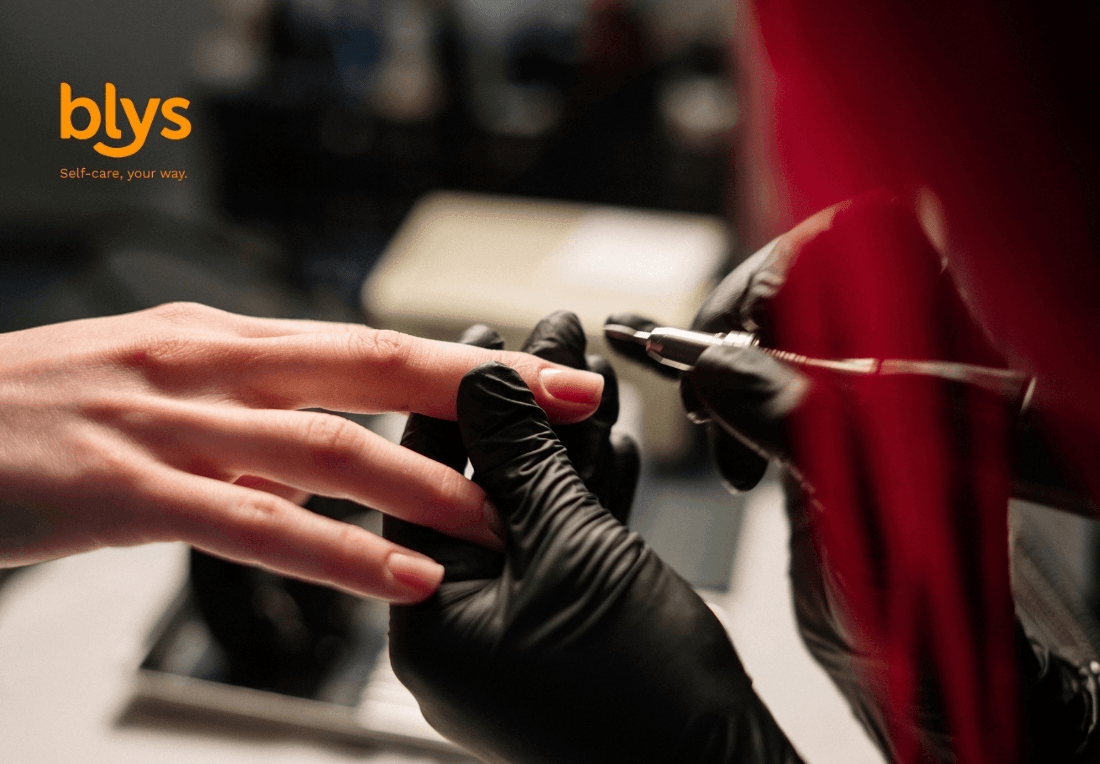
A Russian manicure uses an electric e-file on dry skin to remove cuticle more thoroughly, including the small amount that grows onto the nail plate, while a regular manicure soaks the hands first and uses metal tools to trim only the visibly overhanging cuticle. The real difference comes down to precision, longevity, cost, and, contrary to what the buzzing tool suggests, not necessarily pain.
Russian Manicure vs Regular Manicure at a Glance
| Russian Manicure | Regular Manicure | |
| Tool used | Electric e-file | Metal pusher and nippers |
| Technique | Dry, no soak | Soaked first |
| Cuticle removal | More thorough, including under the nail plate edge | Trims visible overhang only |
| Typical longevity with gel | Longer, cleaner surface for gel to bond to | Shorter, more prone to early lifting |
| Typical cost | Higher | Lower |
| Pain level, done properly | Minimal to none | Minimal to none |
| Training required | Specific e-file training beyond standard qualification | Standard manicure qualification |
Precision: How Much Cuticle Actually Gets Removed
The biggest real difference between the two techniques comes down to exactly how much dead skin actually leaves the nail bed.
Why a Russian Manicure Goes Further
The e-file technique itself removes cuticle from around and slightly under the nail plate edge, not just the visible overhang a standard metal tool reaches. This is the actual source of the noticeably cleaner, more precise finish people associate with the technique in the first place.
What a Regular Manicure Leaves Behind
A regular manicure, working with a softened, soaked cuticle and a metal pusher, generally only reaches the visible overhang rather than the fuller area a Russian manicure’s dry, precise technique can access. This isn’t a flaw. It’s simply a different, more conservative approach that leaves slightly more natural cuticle intact.
How Each Technique Handles Specific Nail Conditions
Naturally thin or fragile nails sometimes do better with the gentler, more conservative approach a regular manicure takes, since less aggressive cuticle work means less overall handling of a nail plate that’s already sensitive. Thicker, more resilient nail plates generally tolerate the more thorough Russian manicure approach without issue, which is part of why a technician assessing nail condition before choosing a technique counts for more than picking one purely because it sounds more advanced.
Longevity: Which One Actually Lasts Longer
A cleaner nail bed doesn’t just look better on day one. It actually changes how long the result holds up.
Why Cleaner Prep Means Fewer Lifting Problems
Gel lifting and early damage trace back almost entirely to prep quality, and the more thorough cuticle removal a Russian manicure provides creates a cleaner surface for gel to actually bond to. A regular manicure paired with the same gel polish typically shows earlier signs of lifting simply because slightly more natural cuticle sits between the nail plate and the product.
When a Regular Manicure Still Makes Sense for Longevity
Writing off a regular manicure as the lesser option undersells a technique that’s done its job perfectly well for a very long time. For a shorter-wear polish, or for anyone not specifically chasing maximum longevity, the longevity gap between the two techniques matters considerably less than it does for someone planning several weeks of gel wear.
Cost: Why One Costs More Than the Other
Choosing based purely on which one’s cheaper, without knowing what the price difference is actually buying, is like comparing two flights by price alone and being surprised one of them lands somewhere different.
The Real Reasons Behind the Price Difference
A Russian manicure typically costs more because it requires specific e-file training beyond a standard manicure qualification, a specialised tool, and generally takes longer to perform properly than a soak-and-push approach. The price difference reflects real additional skill and time, not an arbitrary markup on the same basic service. Comparing quotes without accounting for this difference in what’s actually included leads to an unfair comparison, the same way comparing two flights by price alone misses why one costs more than the other.
Pain: Does Either One Actually Hurt More
Assuming a spinning tool must hurt more than a pair of metal clippers is the kind of logic that’s never actually held a pair of aggressive cuticle nippers.
The Common Misconception About the Drill
The buzz of an e-file sounds more intimidating than it actually feels, and done properly, it’s often gentler than a metal tool pushing and trimming against resistant, overgrown cuticle. Neither technique should actually hurt when performed correctly, and assuming the drill is automatically the more painful option gets the comparison backwards more often than it gets it right.
Where Discomfort Actually Comes From in Either Technique
Discomfort in either technique almost always traces back to technician skill and pressure, not the tool itself. An inexperienced hand with metal nippers can nick skin just as easily as an inexperienced hand with an e-file can over-file, which is exactly why checking a provider’s actual experience and reviews counts for more than which specific tool they’re planning to use.
Training and Skill Differences Behind Both Techniques
A regular manicure sits within standard manicure training almost everywhere, while a Russian manicure specifically requires additional training focused on e-file use, since using one incorrectly carries real risk the metal-tool approach doesn’t carry in the same way. This training gap is exactly why asking a technician outright about their specific experience with e-file work counts for more before a Russian manicure than it does before a standard one.
Removal and Aftercare Differences Between the Two
The way each technique wears down over time, and how it should be removed or maintained, differs slightly along with everything else.
Aftercare Needs Are Slightly Different Too
A Russian manicure’s more thorough cuticle work benefits from a bit more aftercare attention in the days immediately following, since the surrounding skin has had slightly more removed than a regular manicure would take. A regular manicure’s more conservative approach generally needs less specific aftercare beyond normal hand care.
Neither Requires a Different Removal Process
Removal for gel or other product applied over either technique follows the same process either way, since removal is about the product on the nail, not the cuticle technique used beforehand. The manicure style itself doesn’t change how a gel set should come off.
Which One Should You Actually Book
Choosing between the two comes down to what actually matters most for a specific appointment, not which one sounds more impressive. Neither technique is a universal upgrade over the other, and a technician who insists one is always the right answer regardless of the situation is skipping the actual assessment that should decide it.
Choose a Russian Manicure If Longevity and Precision Matter Most
Anyone planning extended gel wear, dealing with naturally dry or overgrown cuticles, or simply wanting the cleanest possible finish gets the most out of a Russian manicure specifically, provided the technician performing it has real, specific e-file training.
Choose a Regular Manicure If You Want a Quicker, Simpler Option
A standard manicure works perfectly well for shorter-wear polish, a quick touch-up, or anyone without a specific reason to want the deeper cuticle work a Russian manicure provides. Neither option is objectively better across every situation. They’re built for slightly different priorities.
Picking the right one comes down to matching the technique to what actually matters for a specific appointment, not assuming one is universally superior to the other. Letting a provider know which priorities matter most, longevity, precision, or just a quick simple option, gets the right technique booked from the start.
Book a Manicure Session at Home →
Frequently Asked Questions
What’s the difference between a Russian manicure and a regular manicure?
A Russian manicure uses a dry, e-file-based technique that removes cuticle more thoroughly, while a regular manicure soaks the hands first and uses metal tools to trim only visible overhanging cuticle. The Russian technique typically costs more and lasts longer with gel polish.
Does a Russian manicure need different aftercare than a regular one?
Slightly, yes. The more thorough cuticle work benefits from a bit more attention in the days after, like cuticle oil, since more has been removed than a regular manicure would take.
Does the removal process differ between the two techniques?
No, removal depends on the product applied over the top, gel or otherwise, not the cuticle technique used beforehand. Neither manicure style changes how a gel set should come off.
Is one technique better for thin or fragile nails?
A regular manicure’s gentler, more conservative approach sometimes suits naturally thin or fragile nails better, since it involves less overall handling of an already sensitive nail plate. Thicker, more resilient nails generally tolerate the more thorough Russian manicure approach without issue.
What is a Russian manicure?
A Russian manicure is a nail technique that uses an electric e-file instead of traditional metal tools to remove cuticle and dead skin from around and slightly under the nail plate, done on dry skin rather than after soaking.
How is a Russian manicure different from a regular manicure?
The main differences are technique (dry versus soaked), tool (e-file versus metal pusher and nippers), and how thoroughly cuticle gets removed. A Russian manicure reaches further under the nail plate edge than a regular manicure typically does.
Are Russian manicures safe compared to regular manicures?
Yes, both are safe when performed by a properly trained technician. The real risk with either technique comes from inexperienced technique, not the tool itself, so checking specific training and experience counts for more than which method is chosen.
Which lasts longer, a Russian manicure or a regular manicure?
A Russian manicure paired with gel polish typically lasts longer, since the more thorough cuticle removal creates a cleaner surface for the gel to bond to, reducing the chance of early lifting.
Why does a Russian manicure cost more than a regular manicure?
It requires specific e-file training beyond a standard manicure qualification, a specialised tool, and generally takes longer to perform properly, all of which are reflected in the higher price.
Does a Russian manicure hurt more than a regular manicure?
No, neither should hurt when performed correctly. Discomfort in either technique comes down to technician skill rather than the tool itself, and an inexperienced hand can cause discomfort with metal tools just as easily as with an e-file.
Should I choose a Russian manicure or a regular manicure?
Choose a Russian manicure for longer-lasting gel wear or a cleaner, more precise finish, especially with naturally dry or overgrown cuticles. Choose a regular manicure for a quicker, simpler option without a specific need for deeper cuticle work.