Upper crossed syndrome is a mix of tight chest and upper neck muscles and weak mid-back muscles that long hours at a desk build up over time, and it shows up as forward head posture, rounded shoulders and sometimes a neck hump. Your chair has been quietly working on this project for years, one slouched hour at a time.
Massage can ease the tight parts, and a therapist can come to your home after work or to your office to do it. Remedial massage sessions work on the tight chest and shoulder muscles, Swedish settles the rest of the tension and assisted stretching opens the front of the body, though none of them replaces the movement that wakes up the weak muscles.
What Desk Work Builds: The Upper Crossed Mix
Your body adapts to whatever you do for eight hours a day, and sitting with your head poked toward a screen teaches some muscles to stay short and others to switch off.
How a Normal Day Builds the Mix
No single bad day does this, and it’s the eight hours a day over years that count. Your head drifts toward the screen, your shoulders roll forward to reach the keyboard and the mouse, your phone pulls your chin toward your chest and you rarely stand up long enough to undo any of it. The muscles you hold short all day learn to stay short, and the ones you stop using fade, which is how a normal job builds a very specific shape.
What Is Upper Crossed Syndrome?
Upper crossed syndrome is a mix of tight muscles at the chest and the back of the neck and weak muscles in the mid-back and the front of the neck, and the two sets cross over each other like an X, which is where the name comes from. It describes how the muscles are working, and a doctor or physiotherapist is the person who assesses it.
Tight Up Front, Weak at the Back
The tight muscles are the overachievers, always switched on and never rested, while the weak ones in the mid-back quietly leave the work to everyone else. Fascia, the connective tissue wrapped around those muscles, goes along for the ride, and myofascial release for tight tissue works on that layer. The table shows the usual line-up.
| Muscle group | Where it sits | Usually |
| Chest (pecs) | Front of the shoulders | Tight |
| Upper traps and levator scapulae | Top of the shoulders and sides of the neck | Tight |
| Muscles at the back of the neck | Base of the skull | Tight |
| Mid-back (rhomboids and lower traps) | Between and below the shoulder blades | Weak |
| Deep neck muscles | Front of the neck | Weak |
What It Looks and Feels Like
Forward head posture means your head sits ahead of your shoulders, rounded shoulders means they roll forward, a neck hump is a visible bump at the base of the neck and a hunched back is a deeper curve through the upper back. Most people notice an aching neck, tight shoulders and a chest that feels like it’s pulling inward after a long day, and the look and the feeling usually arrive together.
Hunched Back, Rounded Shoulders and Neck Hump: Are They the Same?
Not quite, though they overlap and often turn up together. Rounded shoulders is the forward roll of the shoulders, a hunched back is a deeper curve through the upper back and a neck hump is a bump at the base of the neck, and a doctor can tell you which one you’re looking at in the mirror. All three share the same forward-leaning look, so people often use the words interchangeably.
A Quick Self-Check at Your Desk
You need no equipment and no audience for this one: three minutes and a wall.
A Three-Minute Self-Check
Do this self-check in three steps:
- Stand with your heels, hips and upper back against a wall and let your arms hang. Does the back of your head touch the wall without you tipping your chin up?
- Ask someone to take a side photo of you at your desk. Do your ear, shoulder and hip roughly line up, or does your head sit ahead of your shoulders?
- Let your arms hang by your sides and look at your hands. Do your palms face backward, or your knuckles point forward, which can suggest rounded shoulders?
None of these steps diagnoses anything, and they’re only a way to notice what your body does.
What to Do With What You Notice
Write down where it feels tight and how many hours a day you sit, because both details go straight into your booking notes. A provider who knows you sit for eight hours and feel tight across the chest and the tops of your shoulders can plan the session around that, instead of guessing.
Massage for Rounded Shoulders: Which Type Fits Which Area
Each massage style suits a different part of the mix, from Swedish through myofascial release therapy to assisted stretching, and the table matches them up so you can pick without a degree in anatomy.
| Area | What’s going on | Massage that fits | What it involves |
| Whole back, neck and shoulders | General tension from sitting | Swedish | Long, flowing strokes across the back, neck and shoulders |
| Chest and front of the shoulders | Tight chest muscles pulling the shoulders forward | Remedial or myofascial release | Slow, firmer work on the chest and the connective tissue around it |
| Tops of the shoulders and back of the neck | Tight upper traps and neck muscles | Remedial or myofascial release | Focused work on those muscles |
| Front of the body | A closed-up chest and stiff front of the shoulders | Assisted stretching | Guided stretches that open the chest and shoulders |
| Mid-back | Weak muscles that need strengthening | Exercise, not massage | Movement from a physiotherapist or trainer |
Swedish Massage to Settle the Whole Back and Neck
Swedish massage uses long, flowing strokes at light to medium pressure, and it settles the general tension that builds across your back, neck and shoulders by the end of a desk day. It’s the easy starting point if you’re not sure what you need, since your therapist adjusts the pressure as you go, and it pairs well with the more specific work below.
Remedial or Myofascial Work on the Chest and Upper Traps
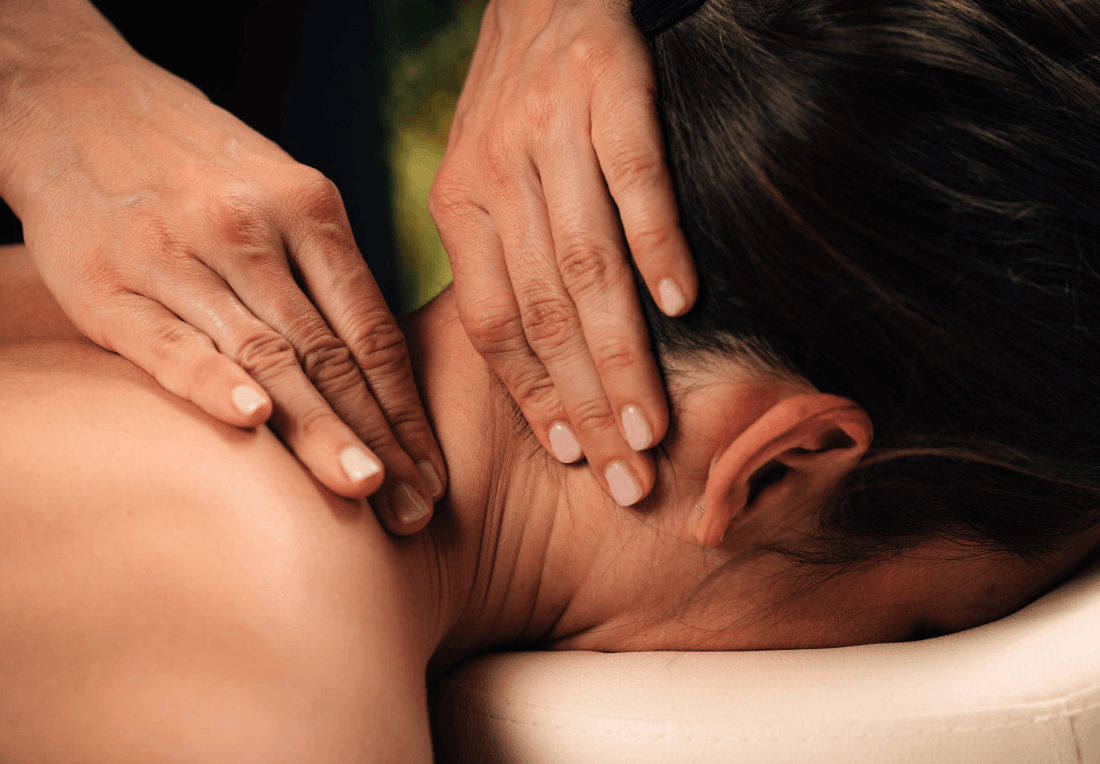
Remedial massage for tight muscles and myofascial release both work on the tight chest and upper trap muscles, with slow, firmer pressure on the muscle and the connective tissue around it. Your therapist often spends time on the chest, which surprises people who expected a back massage, since the front of the body is where rounded shoulders begin. Myofascial work is a slower, gentler style than most people expect.
Assisted Stretching to Open the Front of the Body
Assisted stretching sessions use guided stretches that open the chest and the front of the shoulders, with your provider doing the pushing and you doing the breathing. It’s the closest thing to a gentle unfolding, and it works well after a bout of massage has softened the tight areas. Two assisted stretching sessions a week in the same position as a desk day are a very different thing from a stretch you do alone in the hallway.
Planning a Session Around the Mix
Settle first, work specifically next and open up last is a sensible order for this mix. Swedish eases the general tension, remedial or myofascial work goes into the chest and upper traps and assisted stretching finishes by opening the front of the body. Ask your provider whether they can combine styles in one session or whether it’s better to arrange them on different days, since each style suits a different part of the mix.
What a Session Feels Like
Swedish feels like long, even strokes, remedial and myofascial work feel slower and firmer, and assisted stretching feels like a steady pull that you control with your breathing. Chest work can feel unfamiliar, because most people expect their back to be the focus, so say so if the pressure is too much and your provider will adjust. Any sharp or growing pain is a reason to stop, and a good session never needs you to grit your teeth.
What Massage Can and Can’t Do for Forward Head Posture
Massage is the warm-up act and movement is the main event, and the two work best as a pair.
Can Massage Help Forward Head Posture and Rounded Shoulders?
Massage can ease tight muscles in the chest, neck and shoulders, and assisted stretching can open the front of the body, but massage alone doesn’t strengthen the weak mid-back muscles that hold you upright, so it works best alongside movement. No session can promise to change your posture, and anyone who does is promising more than a massage can deliver.
Why Movement Still Matters
The weak muscles in the mid-back and the front of the neck need exercise to switch back on, and a physiotherapist or trainer can show you the moves that suit you. That’s why office workers often get the most from sessions that sit beside movement, which is the idea behind massage for office workers who sit all day.
Desk Habits to Pair With Your Sessions
A few small habits between sessions do more than any single hour on a table, and none of them need a new chair:
- Raise your screen so the top sits near eye level.
- Stand up and move every so often, even for a minute.
- Keep your keyboard close enough that your elbows rest by your sides.
- Lift your phone to eye level instead of dropping your chin to it.
- Turn a call into a walk when you can.
The best desk setup is the one that lets you leave the desk now and then, and a short chair massage session between meetings is one way to do it.
Arranging a Session at Home or at the Office With Blys
A massage after work beats a second coffee, and it’s easier when the therapist comes to you instead of the other way around.
After Work at Home
Bookings run from 6 am to midnight, seven days a week, so an after-work session at home fits around even a late finish. A 60-minute session at a clinic with 30 minutes of travel each way is a two-hour commitment after a long day. A 60-minute session at home is 60 minutes, and you stay on your own sofa afterward, which is the whole point of mobile massage vs spa.
At the Office
Chair massage sessions take as little as 10 to 20 minutes, which fits between meetings, and your therapist brings the chair and handles the setup and pack-down. Each chair needs about 1m x 1.5m of space, so a quiet corner, a sign-up sheet and a spot away from the printer are all the setup a team needs. For a whole team of desk workers, corporate massage at your workplace brings a therapist to the office, which means nobody has to leave the building to get a turn.
What to Put in Your Booking Notes
Put your desk hours and where it feels tight in your booking notes, such as the chest, the tops of the shoulders or the back of the neck. Add the style you’d like, whether Swedish, remedial, myofascial or assisted stretching, so your provider arrives knowing what to focus on.
When to See Your Doctor First
This page is general information about posture and massage, and it isn’t medical advice. It doesn’t diagnose upper crossed syndrome or any other condition, and it doesn’t promise that massage changes your posture or removes a neck hump. A neck hump in older adults can have medical causes, so see your doctor about a hump that’s new, growing or painful, or one that comes with numbness, tingling or weakness.
If your desk hours have turned your shoulders into earmuffs, a session after work is an easy place to start, and your chair can stay at the desk.