 You’re somewhere between the end of your first trimester and the home stretch of your third, your back has strong opinions about everything, and you’ve finally booked your first pregnancy massage. Smart move. Now you just want to know what’s actually going to happen when the therapist arrives at your door.
What do you wear? How do you lie down comfortably with a bump? Is the pressure going to feel safe? Can the therapist actually reach everything that’s been giving you grief? These are exactly the right questions and this article answers all of them, in plain English, before your session even starts.
One thing worth knowing upfront: if you’re booking through Blys, your pregnancy massage happens at home. A professional therapist comes to you with everything they need, sets up in your lounge room or bedroom, works for 60 or 90 minutes, and packs up on their way out. You don’t drive anywhere, sit in a waiting room, or navigate a car park at 34 weeks. That changes the experience in some genuinely practical ways and we’ll walk through all of it below.
What To Wear And What You Won’t Need To Figure Out
The short answer: whatever you’re comfortable in. Most people undress to their underwear, but you’ll never be expected to remove more than that. Throughout the session, the therapist uses draping clean sheets and towels to keep you covered at all times, only uncovering the area they’re actively working on.
If you’re having your pregnancy massage at home through Blys, you change in your own bedroom or bathroom. No clinic robe, no walk down an unfamiliar corridor, no figuring out someone else’s locker system. You’re in your own space from the moment the provider arrives to the moment they leave.
A few practical things to sort before your session:
- Skip tight waistbands or anything that leaves marks on your skin pressure-point indentations make the therapist’s work harder and less effective
- Remove jewellery from your neck and wrists before the session starts
- Loose maternity shorts or stretchy bike shorts can make side-lying positions significantly more comfortable, especially in the third trimester
How A Provider Sets Up For Your At-Home Pregnancy Massage
Here’s something most pregnancy massage articles skip entirely probably because they’re written with clinic visits in mind. When a provider you book through Blys arrives at your home, they bring a professional massage table, fresh linen, pregnancy-appropriate oils (typically unscented or with pregnancy-safe formulations), and all the bolsters and pillows needed to position you safely throughout the session. Setup takes around ten minutes. You need a clear space a lounge room or bedroom works perfectly.
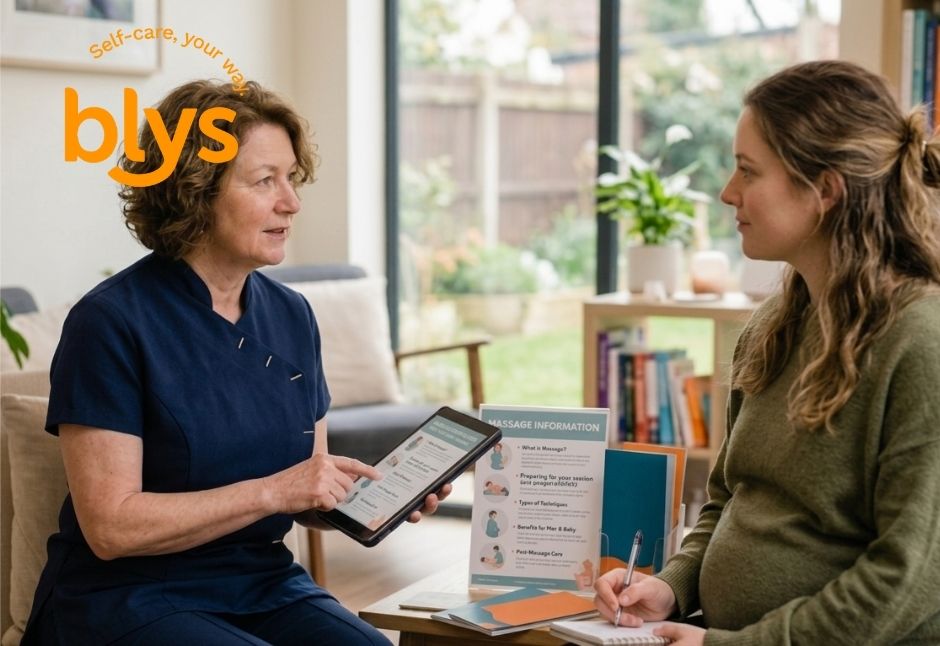
Before the massage starts, the therapist runs through a brief intake: how far along you are, which areas are causing the most trouble, and whether your GP or midwife has flagged anything to keep in mind. It’s a short, focused conversation not a form-filling exercise just the information needed to make the next 60 or 90 minutes as useful as possible.
Here’s the part that genuinely sets at-home sessions apart: when it’s over, you don’t have to go anywhere. You move directly from the massage table to your couch. At 32 weeks, that’s not a minor detail. It’s a meaningful difference and one you won’t find covered in any clinic-based guide.
Before your appointment, is pregnancy massage safe? is worth a read it covers the evidence by trimester and answers the questions most people are quietly wondering about.
What Positions Are Used During A Pregnancy Massage?
Side-lying is the main position and it works better than almost every first-timer expects. You’ll lie on your left or right side with a bolster or pillow between your knees, which keeps your hips aligned and takes real pressure off your lower back. From this position, the therapist can reach your back, hips, glutes, legs, shoulders and neck without any trouble. You’ll switch sides partway through the session.
In the second trimester, a semi-reclined position is sometimes used the table or a wedge is angled so you’re leaning back at around 45 degrees rather than lying fully flat. This tends to feel comfortable and allows the therapist to work on the front of the legs and, if you’d like it, light abdominal work.
What you will not do: lie face-down with your bump through a hole in the table. That’s not how a proper pregnancy massage works. After the first trimester, prone positioning isn’t used. A therapist experienced in pregnancy massage works with the shape your body is in right now bump included.
What Does The Pressure Feel Like And Why Do Certain Areas Get Special Attention?
Pregnancy massage isn’t one flat setting applied to everything. Pressure shifts throughout the session based on the area, your trimester, and what you feed back as you go. Broadly, it’s gentler than a deep tissue session but that doesn’t mean light. It means precise and adapted.
Why your lower legs are handled differently
Certain acupressure points around the ankles and lower calf are avoided during pregnancy because of their potential link to uterine stimulation. An experienced therapist knows exactly where these points are and works around them it’s standard practice, not something you need to request. For full detail on what’s avoided and why, the Blys pregnancy massage guide covers it clearly.
Why your lower back gets checked in on throughout
Moderate pressure on the lower back is appropriate for most pregnant women, but it’s an area the therapist revisits rather than works through once and moves on from. Say something if anything feels off at any point that feedback shapes the whole session.
Why hips and glutes often get the most attention
This is where the most impactful work tends to happen. Sciatic pain and hip tightness are among the most common pregnancy complaints from the second trimester onward, and focused work in this area often delivers the most noticeable and lasting relief. Don’t be surprised if the therapist spends a good chunk of time here.
Research published through PubMed consistently finds that regular pregnancy massage is associated with lower cortisol levels, improved sleep quality and reduced anxiety, particularly in the third trimester. A study in the Journal of Bodywork and Movement Therapies found meaningful reductions in both back and leg pain with consistent sessions.
How Long Will It Take And What Should You Do When It’s Done?
Most sessions run for 60 or 90 minutes. For a first pregnancy massage, 60 minutes is the right starting point it covers the key areas (back, hips, legs, shoulders, neck) without overdoing it. If you’re managing something specific like significant sciatic pain or persistent fluid retention, 90 minutes gives the therapist more time to focus where it counts.
After your session, here’s what actually helps:
- Drink water: Massage improves circulation and helps move fluid through the body staying hydrated supports that process.
- Rest when you can: Even 20 minutes lying down after the session makes a real difference. One of the standout advantages of booking a pregnancy massage through Blys at home is that this rest is immediate your couch or bed is right there. No car journey, no stairs, no effort.
- Check in with yourself over the next 24 hours: Some women feel the benefit straight away; for others it builds the next day. Mild muscle fatigue is completely normal. If you notice anything unusual cramping, reduced foetal movement, or unexpected swelling contact your midwife or GP.
- Plan your next session: Many women settle into a fortnightly rhythm during the second and third trimesters. Others book monthly. Let what your body is managing guide the schedule.
Ready To Book Your First Pregnancy Massage?
Now you know what a pregnancy massage actually involves what positions work, how pressure adapts across different areas and trimesters, which parts of the body get the most attention, and why an at-home session suits pregnancy so well.
Providers you book through Blys are vetted, insured and experienced in pregnancy massage, and they arrive at your door with everything they need. Explore pregnancy massage on the Blys platform and find a trusted local therapist available near you. Your back has been patient long enough.