Most Australian organisations have a wellness program. However, most of those programs are underused. That’s not a funding problem or a communication problem, it’s a design problem. And the fix is simpler than most HR teams expect.
The Uptake Problem with Workplace Wellness Ideas
The numbers on corporate wellness participation are not flattering. According to Ken Research, only 30% of Australian employees actively engage in the wellness initiatives offered to them. A RAND Corporation study puts the global participation range at 20 to 40 percent, depending on the size and design of the program. That means most organisations are investing in wellness benefits that the majority of their workforce quietly ignores.
Meanwhile, Employment Hero’s 2024 Wellness at Work Report, which surveyed over 1,000 Australian workers, found that 85% experience stress at least a few times a month, and 66% have felt burnt out in the past three months. The demand for wellbeing support is clearly there. The programs just aren’t meeting it.
The gap between what’s offered and what gets used is the real problem, and understanding why that gap exists is where recovery starts.
Why Effort Is the Enemy of Employee Wellness Program Ideas
Think about how most workplace wellness benefits work. There’s a gym membership discount that requires the employee to travel to a gym, find the time, and build a new habit. There’s a meditation app that requires downloading, configuring, and remembering to open. There’s an Employee Assistance Program (EAP) that requires the employee to recognise they need help, overcome the discomfort of asking for it, and then navigate a phone or online booking process.
Each of these involves effort on the part of the person the benefit is meant to support. And effort is exactly what a stressed, burnt-out employee has the least of.
The gym membership example is worth staying on. Studies consistently show that gym memberships purchased in January are largely unused by March. The problem isn’t motivation, but that most people who buy them genuinely intend to use them. The problem is that getting to a gym requires a decision to go, time set aside, and travel. Under normal conditions, that’s manageable. Under work stress, it’s the first thing that drops off.
The same logic applies to almost every wellness benefit that requires the employee to go somewhere or do something outside their normal day. The benefit exists, but the barrier to using it is just slightly higher than it needs to be.
The Case for Delivered Wellness at Work
The research on what actually drives wellness program uptake points consistently to one factor: convenience. According to the 2024 Australian Corporate Wellness Market Report, the onsite delivery model holds the largest market share precisely because it removes the need for employees to travel to access a benefit. When wellness comes to the employee rather than the other way around, participation increases.
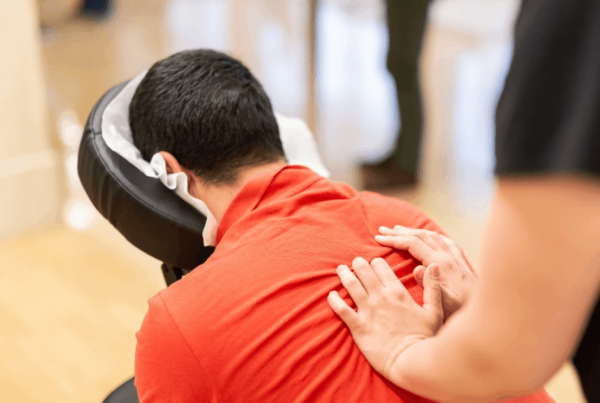
This is the case for delivered wellness, and specifically, for in-office or at-home massage as a team benefit. It requires nothing from the employee except showing up. No travel, no new habit to build, or an app to download. A therapist comes to the workplace, employees engage in a 10 to 20-minute session into their day, and they return to their desk having had a genuine physical recovery break.
The workplace stress management research is clear on why this matters beyond convenience. A 2024 systematic review of 137 studies found that physical touch interventions are especially effective at regulating the body’s stress response. Massage addresses the physical dimension of workplace stress: the tension in the neck, shoulders, and back, in a way that a mindfulness app simply cannot.
For remote teams, the same logic applies. In-home massage sessions through Blys bring the benefit to the employee at their home, with the same zero-effort access model.
What Actually Gets Used: Staff Wellbeing Activities That Work
The employee wellbeing ideas with the highest uptake share one characteristic: low friction. Here’s what the data and the experience of organisations using delivered wellness consistently shows.
In-office chair massage
Chair massage at the workplace is one of the highest-uptake wellness benefits available. It requires no preparation, no travel, and no time outside the working day. A therapist sets up in a meeting room or open space, employees book short sessions, and the benefit is accessible to everyone in the office that day, including the people who would never book a massage on their own time.
In-home massage for remote workers
For remote or hybrid teams, in-home massage through Blys gives employees access to the same benefit without coming into the office. A local therapist travels to the employee’s home, fully equipped, at a time that suits them. For team wellbeing ideas that actually reach remote workers, this is one of the few formats that genuinely works.
Gift vouchers as a team wellness benefit
For distributed teams or organisations that want to give employees flexibility, Blys gift vouchers can be offered as part of a wellness allowance. Employees choose their own service and time. The benefit is tangible, personal, and immediately usable, which is why it tends to get used, unlike a gym subsidy that requires a separate sign-up process.
How to Measure Whether Your Employee Wellbeing Ideas Are Working
If your wellness program can’t be measured, it can’t be improved. Here are the metrics worth tracking.
Participation rate
The most basic measure: what percentage of your team actually used the benefit in a given period? For in-office massage days, this is easy to track since every session is a booked appointment. A participation rate below 50% is a signal to look at the format, not the budget.
Absenteeism
Track sick days and unplanned absences before and after introducing a regular wellness benefit. Chronic physical tension and stress are among the leading contributors to short-term absenteeism. A reduction over six to twelve months is a meaningful signal.
Engagement scores
Most organisations run annual or quarterly engagement surveys. Add a specific question about whether employees feel their physical wellbeing is supported by the organisation. Track it over time as a wellness-specific engagement indicator.
Repeat bookings
For platforms like Blys, repeat booking rates among employees who’ve used the benefit are a strong proxy for satisfaction. An employee who rebooks is an employee who found it useful, not just convenient.
Self-reported stress levels
A simple monthly pulse question: “How would you rate your stress level this week?” on a scale of one to five. This gives you a running picture of team stress that can be linked against the flow of your wellness benefit. It takes two minutes to answer and generates data that’s actually useful for making decisions.
The organisations that get the most out of employee burnout prevention are the ones that treat wellness as something to be measured and iterated on, not announced and forgotten.
What to Do Instead
The shift is not complicated. It comes down to one question: does this benefit require effort from the employee, or does it come to them?
If the answer is the former, the uptake will reflect it. If the answer is the latter, if the wellness arrives, requires nothing beyond showing up, and fits into the working day rather than around it, you’ll see the numbers move.
In-office chair massage through Blys is one of the most practical ways to make that shift. Therapists come to the workplace, employees book short sessions during the day, and the physical recovery benefit reaches the people who need it most, including the ones who would never prioritise it on their own.
For distributed teams, Blys gift vouchers extend the same benefit to employees wherever they are.
If you’re ready to build a wellness program your team will actually use, get in touch with our team.