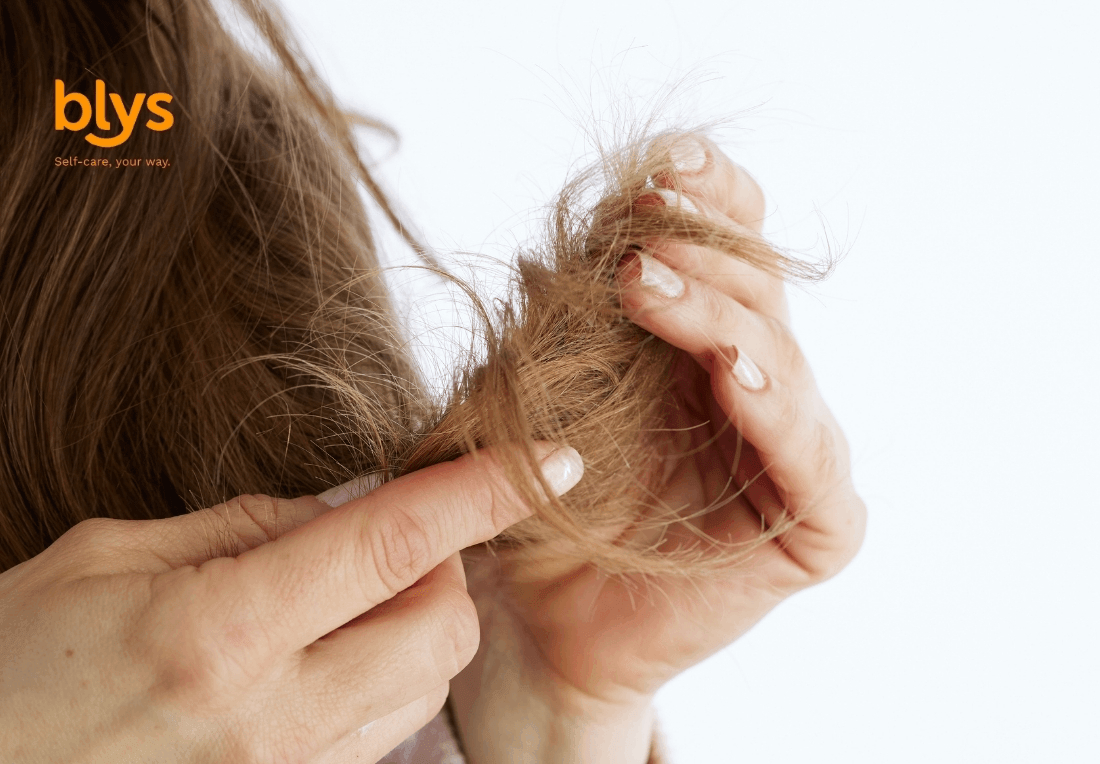
Split ends can only actually be removed by trimming them off, since no product on the market actually repairs a structurally split hair shaft, no matter what the label promises. Believing a serum can permanently repair a split end is the hair care equivalent of believing duct tape can permanently fix a cracked windshield, it holds things together for a while, but nobody’s calling it a repair.
Spotting Split Ends Before They Get Worse
Catching a split early makes the eventual trim smaller and the whole process considerably less dramatic.
What to Actually Look For
Twirling a section of hair between two fingers and looking closely at the ends reveals splits as small forks or frayed points at the very tip, often visible even without particularly good lighting once you know what to look for. Hair that feels rough or straw-like at the ends, even when the rest of the length feels normal, is often a sign splits are already present even before they’re clearly visible.
Checking Regularly Catches Problems Early
A quick check every few weeks, rather than waiting until hair feels obviously damaged, catches splits while they’re still small and contained near the tip rather than after they’ve already travelled further up the shaft.
What Actually Causes Split Ends
Knowing what actually splits a hair shaft in the first place makes prevention considerably easier than guessing at random fixes afterward.
Heat and Styling Damage
Repeated exposure to straighteners, curling irons, and blow dryers, especially without a heat protectant, gradually weakens the hair’s outer layer until it eventually splits under the stress. Higher heat settings and more frequent styling sessions both add up faster than most people expect.
Chemical Processing and Over-Colouring
Bleaching, colouring, and chemical treatments like relaxers or perms all alter the hair’s actual structure, and repeated or overlapping processing without adequate recovery time between sessions leaves hair considerably more prone to splitting. Already-compromised hair needs a more careful approach than hair that hasn’t been recently processed, a real consideration before booking a colour service like balayage. This doesn’t mean colour treatments are inherently damaging on their own, just that stacking too many chemical processes too close together adds up.
Mechanical Friction and Rough Handling
Aggressive towel drying, tight hair ties, rough brushing through tangles, and sleeping on regular cotton pillowcases all create ongoing friction that wears down hair over time, even without any heat or chemical involvement at all. Ignoring a split end long enough doesn’t make it go away, it recruits reinforcements and works its way further up the hair shaft like it’s got somewhere important to be.
Simple Age and Infrequent Trims
Hair ends are the oldest part of any given strand, having been through the most washing, styling, and general wear since they first grew out, which makes them naturally more prone to splitting regardless of how gently they’re treated. Going too long between trims lets existing splits travel further up the shaft rather than staying contained at the very tip.
Nutrition and Overall Health Play a Real Role Too
Hair is built from protein, and a diet actually lacking in protein, iron, or key vitamins can leave hair more brittle and prone to splitting regardless of how gently it’s styled or handled externally. This isn’t a replacement for proper hair care, but it’s a real, often-overlooked factor sitting underneath everything else on this list.
Split End Treatment Options That Actually Work
Attempting DIY split end removal with kitchen scissors in questionable bathroom lighting is a decision everyone regrets exactly one haircut appointment too late.
The Only Permanent Fix: A Proper Trim
A trim is the only actual solution that removes a split end rather than temporarily managing it, since cutting above the damaged point is the sole way to eliminate the structural problem entirely. Getting this done by a professional, rather than attempting it solo at home, protects against removing more length than actually necessary or missing splits further up the shaft. Checking typical pricing beforehand helps set realistic expectations for what a proper trim actually costs.
What Split-End Serums Actually Do (and Don’t)
Split-end serums and sealing products, usually containing silicones or bonding agents, temporarily smooth the split and glue it together enough to look better and resist worsening in the short term. This is real, useful damage control, not a repair, and washing the hair removes most of this temporary effect, meaning the underlying split is still there once the product wears off.
Deep Conditioning and Protein Treatments
Regular deep conditioning and occasional protein treatments can actually improve overall hair strength and resilience, reducing how likely new splits are to form going forward, though neither treatment fixes splits that already exist. Treating this as prevention rather than a cure sets a far more accurate expectation for what these treatments can actually deliver, and avoids the disappointment of expecting a conditioning mask to undo damage that’s already structurally there.
How to Prevent Split Ends Going Forward
Skipping trims to save money on hair growth ranks among the more expensive money-saving strategies in general circulation, since untreated splits just mean more length needs cutting off later.
Heat Protectant and Lower Styling Temperatures
Using a proper heat protectant every time heat tools get used, and dropping the temperature setting where possible, noticeably reduces the cumulative damage that eventually leads to splitting. This single habit does more for long-term hair health than almost any other single change available.
Gentler Detangling and Drying Habits
Switching from a regular towel to a microfibre towel or soft t-shirt for drying, and detangling with a wide-tooth comb starting from the ends rather than the roots, both reduce the everyday friction that wears hair down over time. Simple hair care habits between professional appointments matter more than most people expect, since these small daily choices add up considerably faster than any single salon visit could undo.
Protecting Hair While You Sleep
A silk or satin pillowcase reduces the friction a regular cotton pillowcase creates overnight, and loosely tying hair up before bed prevents the tangling that leads to rougher handling the next morning. This is a properly low-effort change that pays off over months rather than overnight.
Understanding Your Own Hair’s Actual Needs
Knowing your hair’s actual porosity helps explain why some hair holds onto moisture and resists splitting better than others, since more porous hair usually loses moisture faster and becomes more prone to damage without the right care matched to that specific need. Curly hair specifically often needs extra attention here, since natural oils struggle to travel down a curled strand the way they would down straight hair, leaving ends more exposed to dryness and splitting over time.
Sticking to a Regular Trim Schedule
A trim roughly every six to eight weeks keeps existing splits from travelling further up the shaft and catches new damage before it becomes a bigger problem, even when hair is being actively grown out rather than kept short. Booking this on a consistent schedule, rather than only when damage becomes visibly obvious, protects length far more effectively than reactive trims ever manage to.
Getting a proper trim on a consistent schedule protects the length you’re actually trying to grow, rather than working against it. The trim itself is the only part of this that actually removes the problem, so it deserves to be the priority rather than an afterthought.
Get a Hair Cut or Trim at Home →
Frequently Asked Questions
Does diet actually affect split ends?
Yes, hair is built from protein, and a diet lacking in protein, iron, or key vitamins can leave hair more brittle and prone to splitting, regardless of how gently it’s handled externally.
How do you get rid of split ends?
The only way to actually remove a split end is trimming it off. Products can temporarily smooth and manage the appearance, but nothing reverses the actual structural split.
How can I tell if I actually have split ends?
Twirl a section of hair between two fingers and look closely at the tips for small forks or frayed points. Hair that feels rough or straw-like at the ends, even when the rest feels normal, is often a sign splits are already present.
How often should I check for split ends?
Every few weeks rather than waiting until hair feels obviously damaged, since catching splits early keeps them small and contained near the tip rather than travelling further up the shaft.
What is the best split end treatment?
A proper trim is the only treatment that removes existing splits. Deep conditioning and protein treatments help prevent new splits from forming but don’t fix damage that’s already there.
How do you prevent split ends?
Use heat protectant with lower styling temperatures, switch to gentler drying and detangling habits, sleep on silk or satin, and stick to a trim roughly every six to eight weeks.
Can split end serums actually repair damaged hair?
No, they temporarily smooth and seal the split for a better appearance and short-term resistance to worsening, but the underlying structural damage is still there once the product washes out.
How often should hair be trimmed to prevent split ends?
Roughly every six to eight weeks, even while growing hair out, since this keeps existing splits from travelling further up the shaft before they’re caught.
Do split ends get worse if left untreated?
Yes, an untreated split can travel further up the hair shaft over time, eventually requiring more length to be cut off than if it had been trimmed earlier.
Does hair porosity affect how prone hair is to split ends?
Yes, more porous hair usually loses moisture faster, which can leave it more prone to dryness and splitting without care specifically matched to that porosity type.
Does chemical processing history affect how a colour service should be planned?
Yes, already-compromised hair from repeated processing needs a more careful approach than hair that hasn’t been recently treated, a detail to raise with a colourist before booking something like balayage.
Are split ends caused by anything other than heat styling?
Yes, chemical processing, mechanical friction from rough towel drying or brushing, environmental exposure, and simple age of the hair ends themselves all contribute alongside heat damage.
Can deep conditioning fix existing split ends?
No, deep conditioning improves overall hair strength and can reduce how likely new splits are to form, but it doesn’t repair splits that already exist.