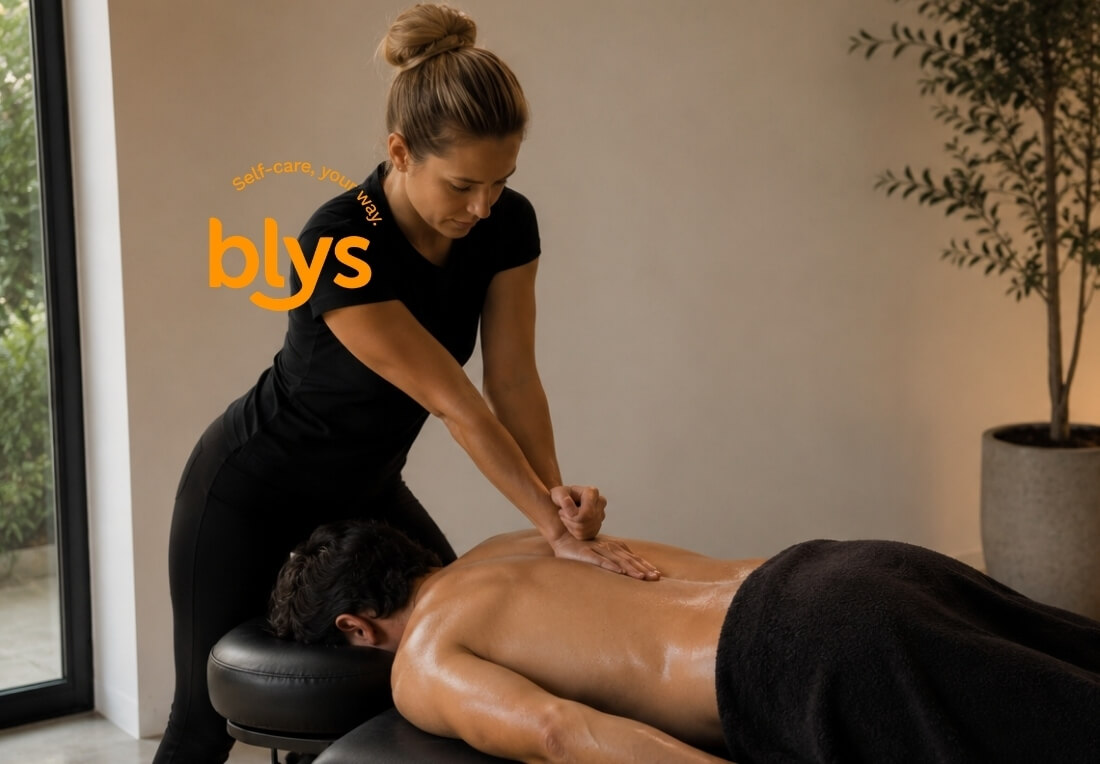
By the time most people notice they are burnt out, the evidence has already been sitting in their shoulders, jaw, and hips for months. Most stress treatments address the mental layer without ever touching the physical one, which is why people can meditate, take time off, and do everything right and still feel like they are carrying something they cannot put down. What they are carrying is in the tissue, and nothing they have tried has reached it yet.
Lomi lomi for emotional release works at that layer. What happens to the mental dimension as a result catches people off guard in the best way, and the physical and emotional benefits are more connected in this treatment than in any other massage style.
Why Lomi Lomi Affects the Nervous System Differently to Other Massage Styles
The difference is in what the continuous strokes do to the brain’s threat-detection system, and why that matters.
How the Rhythm Changes the Body’s State
The nervous system has a rest mode and an alert mode. Most people who are chronically stressed spend the majority of their time in alert mode whether or not there is anything to be alert about, and the body accumulates the cost of that over time as tight muscles that never fully release, a breathing rhythm that stayed shallow and became a habit, and a resting tension the person eventually stops noticing because it has been constant long enough to feel normal.
Lomi lomi shifts this because the continuous, uninterrupted strokes do not give the brain anything to track. The brain looks for variation, for the next thing requiring attention, and when the strokes continue in an unbroken rhythm without the pauses and transitions that most massage styles include, the nervous system runs out of things to monitor and stops looking. Most people do not notice when this happens, they just notice at some point that they are somewhere quite far under and have no idea when they got there.
The Difference Between Relaxation and Restoration
A regular massage produces relaxation, and lomi lomi produces something closer to restoration, and they are not the same thing. Relaxation is the surface tension reducing. Restoration is the whole system downregulating: the nervous system, the breath, the held tension in the tissue, the background noise that chronically stressed people have stopped being able to hear because it became constant a long time ago.
The distinction shows up the next morning rather than the next hour. A regular massage feels good and fades within a day, while a lomi lomi session often feels subtle immediately and noticeably different the following morning, with an ease in the body that is hard to trace back to anything specific, because it was not specific. It was everything at once. It is also one of the reasons session length matters more for lomi lomi than for most other styles. The treatment needs time to work through to completion, not just to begin.
Lomi Lomi Stress Relief: The Mechanism Behind It
Lomi lomi for stress has a measurable physiological basis, and understanding it explains why the results feel different from what most people have experienced before.
What Cortisol Has to Do With It
Cortisol is the body’s stress hormone, useful in short doses and disruptive when it stays elevated for weeks or months at a stretch, which is what happens during long periods of pressure. Chronically high cortisol disrupts sleep, slows recovery, and increases inflammation, alongside creating a baseline physical tension that keeps reinforcing itself because the body stays tight when the system stays alert, and the system stays alert partly because the body is tight.
Massage reduces cortisol, and this is well established, but lomi lomi appears to do this faster and more completely than styles with more interruption in them. The rhythm is not incidental to the treatment, it is the mechanism.
What Most Stress Treatments Miss
The reason people can do everything right, whether that is sleep, exercise, meditation, or time off, and still feel like they are not recovering is that the body holds stress in the tissue as well as the mind. The jaw stays tight, the chest stays closed, and the hip flexors stay shortened. These physical habits persist long after the immediate pressure has passed, and they keep signalling tension to the nervous system even when the external situation has changed.
Lomi lomi addresses this at the tissue level across the whole body in a single session, which is why people sometimes feel something shift that they cannot quite locate. It was not in any one place.
Lomi Lomi Massage Emotional Healing: What People Actually Experience
The emotional dimension of lomi lomi is the most commonly undersold aspect of the treatment, partly because it is hard to describe without making it sound more dramatic than it usually is.
What Emotional Release Actually Looks Like
Lomi lomi for anxiety and stress sometimes produces an emotional response during the session, though not always and rarely in the way people imagine when they hear the phrase. It is more often a sudden welling of tears with no obvious cause, a feeling of unexpected sadness or relief that does not attach to anything specific, or an emotion that surfaces and passes before the person has time to name it, which is part of why knowing what to expect from a session beforehand makes the experience easier to be present for.
Some people feel a lightness afterward that they do not have a word for, and some feel a grief they did not know they were still carrying, and some feel nothing during the session and then spend the next two days in an unusual, unaccountable calm. None of this requires a dramatic life event to explain it, it just requires a body that has been holding something, which describes most people who book a lomi lomi session.
What to Do When It Happens
The most useful response is to let it happen and say nothing unless you want to. The therapist has seen it before, so they will not make it strange, and will not change the session unless you ask. The urge to apologise is almost universal and completely unnecessary, because nothing has gone wrong, and if anything, something specific and useful has gone right.
The session that produces a quiet cry halfway through is often the one people describe years later as the one that actually helped. This is worth knowing.
Why the At-Home Setting Supports Lomi Lomi for Anxiety
The environment matters more for lomi lomi than for most massage styles, because the treatment is specifically working to move the nervous system out of alert mode, and where that happens either helps or works against it.
Why Arriving Somewhere Costs More Than It Sounds
Getting to a spa or clinic involves a sequence of small alerting cues: navigating somewhere new, parking, interacting with reception, being in an unfamiliar environment. None of these is stressful in isolation, but together they create a background level of activation that the session then has to work through before it can work with the nervous system properly. The first fifteen minutes of many spa sessions are spent arriving rather than recovering.
A home session starts from a baseline that is already lower, because the environment is already known and safe, which means booking lomi lomi at home gives the nervous system a head start rather than a hurdle. That difference in starting point shows up in how far the session gets by the end.
What to Protect After the Session
The two to three hours after lomi lomi are when the restoration effect is most active, and filling them immediately with screens, difficult conversations, or anything that pulls the nervous system back into alert mode interrupts the process at exactly the wrong moment. Nothing elaborate is required, just not immediately giving the system a reason to restart, which is considerably easier when the session ends at home and the next thing on the agenda is already whatever you want it to be.
The stress will still be there tomorrow, and the question is whether your body will be in a better position to deal with it than it is right now. Book a lomi lomi massage at home through Blys, available 7 days a week, 6 am to midnight across Australia.