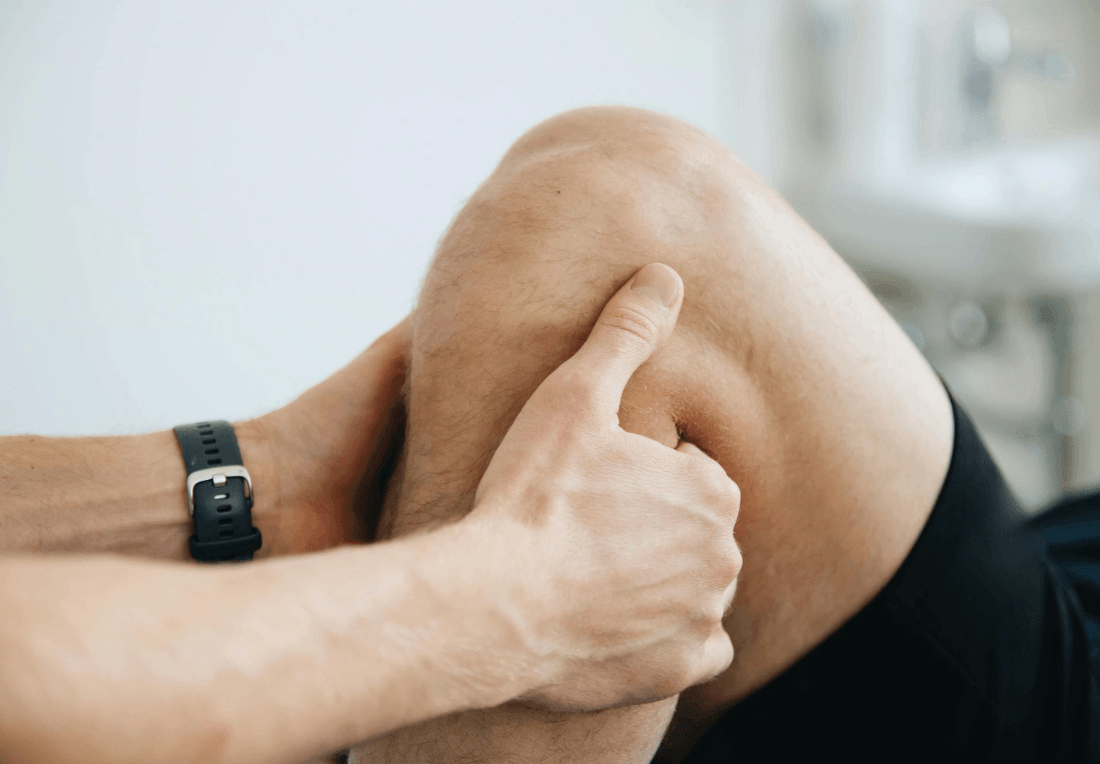
Massage after knee replacement is gentle, specific work that sits alongside your rehab plan, and it can start only with your surgeon’s or physio’s clearance. Your new knee is brilliant at its job and terrible at looking calm, so it swells, stiffens and sulks on a schedule of its own. A therapist works above the joint with light strokes aimed at moving fluid, and on the tight thigh and calf muscles around it, never on the incision itself, and you can arrange post-op lymphatic drainage massage at home without leaving the house.
Why the Knee Swells and Stiffens After Replacement
Your knee doesn’t read the rehab handbook, so it swells and stiffens whenever it likes, and understanding why makes the whole process feel less personal.
Why Does the Knee Swell After Replacement Surgery?
The knee swells after replacement surgery because your body sends extra fluid and blood flow to the area as part of healing, and the surgery itself disturbs the tissue around the joint. The swelling can feel tight, warm and heavy, and it often looks worse at the end of a busy day than first thing in the morning.
Why Does the Knee Feel So Stiff?
The knee feels stiff because swelling, tender tissue and tight muscles all limit how far it bends and straightens, and the muscles around the joint tighten to protect it. That protective tightening is sometimes called guarding, and the thigh and calf muscles are the usual suspects. Movement is the physio’s territory, and mobile physiotherapy at home brings the exercises to your living room.
How Does Swelling Change Week by Week?
Swelling and stiffness are usually strongest in the early weeks, settle gradually over the weeks that follow and can come and go with activity for months afterwards. The table gives the general shape, and your surgeon or physio sets the real expectations for your knee.
| Phase | What people commonly notice | What home life looks like |
| Early weeks | The most swelling, warmth and stiffness | Rest, a walking aid, lots of pillows and short trips between chair and bed |
| Middle weeks | Swelling settling, with ups and downs after activity | Rehab exercises most days, longer walks as cleared and a routine that mostly works |
| Later weeks | Less swelling, with tightness after busy days | More independence, shorter rests and a growing list of things you can do yourself |
| Months on | Occasional swelling after big days | Normal life with a knee that still has opinions |
Normal Swelling vs Signs to Call Your Surgeon
Surgeons expect a swollen knee after replacement surgery, so the useful question is which signs fit that picture and which deserve a phone call.
What Counts as Normal Swelling After Knee Replacement?
Surgeons commonly expect swelling, warmth, bruising and stiffness after knee replacement, and your surgeon sets what’s normal for your procedure. Note how your knee feels at the same time each day, so the next check-in has a clear picture instead of a vague it’s still puffy.
What Are the Signs to Call Your Surgeon?
Call your surgeon about a fever, redness or warmth that spreads, pus or a bad smell from the incision, pain that’s getting worse instead of easing, swelling that grows fast, an incision that opens, or new pain, swelling or warmth in the calf. Call emergency services on 000 for chest pain or sudden breathlessness, and mention any new calf symptoms to your surgeon before any massage.
When Massage After Knee Replacement Fits In
Massage fits in as a support act, so the useful question is when it’s allowed and what the therapist actually does.
Can You Have Massage After Knee Replacement?
Yes, once your surgeon or physio clears it, and the work stays gentle and away from the incision. Clearance comes first, and a therapist who knows your surgery date and your rehab plan can plan the session around both, so have the dates and the plan ready when you arrange it.
What Is Lymphatic Drainage After Knee Replacement?
Lymphatic drainage after knee replacement is gentle, rhythmic stroking above the knee, aimed at moving fluid, with no work on the incision itself. The strokes are light and slow, which surprises people who expect firm pressure. The same light technique applies after other surgeries, and lymphatic drainage massage for liposuction and tummy tuck works the same gentle way.
What Gets Worked On?
A therapist works on three areas: gentle lymphatic strokes above the knee, slow work on the thigh muscles and slow work on the calf muscles. The table shows what each area involves, and nothing goes on the incision itself.
| Area | What the therapist does | What stays off limits |
| Above the knee | Light, rhythmic strokes aimed at moving fluid | The incision |
| Thigh | Slow, gentle work on the muscles that tighten around the joint | The incision |
| Calf | Slow, gentle work on the calf muscles, once your surgeon or physio is happy for it | The incision, and any calf with new pain, swelling or warmth |
Does Massage Replace Physio?
No, massage sits alongside your rehab plan and never takes its place. Physio is the headliner and massage is the supporting act, and a good supporting act knows when to stay off the stage. The exercises, the walking and the range-of-motion work stay with your physio, and massage fits in around them.
Fitting Massage Around Your Rehab Plan
Rehab is the main job, and massage works best when your physio and your therapist both know the plan.
How Do You Fit Massage Around Physio?
Ask your physio or surgeon how they’d like sessions timed around your exercises, and plan your massage days around their answer. A short note about the plan helps your therapist, and a short note about the massage helps your physio, so your physio and your massage therapist can share the same information.
Who Does What: Physio, Lymphatic Drainage and Remedial Massage
A physio guides your exercises and movement, lymphatic drainage uses light strokes aimed at moving fluid and remedial massage sessions work on tight muscles with firmer pressure. The table sets the three side by side, and your surgeon or physio decides which suit your stage.
| Support | Focus | Touch | Ask first |
| Physiotherapy | Exercises, movement and walking | Guided and hands-on | Your surgeon |
| Post-op lymphatic drainage | Moving fluid above the knee | Very light and rhythmic | Your surgeon or physio |
| Remedial massage | Tight thigh and calf muscles | Firmer than drainage, adjusted to you | Your surgeon or physio |
What Should You Tell Your Physio and Your Therapist?
Tell each of them what the other is doing. Share your surgery date, which knee, your exercises, any rules your surgeon gave you and what feels tender, and ask your physio to pass on anything the therapist should know. A therapist who knows the plan can work around it, instead of guessing.
Questions to Ask Before You Add Massage
A few questions at your next check-in save a lot of guessing later, and your surgeon or physio will have answers ready.
What Should You Ask Your Surgeon or Physio First?
Ask your surgeon or physio six things before the first session:
- When can massage start after my surgery?
- Can a therapist work on my calf yet?
- Is there any area to avoid besides the incision?
- Which positions are fine for my knee?
- Which signs should make me stop a session?
- Can I have the clearance in writing?
Write the answers on the same page as your exercise list, so your therapist sees them on arrival.
What a Session at Home Looks Like
Driving is off the table for weeks after surgery, and so is the idea of nipping down to a clinic, so a session at home suits this stage well.
Why Is a Home Session Easier Than a Clinic?
A home session is easier because you don’t have to find a driver, climb into a car or sit in a waiting room. A 60-minute clinic session with 45 minutes of travel each way is a two-and-a-half-hour commitment. A 60-minute session at home is 60 minutes, and clinic against home is mostly a question of travel, the heart of mobile massage vs spa.
What Happens When Your Provider Arrives?
Expect a short chat first, covering your surgery date, which knee, your clearance and how you move, before anything else happens. Your provider then sets up the space and works out the position with you, so you’re comfortable before the session starts. If something doesn’t feel right at any point, say so, and the session changes.
How Do You Get On and Off the Table?
Tell your therapist how you move on and off a table before the session, and ask whether they’ll work with you on a table, a bed or a recliner. A massage table needs about 2 x 2 metres, so clear a patch of the living room or bedroom, and keep your walking aid within reach. Your coffee table doesn’t count as a massage table.
What Should You Have Ready?
Have six things ready before your therapist arrives:
- Your surgeon’s or physio’s clearance note
- Your rehab plan or exercise list
- Your walking aid, within reach
- A clear path from the door to the room
- A sturdy chair with arms
- A glass of water
Your therapist brings fresh linen and towels, so the only things to organise are yourself and the space.
What Should You Do Afterwards?
Keep following your rehab plan and your surgeon’s advice, and notice how the knee feels over the next day. Tell your physio about the session at your next check-in, since they’ll want to know what the therapist did and how you responded. If anything worries you, that’s a call to your surgeon.
Can You Have the Same Provider Each Time?
Yes, you can ask for the same provider each time and set sessions to repeat, so the person arriving already knows your knee and your routine. Repeat sessions also mean you decide once and the calendar does the rest, which suits a recovery that already has enough appointments in it.
If You’re Helping Someone Recover
A partner, child or friend can arrange the sessions, as long as the booking uses the patient’s details, clearance and mobility notes. Offering to be at home for the first session is a kind touch, since a familiar face makes the first visit easier, and you can ask the provider any questions about the setup while you’re there.
What Should You Put in Your Booking Notes?
Put your surgery date, which knee, your clearance and how you move on and off the table in your booking notes. The surgery date and knee tell your provider where you are in recovery, the clearance confirms your surgeon or physio has agreed and the mobility note helps them plan the setup. The notes go in with the booking whether you arrange post-op lymphatic drainage massage at home or a physio visit.
Massage After Hip Replacement
Hip replacement shares the same basic rules as knee replacement, with a few extras that come from the way the hip moves.
Can You Have Massage After Hip Replacement?
Yes, once your surgeon or physio clears it, with gentle work that follows your hip precautions and stays away from the incision. Massage after hip replacement sits alongside your rehab plan in the same way, and it never takes the place of the exercises your physio sets.
What Gets Worked On After Hip Replacement?
After hip replacement, a therapist works with gentle lymphatic strokes and slow work on the thigh and the muscles around the hip, with nothing on the incision itself. The aim is the same light, careful approach, adjusted to wherever your surgeon and physio say it’s safe to go.
How Does Positioning Change After Hip Surgery?
Your surgeon’s hip precautions decide how you can lie and how your therapist can support you, so tell your therapist exactly what they are before the session. Hip surgeons often give movement rules that depend on the surgical approach, and a therapist who knows yours can plan the position around them.
When to Speak to a Clinician First
This page is general information about swelling, stiffness and massage after knee and hip replacement, and it isn’t medical advice. It doesn’t diagnose any symptom, and it doesn’t promise any result from massage. Only your surgeon or physio can tell you what’s normal for you, when massage can start and what’s safe for your surgery, so check with them first and start only with their clearance.
Once your surgeon or physio has said yes, the next step is choosing a day and a provider who’ll come to you, since driving isn’t an option yet and the sofa is a perfectly good waiting room.