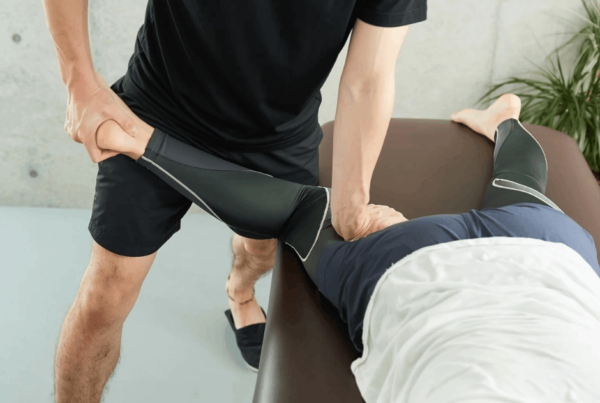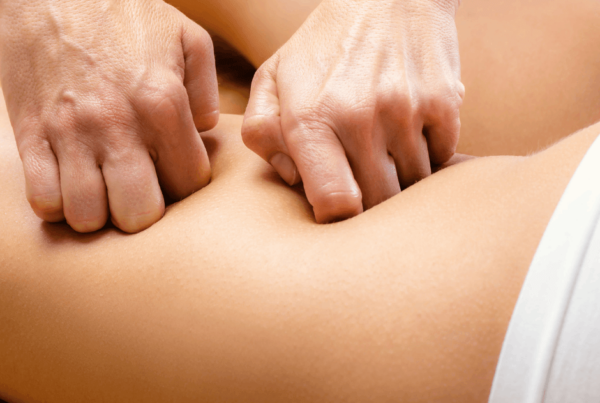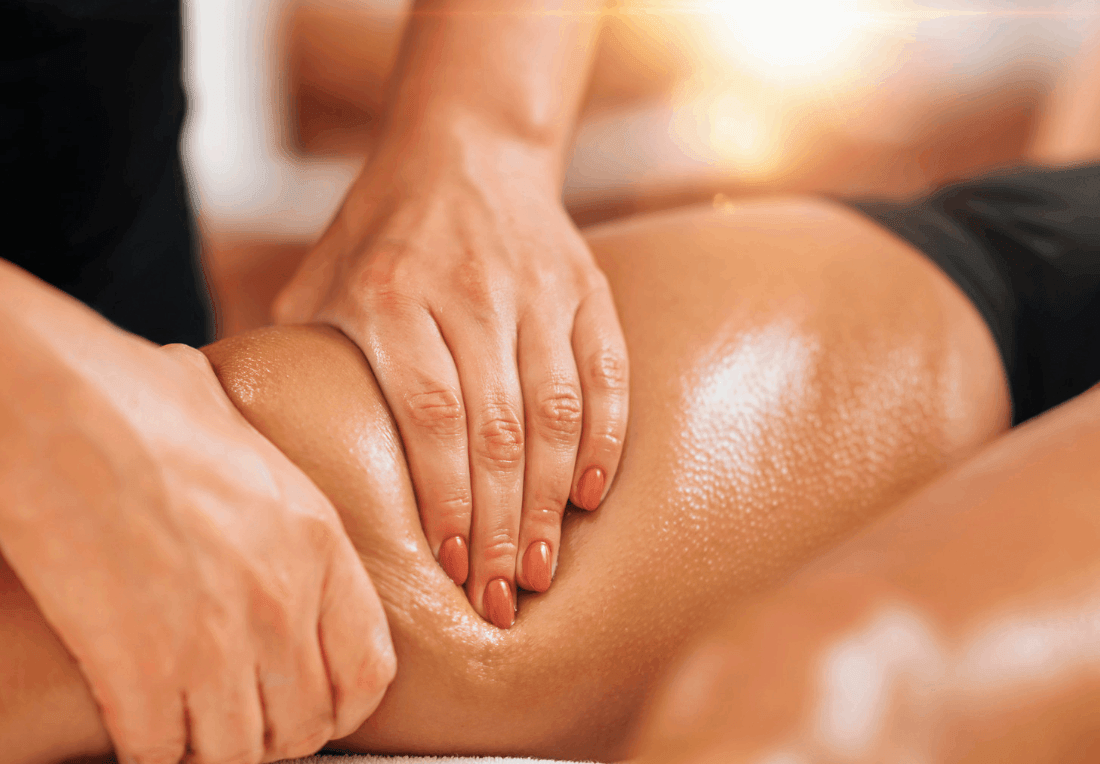
Quads get tight because of running, cycling, squats, stairs and hills, long hours of sitting and weak glutes or hamstrings that leave the front of the thigh doing extra work. Because the quads attach to the kneecap and the shin, tight ones can pull on the knee, though they’re not always the reason a knee hurts. Sports massage is the usual pick for loosening them, and it may help the muscles feel looser, though it isn’t a cure. Quads are the four muscles that carry you up every staircase and never get a thank-you card. If you’d rather not limp to a clinic after a long ride, a therapist can come to your home.
After a big ride, a hard run or a leg day, sports massage at home means the therapist brings the table, and you bring the thighs.
What Causes Tight Quads?
What causes tight quads depends on how you move, sit and train, and most people have a few things going on at once. The front of the thigh is a hard-working neighbourhood, so it picks up a lot of load.
What Are the Quads and What Do They Do?
The quads, short for quadriceps, are four muscles along the front of your thigh. They straighten your knee, help you stand up, climb stairs and absorb the impact when you jump or run downhill. They join together into the tendon that holds your kneecap and attaches to your shin, and one of them, the rectus femoris, also crosses the hip. That’s why a problem at the hip or the knee can show up in the quads.
Why Do Quads Feel Tight?
Tight can mean a few things. A quad can feel tight because it’s short from sitting, tired from training, guarding after a hard session or simply stiff from not moving. That’s why the question why are my quads so tight has more than one answer, and why are my quads so tight often comes down to a mix of causes, and why one stretch doesn’t always settle it.
Running
Every stride asks the quads to absorb the impact and push you on, and downhill running asks them to work hard while lengthening, which often leaves them sore and tight. Long runs, hills and races add up, and a sudden jump in distance is a classic reason for tight quads.
Cycling
Cyclists ask their quads for ninety turns of the pedals a minute and then wonder why they’re grumpy. Long rides in one position, climbs and hard efforts all load the front of the thigh, and the same position can leave the hip flexors short as well. Massage for cyclists goes with the territory.
Squats, Lunges and Leg Day
Squats don’t spare the quads, they send them a bill. Squats, lunges, step-ups and leg presses all load the front of the thigh, and heavy training with short rests can leave it tight for days. Stairs after leg day are a negotiation with gravity.
Hills, Stairs and Hiking
Going downhill makes quads work as brakes, and that kind of work often brings the worst soreness. A weekend hike, a long set of stairs or a holiday full of cobblestones can leave the front of the thigh tight and achy by the next morning.
Sitting Too Long
Standing up after a long meeting is the quad’s version of Monday. Sitting keeps the knees bent and the hips folded for hours, and the rectus femoris, which crosses the hip, can feel short when you finally get up. Tight quads often arrive with tight hip flexors from sitting.
Weak Glutes and Hamstrings
When the glutes and hamstrings don’t pull their weight, the quads can end up doing extra work, and extra work often feels like tightness. A good plan strengthens the back of the leg as well as stretching the front, and your physiotherapist can check which muscles need what.
Sudden Jumps and Skipped Recovery
A new program, a big event, a return after a break or too little sleep can leave quads tight. Skipping warm-ups and cool-downs doesn’t help, and neither does going straight from the desk to a hard session.
Which Activity Tightens Quads the Most?
Different activities tighten the quads in different ways, and different massage styles suit each. If you keep asking why are my quads so tight, the table matches the common causes, and your therapist can adjust on the day.
| Activity | Why quads tighten | Massage that usually fits |
| Running | Repeated landings and hills | Sports massage |
| Cycling | Thousands of pedal strokes in one position | Sports massage, with deep tissue for stubborn spots |
| Leg day | Heavy loads and short rests | Sports massage or remedial |
| Desk week | Long sitting and short hip flexors | Deep tissue, remedial and assisted stretching |
Can Tight Quads Cause Knee Pain?
Can tight quads cause knee pain is among the most common questions, and the short answer is that the two can go together, but quads aren’t always the cause. The knee is where the quads’ grumbling ends up.
How Tight Quads Pull on the Knee
Can tight quads cause knee pain through that pull? Sometimes. The quads join into a tendon that wraps over the kneecap and attaches to the shin, so a tight quad can add tension to that whole chain. That extra pull can change how the kneecap moves, and it can make the front of the knee feel tense or achy, especially after running, cycling or squatting. It doesn’t mean tight quads always cause knee pain, only that the two can travel together.
Pain at the Front of the Knee
An ache at the front of the knee, around or under the kneecap, is a common complaint in runners, cyclists and lifters. Tight quads can be part of the story, and so can weak hips, training load, footwear and more. If the pain keeps coming back, a physiotherapist can look at how you move.
Can Tight Quads Cause Knee Pain on One Side Only?
Can tight quads cause knee pain in just one knee? They can, since one leg often works harder, sits crooked or takes more of the load. If one side is much tighter or sorer, tell your therapist.
The Outer Knee and the IT Band
Pain on the outer side of the knee is a different story, and it often involves the IT band and the muscles around the hip. Tight IT band is a good one to rule in or out if your pain sits on the outside.
When Knee Pain Has Another Cause
Knee pain can come from joints, cartilage, ligaments, tendons, muscles and more. If your knee swells, locks, gives way or hurts at rest or at night, see a doctor or physiotherapist rather than assuming it’s your quads. Massage for knee pain depends on what’s behind yours.
What a Therapist Does That Foam Rolling Can’t
Foam rolling is a handy tool, and plenty of people get good use from it. A foam roller is a tool, and a therapist is a tool with opinions, hands and a plan.
Finding the Spot
A roller is a blunt shape, and it gives the same pressure to everything it touches. A therapist doing quad massage can feel where the muscle is tight, where it’s tender and where it’s actually fine, then spend time where it counts.
Reading the Whole Leg
Foam rolling can’t look at your whole leg and say hold on, it’s your hip. A therapist can work the quads, then check the hip flexors, glutes, hamstrings and calves that share the load, and they can ask about your training and desk habits too.
Changing Pressure and Angle
A therapist adjusts pressure, speed and direction as they work, using palms, forearms, thumbs and elbows to suit the muscle. A roller can only press down, and that’s not always the angle a tight muscle wants.
Reaching Where You Can’t
Some parts of the quad are awkward to reach on your own, like the outer thigh, the top of the thigh near the hip and the tender spot just above the kneecap. Lying relaxed on a table lets a therapist work them without you having to hold yourself up.
Feedback and Adjusting
A therapist watches how you react and asks for feedback, then eases off or goes deeper as you need. A roller can’t tell you it’s time to stop, and it has no opinion when the pressure is too much.
Knowing When to Stop or Refer
A therapist can notice signs that need a doctor or physiotherapist, like swelling, heat, bruising or pain that doesn’t fit, and they can say so. It’s one of the quiet benefits of having a person involved.
Quad Massage: Which Type Suits?
Quad massage is popular with cyclists, runners and lifters alike, and quad massage works on the front of the thigh and the muscles around it, like the hip flexors, glutes and the outer thigh. Different types suit different problems, and your therapist can mix them on the day.
| Massage type | What it focuses on | Often suits |
| Sports | Firm, specific work around training | Runners, cyclists and lifters |
| Deep tissue | Slow, firm work into deeper layers | Stubborn, long-standing tightness |
| Remedial | Targeted work on the area causing trouble | Nagging aches that keep returning |
| Trigger point | Specific tender spots in the muscle | Knotty, tender patches |
Sports Massage for Quads
Sports massage sessions use firm, specific pressure with a focus on how you train and move. They’re a good fit for quad massage after running, cycling or lifting, and they often include the hips, glutes and calves, since they share the load.
Deep Tissue for Stubborn Tightness
Deep tissue massage uses slow, firm strokes to work into the deeper layers of muscle. Deep quad massage suits tightness that has hung around for weeks, and it should feel firm but tolerable, never sharp. If it hurts in a bad way, say so and your therapist will ease off.
Remedial for Nagging Spots
Remedial massage sessions start with a chat about where it hurts and how it started, then works on the areas behind it. It’s useful for quad massage when tightness keeps coming back, or when the cause isn’t obvious.
What a Quad Massage Feels Like
A quad massage starts with a chat about your quads, your activity and anything that feels off. You lie on a table with towels covering you, and your therapist works the front of the thigh, usually with the leg supported on a pillow or bolster. Pressure builds gradually, and you can ask for more or less at any point.
Soreness After a Session
Firm work can leave the area tender for a day or so, like a good workout, though it shouldn’t feel sharp or last long. Drink water, take a gentle walk and avoid a punishing session straight away. If soreness feels more than mild or lasts, check in with your therapist or doctor.
How Often Should You Get Quad Massage?
How often to arrange quad massage depends on your training, your sitting hours and how your body responds. Some people arrange a session every few weeks, some around big training blocks and some only when things flare up. Your therapist can suggest a rhythm.
How to Loosen Tight Quads
How to loosen tight quads isn’t just a stretching question, and a mix of warm-up, movement, strength and massage usually works better than one trick alone. A physiotherapist can tailor these tips to you.
Warm Up First
The first step in how to loosen tight quads is warming up, and how to loosen tight quads safely always starts there. Walk, cycle gently or do some easy leg swings for a few minutes, so the muscles are ready. Stretching cold quads is less comfortable and less useful.
Gentle Quad Stretches
A standing quad stretch, with a hand on a wall and your heel drawn toward your backside, or a kneeling stretch with a cushion under the knee, can feel good. Hold to a point of mild tension, not pain, and breathe steadily. Don’t bounce, and keep your knees comfortable.
Foam Rolling, Done Gently
A foam roller or massage ball can ease tight spots on the front of the thigh, which makes it a handy partner for quad massage. Roll slowly, use moderate pressure, skip the kneecap and the bony bits and stop if anything feels sharp or tingly. It’s a good partner to massage, and not a replacement for a plan.
Strengthen the Back of the Leg
Bridges, hip hinges and step-ups help the glutes and hamstrings share the load, so the quads don’t have to do everything. Stronger muscles often feel less tight. If the hamstrings are grumbling too, tight hamstrings and how to loosen them is the same story from the other side.
Recovery Habits
Sleep, easy walks on rest days and a gentle cool-down after hard efforts help muscles settle. Build training up gradually, and don’t pile a big jump in load on top of a stressful week.
What Not to Do
Don’t push through sharp pain, don’t stretch an injured muscle aggressively and don’t ignore swelling, bruising or a sudden pop. If a quad felt like it tore, rest it and read the doctor section below.
How Long Does It Take to Loosen Tight Quads?
How long does it take to loosen tight quads is a fair question, and how long it takes to loosen tight quads depends on you, and the short answer is that it varies a lot. It depends on the cause, how long the tightness has been there, how hard you train and what else you do.
What Changes the Timeline
A quad that’s tight from one hard hike may settle in a few days, while tightness from months of cycling, sitting and skipped recovery may take longer. Sleep, training load, warm-ups and how often you move all play a part, and so does the rest of the leg.
What to Expect From Massage
So, how long does it take to loosen tight quads with massage? Many people feel their quads loosen after a quad massage session, though how long that feeling lasts varies. Regular habits, like warming up, strengthening and moving often, help it last. If tightness keeps returning, ask your physiotherapist or therapist to look at the bigger picture.
When Slow Progress Is a Sign to Get Checked
If tightness isn’t improving after a few weeks of sensible care, or if it comes with pain, swelling or weakness, have it checked. A doctor or physiotherapist can look for other causes.
Tight Quads for Cyclists and Runners
Cyclists and runners ask a lot of their quads, so it helps to plan around training. Arrange massage in the days after a big event or hard block, and give your legs a lighter day before the next one. Massage for cyclists and sports massage for runners suit both, and your therapist can tailor it to your training calendar.
When to See a Doctor or Physiotherapist
Most quad tightness is the ordinary kind, but a few signs need professional help, and this section comes before any massage plan.
Call 000 for These Signs
Call 000 if leg pain or swelling comes with chest pain, shortness of breath, coughing up blood or feeling faint. Also call for a leg that’s cold, pale or numb, or after a serious fall or crash. Don’t wait for an appointment.
See a Doctor Before Any Massage for These Signs
See a doctor before any massage if you have a thigh or calf that’s swollen, red, warm or painful, a sudden pop with severe pain or bruising, a knee that swells, locks or gives way, new numbness or tingling, leg weakness, pain that wakes you at night, fever or pain that keeps getting worse. These need a check first.
What This Page Is and Isn’t
This page is general information about tight quads and massage, and it isn’t medical advice. It doesn’t replace your doctor’s or physiotherapist’s advice, and it doesn’t promise that massage will fix or prevent any problem. If you’re unsure about anything, ask them first.
Arranging a Therapist at Home After a Ride, Run or Leg Day With Blys
After a long ride or a hard leg day, the last thing tired quads want is a trip across town, and a therapist who comes to you fixes that.
Why At-Home Works for Tight Quads
Sitting in a car makes tight quads worse, and a session at home means you can shower, stretch out and have the massage while your muscles are warm. Blys lists sports, deep tissue and remedial massage at your home, and bookings run from 6 am to midnight, seven days a week.
How It Works
Arrange your appointment through Blys, pick the service and time, and a local provider comes to your door. You’re not charged until a provider confirms your booking, and same-day times depend on availability. Busy times fill up fast, so check availability and arrange early.
What to Expect When Your Therapist Arrives
Your therapist brings the table, fresh linen, towels and oil or lotion, and you only need about 2 x 2 metres of floor space. They’ll ask about your legs, your training and anything that hurts, then adjust the pressure to suit you.
What to Put in Your Booking Notes
Put where it feels tight, how long it’s been, your training or desk routine, any knee issues, past injuries and anything that hurts. Mention if you’ve felt tingling, numbness or a sudden pull. Your therapist arrives ready to tailor the session.
Repeat Sessions With the Same Therapist
If tight quads keep returning, you can set sessions to repeat and ask for the same provider each time. The person arriving then already knows your legs, your training and what works for you.
Once the week gets hectic, a session at home is one thing you can cross off the list without leaving the house, and your quads can stay on the couch.
Quads Tight After a Ride or Run? Arrange a Therapist at Home →
Tight Quad Questions, Squatted Down
These are the questions people type into search once the tightness sets in.
Can I foam roll my quads every day?
Many people roll lightly most days, but it depends on how your legs feel. Keep the pressure moderate, avoid the kneecap and bony areas and take a day off if the area gets sore or bruised.
Why do my quads feel tight after cycling?
Cycling loads the quads thousands of times in one position, and long rides, climbs and hard efforts all add up. A warm-up, a cool-down, a bike fit check and some strength work for the glutes and hamstrings can help.
Is quad massage supposed to hurt?
Firm quad massage can feel intense, but it shouldn’t be sharp or make you hold your breath. Tell your therapist if it’s too much, and they’ll ease off. A little tenderness the next day is common.
Should I stretch tight quads before a run?
Gentle movement and a warm-up usually suit a run better than long, deep stretches on cold muscles. Save the longer stretches for after, and ask your physiotherapist what suits you.
Why do my quads feel tight in the morning?
Muscles often feel stiff after hours of rest, and the front of the thigh is no exception. A few minutes of walking or gentle movement usually helps. If morning tightness comes with pain or doesn’t ease, get it checked.
Can a therapist come to my home after a ride?
A mobile therapist can come to your home, but availability varies, and busy times fill up fast. Arrange early, check availability for the time you want and put your training details in your booking notes.
What Is Blys?
Blys is a mobile wellness and beauty marketplace that connects you with local providers who come to your home, office or hotel. You can arrange massage, nails, hair, makeup, waxing and more, plus physiotherapy, with bookings from 6 am to midnight, seven days a week. You pick the service and time, and you’re not charged until a provider confirms your booking. See what’s on offer across Blys beauty services and the rest of the range.