You put in the kilometres. You track your pace, count your rest days, and nail your nutrition. But if you are skipping soft tissue work, you are leaving a gap in your training plan that is costing you more than you realise.
Sports massage for runners is not a recovery luxury. It is a practical tool that sits alongside your long runs, speed sessions, and rest days, and it is how you manage the cumulative load that builds week after week, especially during a marathon build-up or race block. It is also one of the most reliable ways to catch small problems before they become big ones.
This post covers what running recovery massage actually does for a runner’s body, when to book it around your training, which injuries a running injury massage helps prevent, and why having a provider come to you at home might be the simplest way to actually stay consistent with it.
Why Your Legs Need More Than Rest Days
Running is repetitive. Every stride sends force through your feet, ankles, knees, hips, and lower back, and over time that load accumulates in ways that rest alone does not fully clear. You feel it as heavy legs, persistent tightness, or that nagging sense that something is about to give.
What Happens Under the Surface
What is happening under the surface is a build-up of tension in muscles and connective tissue. Your nervous system responds to repeated loading by keeping certain muscles in a shortened, guarded state even when you are not running. This is normal, but if it is not addressed, it compounds. Tight calves start affecting your Achilles, restricted hip flexors alter your pace, and overworked glutes put more load on your knees.
How Sports Massage Works on This Build-Up
Sports massage for runners addresses this accumulated load through three main mechanisms.
Repeated loading causes your nervous system to hold muscles in a shortened state even at rest, and targeted soft tissue work releases this tension and restores normal resting tone, so your body moves freely between sessions rather than carrying yesterday’s run into today’s.
Massage also increases local blood flow, delivering oxygen and nutrients to tired tissue while clearing the metabolic byproducts that accumulate during hard training. And regular soft tissue work keeps fascia and tendons more pliable, reducing the friction and rigidity that leads to overuse injury over time.
Research on delayed onset muscle soreness, or DOMS, supports the effect of massage here, with evidence that regular soft tissue work reduces muscle soreness intensity and duration following intense exercise, exactly what most runners experience after a long run or tempo session.
What Sports Massage Does for a Runner’s Body
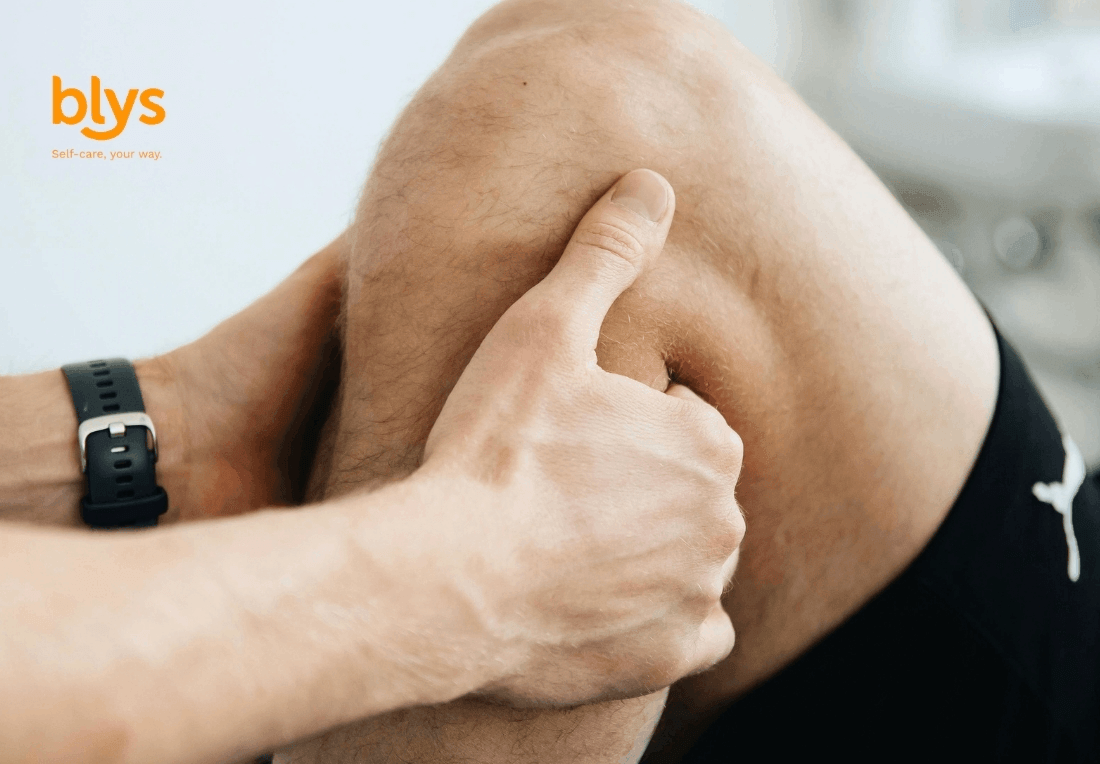
Massage for runners legs covers a specific set of muscles: calves, hamstrings, hip flexors, glutes, and the IT band complex, each of which respond to targeted sports massage work in specific ways. Understanding what is being addressed helps you communicate better with your provider and get more from every session.
The Calf and Lower Leg
Your calves absorb force on every single footstrike. The gastrocnemius and soleus are chronically overloaded in runners, and when they are tight, the load gets transferred to the Achilles tendon and plantar fascia. Targeted work through the calf complex, including the soleus, which sits deeper and is often overlooked, reduces this downstream tension and keeps the lower leg moving freely. If you are prone to Achilles issues or plantar fasciitis, this is non-negotiable.
The Hips and Glutes
Weak or restricted glutes are behind a surprising number of running injuries. When the gluteal muscles are not doing their job effectively, the knee and lower back compensate, and that is where problems tend to show up.
Sports massage through the gluteal complex and hip rotators helps restore normal muscle tone and release the hip flexors, which tend to shorten in runners who also spend time sitting. Booking a mobile session means you can follow up glute-focused work with a short walk or stretch immediately, without having to navigate stairs in a clinic building on legs that just got worked over.
The IT Band and Lateral Leg
The IT band itself does not respond well to aggressive direct pressure, but the surrounding structures, the tensor fasciae latae, lateral quad, and connecting fascia, absolutely do. Skilled soft tissue work through the lateral leg can significantly reduce the friction and irritation that drives IT band syndrome, one of the most common and frustrating running injuries around.
A Training Plan Framework for Booking Sports Massage
Timing matters more than most runners realise. The same technique that supports recovery mid-week can feel counterproductive the night before a race. Here is a quick reference framework, with the detail below it.
| Training phase | Ideal timing | Session focus | Pressure |
|---|---|---|---|
| Active training block | 48 hours after your long run | Calves, glutes, hamstrings | Moderate to deep |
| Peak mileage week | Mid-week | Full-leg tension release | Moderate |
| Race week | 72 hours before race day | Light maintenance | Light |
| Post-race recovery | 24-72 hours after the event | Circulation and DOMS reduction | Light to moderate |
During a Training Block
For runners in a structured build, especially massage for marathon training, a sports massage every two to three weeks is a solid baseline. The sweet spot is typically 48 hours after your long run, since the acute soreness has settled but residual tension is still present and addressable. A session here clears the slate before your next quality workout.
If you are in a particularly heavy block or running through an area of tightness you are monitoring, bumping sessions to fortnightly is a reasonable step. Knowing what that adds up to over a training block helps with planning rather than booking session by session. A regular schedule can be set up to fit your training calendar, with no need to rebook from scratch each time.
The Week Before a Race
In the 72 hours before a race, lighter maintenance work can take the edge off accumulated tightness and improve how your legs feel on the start line. Avoid deep, intense work in the final 24 hours, since it can leave muscles feeling heavy and bruised rather than fresh. If in doubt, book for earlier in the week rather than later.
After a Race or Long Event
Post-race massage is one of the most well-established uses of sports massage for runners. After a marathon or long event, a recovery-focused session supports circulation, helps reduce DOMS, and assists the body in shifting from effort to recovery more efficiently. Booking this at home rather than travelling anywhere when your legs are completely spent is one of the clearest practical advantages of mobile massage.
Can Sports Massage Help Prevent Running Injuries?
Injury prevention is arguably the strongest case for building sports massage for runners into your routine. No intervention eliminates injury risk entirely, but consistent soft tissue work is one of the most actionable things you can add.
Research on massage and musculoskeletal health suggests that regular soft tissue interventions support tissue resilience, improve range of motion, and reduce the markers associated with overuse injury, all relevant concerns for runners logging significant weekly mileage.
How It Maps to Common Running Injuries
IT band syndrome responds well to regular lateral hip and thigh work, which reduces the cumulative friction that drives the irritation. Addressing the TFL and glute med proactively, rather than waiting for pain, is far more effective than reacting once it flares up.
Plantar fasciitis is closely linked to calf tightness, since the two are tightly connected through the fascial line. Consistent work through the lower leg keeps the fascia from becoming overloaded, and catching tightness early, before it becomes chronic, is the goal.
Shin splints, or medial tibial stress syndrome, often improve when the tibialis posterior and surrounding lower leg muscles are released, reducing the stress on the periosteum that leads to shin pain. This is one of the injuries where early intervention makes the biggest difference between a minor niggle and weeks off running.
Hamstring strains are common in runners doing speedwork, where high hamstring loads make tight, overworked tissue more vulnerable to strain. Regular maintenance keeps the tissue more resilient and better able to handle the demands of training.
How Mobile Massage Fits a Runner’s Schedule
Why Most Runners Skip It
Here is the honest reason most runners do not get massage as often as they should: it is inconvenient. You finish a Sunday long run, your legs are heavy, you are tired, and you are hungry. The idea of driving to a clinic, finding parking, and sitting in a waiting room is enough to make you skip it entirely. Again.
This is exactly the problem sports massage for runners booked as a mobile session solves. A local professional comes to your home with everything they need, table, equipment, and the right technique for what your legs just went through. You are horizontal and recovering within minutes of the session starting, not sitting in traffic on the way to one.
The Consistency Argument
There is also a consistency argument worth making clearly. Sports massage is cumulative. One session helps, but regular sessions transform how your body holds up through a training block. Removing the logistics barrier makes it dramatically easier to keep those bookings.
Book a fortnightly slot on a Sunday afternoon, and it becomes as embedded in your training routine as your foam rolling or recovery runs.
A Provider Who Knows Your Training
A provider working with you regularly gets to know the patterns of tightness that come with your specific mileage and adjusts their approach depending on where you are in your training cycle. Whether you are deep in a marathon block, tapering for race day, or recovering from an event, there is a session format that fits.
Make Sports Massage Part of How You Train
Running hard is only half the equation. The other half is recovering well enough to do it again and again, across weeks and months of training. Sports massage for runners gives you a direct, evidence-backed way to manage the load your body is carrying, reduce the risk of injury, and show up to every session with legs that are actually ready.
Your next training block will thank you for booking the session your legs have been quietly asking for since week one. Book a sports massage at home through Blys, available 7 days a week, 6 am to midnight across Australia.