A tight IT band is a thick strip of connective tissue along the outside of your thigh that tugs on the knee, and IT band massage works on the muscles that pull on it, like the glutes and the TFL, because rolling the band itself rarely tells the whole story. Sports massage can ease that tightness, though knee pain that swells, locks or gives way needs a physio or doctor. Foam rolling your IT band is like shouting at a rope to stretch.
Runners and cyclists get the most out of a therapist who looks at the whole leg, and a local provider can bring sports massage sessions to your home after a long run or ride.
What Is the IT Band?
The IT band, short for iliotibial band, is a long, thick strip of connective tissue that runs down the outside of your thigh from your hip to just below your knee. It’s the toughest strap on your leg, and it has no sense of humor about rolling.
Where Is the IT Band?
The IT band starts at the side of your hip, where it joins muscles including the glutes and a small muscle called the TFL, and runs down the outer thigh to attach near the outside of the knee. You can feel it as a firm ridge on the side of your leg when you stand and tense your thigh.
What Does the IT Band Do?
The IT band helps steady your hip and knee when you run, walk or pedal, and it works with the muscles that connect to it. It’s built to be strong and stiff, which makes it good at its job and not very good at stretching. That’s why the muscles around it matter more than the band alone.
What Is IT Band Syndrome?
IT band syndrome is a common cause of pain on the outside of the knee, especially in runners and cyclists, and it usually builds when the area around the band gets overloaded or irritated. A physio or doctor diagnoses it, and IT band syndrome massage works on the muscles around it, not on the diagnosis. IT band pain often shows up after a sudden jump in training.
IT Band Pain: What It Feels Like
IT band pain usually shows up on the outside of the knee, and it often starts mid-run or mid-ride and gets worse the longer you go. Tightness can also appear higher up along the outer thigh or hip.
Signs of a Tight IT Band
A tight IT band usually leaves a few clues:
- Pain or a burning feeling on the outside of the knee when you run or cycle
- Tightness along the outer thigh or the side of the hip
- Pain that gets worse going downhill or down stairs
- A sore, tender spot on the outside of the knee after activity
- A feeling that the outside of the leg is stiff when you start moving
Why Runners and Cyclists Get IT Band Pain
Runners and cyclists repeat the same leg movement thousands of times, and the outer knee keeps count. When the muscles around the hip get tired or tight, the band takes on extra tension and the outside of the knee feels it. Runners and cyclists share that repeated load, and sports massage for runners starts from the same place.
IT Band Pain vs Other Knee and Hip Pain
Pain on the outside of the knee can come from several places, and only a physio or doctor can say which is yours. The table shows the differences people most often describe.
| Possible source | Where it’s felt | What it usually feels like | What makes it worse |
| IT band | The outside of the knee, sometimes up the outer thigh | A sharp or burning ache, often building during activity | Running, cycling, downhill and stairs |
| Pain around the kneecap | The front of the knee, around or behind the kneecap | A dull ache | Squatting, stairs and sitting for long |
| Meniscus or joint injury | Inside or deep in the knee | A catching, locking or sharp pain | Twisting, deep bending |
| Hip bursitis | The outside of the hip | A tender, aching spot | Lying on that side, climbing stairs |
| Hip or lower back | The hip, buttock or outer thigh | A deep ache | Long sitting, standing up |
Why the IT Band Gets Tight
The IT band gets tight when the muscles and the load around it change, and a few causes come up again and again.
Training Load: Too Much, Too Soon
Runners will run through anything except advice, and a sudden jump in mileage, speed or hills is a classic setup for IT band pain. The tissue needs time to adapt to extra load, so a big change in a short time can leave the outer knee irritated. Nothing hurts like a perfectly good running plan meeting a bad hill.
Weak or Tired Glutes and Hips
The glutes help hold your pelvis steady when you run or pedal, and when they tire, other muscles pick up the slack, including the TFL and the IT band. The glutes clock out early and the IT band takes the late shift. Easing tight hips and strengthening the glutes both matter, and a physio can show you what suits your body.
Hills, Cambers and Shoes
Running on a sloped road, doing lots of downhill or wearing worn-out shoes can change how your leg loads, and the outer knee can feel it. Switching routes, rotating shoes and swapping out shoes that have lost their cushioning are simple changes that cost little.
Bike Setup and Cycling Habits
For cyclists, a saddle that’s too high or too low, cleats set at a bad angle or a sudden jump in distance can all add to IT band pain. A professional bike fit can look at your position, and it often settles a problem that massage alone can’t, which is a theme in massage for cyclists.
Why Foam Rolling Isn’t Enough
Foam rolling feels productive, and it can feel good, but the IT band is a poor target on its own. The band is tough, thick and attached at both ends, so rolling the muscles around it often does more than rolling the band.
Can You Stretch or Release the IT Band by Rolling It?
The IT band is a thick, tough strip of tissue that doesn’t stretch like a muscle, so rolling or stretching the band itself is unlikely to change much, and rolling it can feel sore. The muscles that connect to it, like the glutes, the TFL and the outer quad, are where tightness often sits and where a therapist spends most of their time. Your IT band isn’t the culprit so much as the messenger.
Foam Rolling vs Hands-On Work
Foam rolling and hands-on work both have a place, and they do different jobs. The table sets them side by side.
| What matters | Foam rolling | Hands-on sports massage |
| Reaching the right muscles | Easy to roll the band and miss the muscles that pull on it | A therapist works on the glutes, TFL, quads and hamstrings |
| Controlling pressure | Your body weight does the work | The therapist adjusts depth and angle as they go |
| Finding the tender spot | You guess | The therapist feels the tissue and responds |
| Following the tightness | Limited to where you can roll | The therapist can work from the hip to the knee |
| Convenience | Free, at home, any time | Needs a booking, though a provider can come to you |
When Foam Rolling Still Helps
Foam rolling can feel good on the quads and glutes between sessions, and gentle, consistent rolling is a reasonable maintenance habit. Keep the pressure moderate, stay off the sore spot on the outside of the knee and stop if you feel sharp pain. A physio can show you how to use a roller for your situation.
IT Band Massage: What a Sports Massage Works On
IT band massage works on the muscles and tissue around the band, and it helps to know what that means for your legs. Sports massage sessions use firm, specific pressure, and your therapist adapts it to what they find.
Glutes and Hip Rotators
The glutes and the deep hip muscles help steady your pelvis, and tightness here can leave the IT band working harder. Your therapist works through the glutes with firm, steady pressure, and you may feel a deep ache at the tender spots.
The TFL and the Outer Hip
The TFL, or tensor fasciae latae, is a small muscle at the front and side of the hip that connects into the IT band. It’s one of the muscles that pulls on the band, and it often feels tight in people who sit a lot and run or cycle. Tight hip flexors from sitting can add to the load, so your therapist often looks at the front of the hip as well as the side.
Quads and Hamstrings
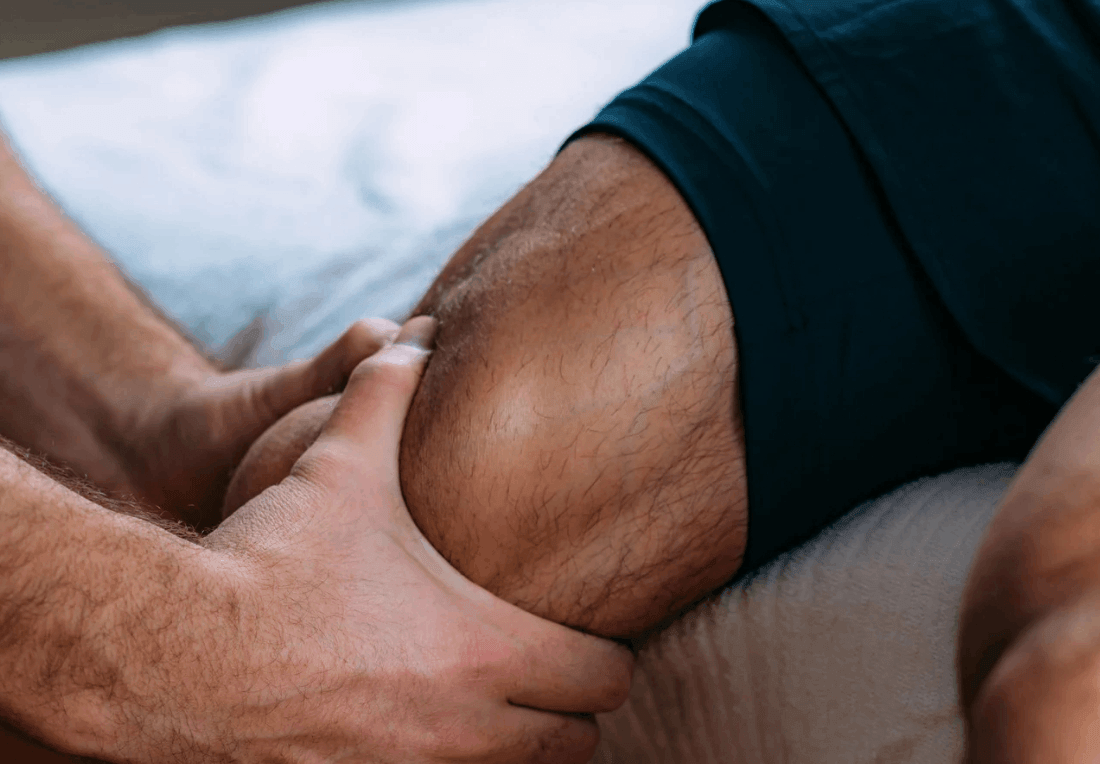
The outer part of the quadriceps connects close to the IT band, and the hamstrings work alongside it, so both often get attention. Your therapist works along the length of the thigh, from the hip down toward the knee, and checks in about pressure as they go.
Myofascial Work Around the Hip and Thigh
Myofascial release therapy uses slow, gentle pressure on the connective tissue around the muscles, and it suits hips and thighs that feel tight and restricted. It feels more like a patient stretch than a rub, and it’s a slower style than most runners and cyclists expect.
Assisted Stretching for the Hips and Hamstrings
Assisted stretching uses guided stretches for the hips and hamstrings, with your therapist holding the position and you doing the breathing. It works well after massage has softened the tight areas, and it solves a problem with self-stretching, because someone else keeps your pelvis in the right place, which is the idea behind assisted stretching sessions.
What Happens in a Sports Massage for IT Band Pain
A sports massage for IT band pain is firmer than a relaxation massage, and it follows a predictable order.
Before the Session: The Conversation
Your therapist asks where it hurts, when it started, how far you run or ride each week, what’s changed lately and whether you have an event coming up. Say if you’ve had any red flag signs from the section below. Your answers decide which muscles get the most time in your IT band massage and how firmly your therapist works.
During the Session: Positions and Pressure
You usually lie on your side or your back, and your therapist works on the glutes, hips and thigh with their hands, forearm or elbow. Please keep your underwear on and lie under a sheet or a towel, and your therapist uncovers only the area they’re working on. Expect firm pressure that feels like a deep ache at the tender spots, never a sharp or frightening pain, and speak up if it’s too much.
After the Session: What to Do Next
Some people feel a little tender the next day, like after a hard workout, and some feel looser right away. Move gently, keep your normal routine and tell your therapist or physio if the pain gets sharper, spreads or settles on the knee.
Sports Massage Before and After Races
Tell your therapist about any race or big ride coming up, so they can adjust how firmly they work and which muscles they focus on. A session close to an event suits a lighter touch than one in the middle of a training block, and your therapist can advise on timing.
How Often Do People Arrange Sports Massage?
Your physio or doctor and your therapist decide how often makes sense, and it depends on your training load and what keeps feeding the problem. On Blys you can set sessions to repeat and ask for the same provider each time, so the person arriving already knows your legs, your training and what worked last time.
Training Load and Habits Between Sessions
Massage settles the muscles, and how you train decides whether the problem comes back.
Build Mileage and Distance Gradually
Increase your running or riding gradually and give each change a few weeks to settle before you add another. A big jump in distance, speed or hills is the most common way to overload the outer knee, so a steady build usually beats a heroic week.
Strength and Warm-Up
Strengthening the glutes and the muscles around the hip, and warming up before you head out, are common suggestions for runners and cyclists with IT band trouble. A physio can show you exercises that suit your body, and the right ones depend on you.
Rest, Cross-Training and Recovery
An easier week, a swim or a spin can give the outer knee a break without wiping out your fitness, and sleep and good food help recovery. Easing back for a short while is usually kinder than pushing through a sharp pain on the outside of the knee.
When to See a Physio or Doctor First
This page is general information about IT band pain and massage, and it isn’t medical advice. It doesn’t diagnose IT band syndrome or any other condition, and it makes no promise beyond easing tight muscles. See a physio or doctor if your knee swells, locks, gives way or catches, if the pain follows a fall or twist, if it keeps getting worse or wakes you at night, or if you have numbness, tingling or a fever. Call 000 for chest pain or shortness of breath.
Arranging Sports Massage at Home After a Long Run With Blys
After a long run or ride, the last thing your legs want is a car trip, and a therapist who comes to you fixes that.
Why Home Works After Training
After a long run or ride, a trip to a clinic means sitting in a car with tight hips and tired legs, while a session at home lets you shower, eat and lie down on your own sofa. Sports massage at home fits around training, and bookings run from 6 am to midnight, seven days a week, so an evening session after a run works.
What to Expect When Your Therapist Arrives
Your therapist brings the table, fresh linen, towels and massage oil or lotion, and you only need to clear about 2 x 2 metres of floor. You’re not charged until a provider confirms your booking, and same-day times depend on availability. A quiet room and a sturdy chair nearby are all the space you need.
What to Put in Your Booking Notes
Put which leg hurts, how far you run or ride each week, any events coming up and the style you’d like in your booking notes, whether sports, myofascial or assisted stretching. Add anything your physio or doctor has told you, so your therapist arrives knowing what to focus on and what to avoid.
Once your physio or doctor has seen your knee, a session at home after your next long run is an easy way to look after your legs, and the sofa is already there.
Long Run Done? Arrange a Sports Massage at Home →
People Also Ask: IT Band Pain and Massage
These are the questions runners and cyclists type into search once the outside of the knee starts complaining.
Can you stretch a tight IT band?
The band itself is thick and tough and doesn’t stretch much, so most stretching and rolling aims at the muscles that connect to it, like the glutes, the TFL and the outer quad. A physio can show you stretches that suit your hips, and you should stop if you feel sharp pain.
Should I foam roll an IT band that hurts?
Rolling on a sore spot at the outside of the knee often hurts more than it helps, so most people do better rolling the quads and glutes with moderate pressure. Stop if you feel sharp pain, and ask a physio what suits your situation.
Why does my IT band hurt more going downhill?
Downhill running asks the outer thigh and hip muscles to control your leg with each step, and that can load the outer knee more. A sudden increase in hills is a common trigger for IT band pain, so build hill work in gradually.
Can cycling cause IT band pain?
It can, because cycling repeats the same leg movement thousands of times, and a saddle that’s too high or low, cleats at a bad angle or a sudden jump in distance can all add to the load. A bike fit and a gradual build in distance often help, and a physio can assess your position.
Can I run with IT band syndrome?
It depends on how bad the pain is, and a physio or doctor can advise on whether to ease back or keep going with changes. Running through sharp or worsening pain on the outside of the knee often prolongs the problem, so get it checked.
How long does IT band pain last?
It depends on how long it’s been building, how much you change your training and what’s feeding it. Mild irritation can settle in weeks when you ease the load, while a stubborn case needs a physio’s plan, so see one if it isn’t improving.